Federal education programs can recognize many different forms of educational achievement, from GED completion and vocational training to certificates, apprenticeships and college degrees. When an authorized program plans a graduation or educational recognition ceremony, purchasing the appropriate graduation bachelors caps and gowns for federal education programs requires more than simply selecting a gown online.
Government and institutional buyers may need to determine the credential being recognized, participant count, gown sizes, required accessories, product specifications, delivery location, purchasing method and applicable institutional requirements before placing an order.
A structured purchasing process can help federal education administrators obtain the correct graduation merchandise while avoiding unnecessary products, incorrect sizes, inappropriate academic regalia and preventable delivery problems.
Which Federal Education Programs May Need Graduation Supplies?
Graduation and recognition products may potentially support a range of authorized federal educational activities. The exact programs, ceremony practices and purchasing procedures vary by agency, institution and location.Potential Educational Recognition Needs Can Include:
- GED and high school equivalency completion
- Adult education programs
- Vocational education
- Career and technical education
- Occupational training
- Apprenticeship completion
- Workforce development
- Employment-readiness programs
- Certificate programs
- Postsecondary education
- Associate degree programs
- Bachelor’s degree programs
- Graduate degree programs
- Educational achievement ceremonies
Step 1: Identify the Credential Being Recognized
The first purchasing decision should be based on what participants actually completed. A GED graduate, vocational certificate recipient and bachelor’s degree recipient should not automatically receive identical graduation regalia. The credential determines which products are appropriate.Example Credential Categories
- GED or high school equivalency
- Vocational certificate
- Occupational training certificate
- Apprenticeship credential
- Workforce-development certificate
- College certificate
- Associate degree
- Bachelor’s degree
- Master’s degree
- Doctoral degree
Step 2: Determine Whether Full Graduation Apparel Is Necessary
Not every federal education completion event needs a complete cap-and-gown package. Some programs may choose a traditional commencement presentation with gowns, mortarboards and tassels. Other programs may prefer certificate covers, stoles, cords or a simpler recognition ceremony.Possible Ceremony Formats Include:
- Full cap-and-gown ceremony
- Gown and certificate presentation
- Certificate-cover presentation
- Stole or cord recognition
- Degree-specific academic commencement
Step 3: Choose the Appropriate Graduation Gown
Once the credential and ceremony format are established, purchasers can identify the appropriate gown. For GED, vocational, workforce and other non-degree recognition programs, a standard graduation gown may be appropriate where authorized. College degree recipients may require degree-specific academic apparel established by the degree-granting institution.Standard Graduation Gowns
Standard gowns can provide a professional, coordinated appearance for qualifying educational recognition ceremonies.When Requesting a Quote, Specify:
- Gown style
- Gown color
- Matte or shiny finish
- Total quantity
- Quantity by size
- Extended-size requirements
- Required delivery date
Matte vs. Shiny Graduation Gowns
Federal and institutional buyers may encounter both matte and shiny graduation gowns. Matte graduation gowns have a lower-reflection appearance. Shiny graduation gowns have more visible fabric sheen. Neither finish should be considered an official federal standard unless the responsible organization has specifically established that requirement.Step 4: Select the Graduation Gown Color
Commercial graduation gowns can be available in black, navy, royal blue, red, maroon, white, gold and other colors depending on the product line. The purchasing organization should determine the approved color based on its ceremony requirements. A commercial supplier should not assign an official federal agency, correctional education, vocational education or government meaning to a gown color unless that designation has actually been established.Step 5: Build an Accurate Graduation Gown Size List
Group orders should include quantities by size rather than simply providing the total number of graduates. Graduation gown sizing often uses height ranges, although manufacturers and gown styles can have different sizing systems.Example Group Size List
- Size range A — 10 gowns
- Size range B — 18 gowns
- Size range C — 15 gowns
- Size range D — 9 gowns
- Extended sizes — 5 gowns
Do Not Assume Graduation Gown Sizes Are Universal
A gown size from one manufacturer may not correspond exactly to the same size description from another manufacturer. Government purchasers should identify the product first and then use the supplier’s current sizing information to determine quantities.Plan Extended Sizes Early
Extended-size gowns can have different inventory availability than standard sizes. Including extended sizes in the initial quotation request can help determine whether the selected gown style, color and finish are available for the complete graduating group.Step 6: Determine Whether Graduation Caps Are Needed
Mortarboard caps can be included in a traditional graduation package, but they are not necessarily appropriate for every educational recognition program. Purchasers should determine whether caps are required and whether they are included with the selected gown or sold separately. Where merchandise is intended for a controlled federal environment, authorized personnel should also determine whether the proposed cap construction is acceptable.Step 7: Choose Graduation Tassels
Graduation tassels may be available in solid colors, multicolor combinations and year-specific designs.Before Ordering Tassels, Determine:
- Required color
- Total quantity
- Whether a year charm is needed
- Whether tassels are included with the cap-and-gown package
- Whether different programs require different approved colors
Step 8: Decide Whether Certificate or Diploma Covers Are Needed
Certificate and diploma covers can provide a professional presentation for educational credentials and may be especially useful for GED, vocational, apprenticeship, workforce and certificate programs.Before Selecting Covers, Verify:
- Document width
- Document height
- Portrait or landscape orientation
- Cover quantity
- Preferred color
- Blank or customized design
Blank Certificate Covers
Blank certificate covers can simplify institutional purchasing and may be useful across several different education programs. They can also reduce the artwork approval and production requirements associated with customized products.Custom Certificate and Diploma Covers
Custom covers may potentially include approved wording, program information or authorized artwork. Federal seals, agency logos, government marks, institutional identifiers, college logos and other protected branding should only be reproduced when appropriate authorization exists.Step 9: Determine Whether Stoles or Cords Are Appropriate
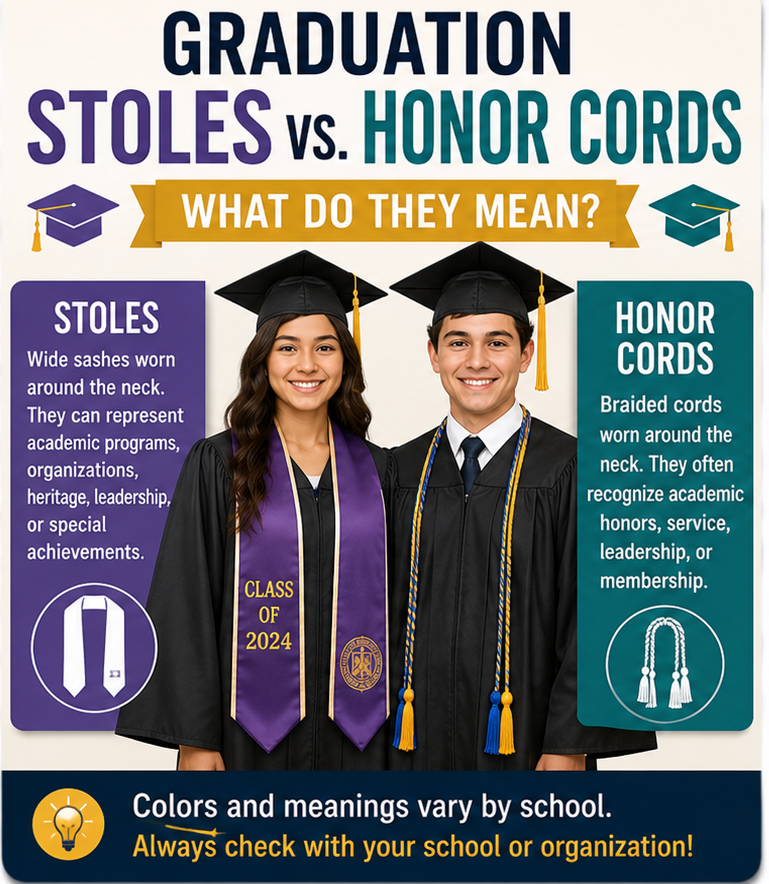
Graduation stoles and achievement cords can potentially recognize approved programs or distinctions. They should not be added automatically to every order.Possible Approved Uses Can Include:
- Program completion
- Educational achievement
- Academic distinction
- Vocational achievement
- Workforce-program recognition
- Approved organizational recognition
Graduation Cord Colors Are Not Universal
A particular cord color does not necessarily have the same meaning across every federal program, school, college or organization. Purchasers should avoid relying on generic internet charts as evidence that a particular color represents a specific federal achievement.Step 10: Identify Degree-Specific Academic Regalia
If participants are earning genuine college degrees, standard graduation gowns may not satisfy the requirements of the degree-granting institution. Academic apparel should be selected according to the degree earned and the institution’s commencement standards.Associate Degree Regalia
Associate degree requirements vary among colleges. The degree-granting institution should specify the appropriate gown, cap, tassel and other academic apparel.Bachelor’s Graduation Regalia
Bachelor’s regalia commonly includes a bachelor-style gown, mortarboard and tassel. Some institutions use academic hoods for bachelor’s graduates, while many do not. Buyers should confirm the requirement rather than automatically adding a hood.Master’s Graduation Regalia
Master’s regalia generally uses a gown with sleeve construction different from a bachelor’s gown and may require an academic hood. The exact hood should correspond to the degree and institutional requirements.Doctoral Graduation Regalia
Doctoral apparel can include a doctoral gown, academic hood and tam or other institution-approved headwear. Custom doctoral regalia may require significantly more planning and production time than standard graduation gowns.Step 11: Verify Academic Hood Specifications
Academic hoods should not be selected simply by choosing colors that appear appropriate.Before Ordering, Confirm:
- Degree level
- Exact degree
- Academic discipline
- Degree-granting institution
- Required hood style
- Velvet color where applicable
- Institutional lining requirements
Step 12: Create a Graduation Supply Package for Each Program
If a federal education organization is recognizing several different programs, creating a standard package for each credential category can simplify purchasing.Example GED Package
- Standard gown
- Mortarboard
- Tassel
- Certificate cover
Example Vocational Package
- Standard gown where appropriate
- Mortarboard where approved
- Tassel
- Certificate cover
- Approved achievement accessory
Example Workforce Recognition Package
- Certificate cover
- Approved stole or cord
- Standard gown where appropriate
Example College Degree Package
- Degree-specific gown
- Approved academic headwear
- Tassel
- Academic hood where required
- Diploma cover
Step 13: Calculate the Exact Quantity
Institutional purchasers should determine quantities product by product rather than simply ordering one identical bundle for every participant.Example Requirement
- 60 graduation gowns
- 60 mortarboards
- 60 tassels
- 60 certificate covers
- 20 approved stoles
- 15 achievement cords
- 3 degree-specific academic hoods
Small Federal Education Program Orders
Some educational programs may have only a small number of graduates at a particular time. A supplier offering individual products or no minimum quantity where applicable can potentially support smaller recognition events without requiring an unnecessarily large purchase.Bulk Federal Graduation Supply Orders
Larger federal education programs may require bulk bachelors graduation caps and gowns. For bulk requirements, purchasers should provide the complete size distribution and accessory quantities when requesting a quote.Step 14: Create an Institutional Bill of Materials
A bill of materials can help ensure that every required product is included in the procurement request.Track:
- Program or credential
- Graduate quantity
- Gown style
- Gown color
- Matte or shiny finish
- Quantity by size
- Extended sizes
- Caps
- Tassels
- Certificate covers
- Diploma covers
- Stoles
- Cords
- Academic hoods
- Other degree-specific regalia
- Customization
Step 15: Separate Required Items From Optional Accessories
Separating required merchandise from optional recognition products can help control costs.Core Products May Include:
- Gown
- Cap
- Tassel
- Certificate or diploma cover
- Required academic hood
Optional or Conditional Products May Include:
- Graduation stole
- Achievement cord
- Honor cord
- Year charm
- Customized cover
- Custom recognition product
Step 16: Confirm Institutional and Security Requirements
Commercial availability does not mean that a graduation product is automatically approved for every federal location. Authorized government and institutional personnel should determine whether gowns, caps, tassels, charms, stoles, cords, academic hoods, tams, certificate covers, diploma covers, decorations, custom products and packaging satisfy applicable security and operational requirements. This is particularly important when products will enter a controlled or correctional environment.Review Individual Components, Not Just the Complete Package
A graduation package can contain products made from different materials and components. The gown may be acceptable while another component requires separate review. Caps, tassels, decorative charms, cords, stoles, covers, academic hoods, headwear and packaging should be considered according to applicable requirements.Request Product Specifications When Necessary
When institutional review requires additional information, purchasers can ask a supplier for available product specifications before ordering. This allows authorized personnel to evaluate proposed merchandise before government funds are committed.Step 17: Limit Unnecessary Participant Information
A graduation supplier generally needs product quantities, sizes, specifications, shipping information and purchasing details. Participant names, government identification numbers, correctional records, release information, educational records or other sensitive information should not be supplied unless genuinely required and appropriately authorized. Aggregate sizing can often support an institutional order while reducing unnecessary disclosure.Step 18: Prepare a Formal Request for Quote
A detailed RFQ can help a government cap and gown supplier provide more accurate product availability and pricing.Include Where Applicable:
- Program or credential
- Total number of graduates
- Gown style
- Gown color
- Finish
- Quantity by size
- Extended-size requirements
- Cap quantity
- Tassel specifications
- Certificate-cover dimensions
- Diploma-cover requirements
- Stole specifications
- Cord specifications
- Academic hood requirements
- Customization requirements
- Packaging requirements
- Approved shipping destination
- Required delivery date
- Procurement instructions
Step 19: Compare Supplier Quotes Correctly
Government purchasers should compare equivalent packages. A $20 gown-only quotation cannot be directly compared with a $30 package that includes a gown, mortarboard and tassel without accounting for the missing products.Compare:
- Exact product specifications
- Products included
- Size availability
- Extended sizes
- Accessories
- Customization
- Processing
- Shipping
- Total delivered cost
Step 20: Calculate the Delivered Cost Per Graduate
Calculating the complete cost per participant can provide a clearer institutional comparison.Include Applicable Costs For:
- Gown
- Cap
- Tassel
- Certificate cover
- Diploma cover
- Stole
- Cord
- Academic hood
- Customization
- Packaging
- Shipping
Institutional and Volume Pricing
Federal education programs purchasing coordinated quantities can ask suppliers whether institutional or volume pricing is available. Actual pricing may depend on quantity, gown style, size distribution, accessories, custom requirements, inventory and delivery needs.Step 21: Confirm Current Inventory
Before an order is finalized, purchasers should confirm availability across the entire requirement. Having one gown style in stock does not necessarily mean that every required size, cap, tassel, cover, stole or cord is available in the necessary quantity.Verify:
- Gowns by size
- Extended sizes
- Matching caps
- Tassels
- Certificate covers
- Diploma covers
- Stoles
- Cords
- Academic regalia where required
Step 22: Separate Stocked Products From Custom Products
Standard stocked merchandise can generally be prepared more quickly than customized products. Custom stoles, decorated covers, embroidered products, specialty academic apparel and other personalized merchandise may require additional production time. Buyers should identify custom requirements early.Step 23: Understand Processing Time
Processing time is the period required for the supplier to prepare the merchandise before it is handed to the shipping carrier. Processing should not be confused with carrier transit or institutional receiving.Step 24: Select the Appropriate Shipping Method
Nationwide U.S. shipping can support federal education programs located throughout the country, subject to supplier and destination requirements. Standard and expedited transportation options may be available depending on the merchandise, inventory and destination.Expedited Shipping Does Not Replace Advance Planning
Faster carrier transportation cannot eliminate the time required for government approval, procurement, custom production, supplier processing, security review, receiving inspection or internal distribution. Programs should avoid relying on expedited shipping as a substitute for early purchasing.Step 25: Confirm the Exact Government Delivery Location
Federal agencies, institutions, correctional complexes and program locations can have specific receiving requirements.Before Shipment, Confirm:
- Official agency or organization name
- Exact institution or department
- Approved receiving address
- Attention line
- Purchase-order number where applicable
- Government order reference
- Package-labeling instructions
- Carrier requirements
- Receiving procedures
Do Not Assume the Public Mailing Address Is the Receiving Address
A publicly listed address may not necessarily be the appropriate destination for a commercial shipment. The purchasing organization should provide the supplier with the approved receiving information for the specific transaction.Step 26: Build the Timeline Backward From Graduation Day
Federal education programs can reduce last-minute problems by working backward from the recognition date.Allow Time For:
- Credential confirmation
- Final graduate count
- Gown sizing
- Product selection
- Institutional review
- Security review where applicable
- RFQ preparation
- Supplier quotation
- Procurement approval
- Custom production
- Supplier processing
- Shipping
- Government receiving
- Inspection
- Internal distribution
- Approved replacements if necessary
Step 27: Determine the Appropriate Government Purchasing Method
Government procurement procedures can depend on the purchasing organization, transaction amount, acquisition method, payment method, supplier requirements and other circumstances. Authorized procurement personnel should determine which procedures apply to the specific purchase. A commercial graduation supplier should not be assumed to qualify for a particular federal purchasing method merely because it sells products suitable for government education programs.Can Federal Education Programs Use Purchase Orders?
Some government and institutional purchases may be conducted using purchase orders. Before issuing a PO, the purchaser should verify whether the supplier currently accepts purchase orders, what payment terms apply and whether additional documentation is required. A formal quote does not automatically establish PO acceptance.Formal Quotes for Government Graduation Supplies
A supplier may be able to prepare a formal quotation containing product descriptions, quantities, unit pricing, shipping and other transaction details. Federal buyers should ensure that the quotation matches the products that have been approved for purchase.Government Registration and Vendor Requirements
Some federal purchasing methods may require specific supplier registrations, representations, payment capabilities or other procurement qualifications. The responsible contracting or purchasing personnel should determine the requirements for the transaction and verify supplier status through appropriate official systems when necessary. No government registration, contract status or approved-vendor designation should be inferred merely from a supplier’s marketing materials.Government Purchase Card Transactions
Some qualifying government purchases may potentially use an authorized government purchase card when permitted by applicable procurement rules and agency procedures. The authorized cardholder and purchasing organization determine whether a transaction is eligible. The supplier should separately confirm which payment methods it currently accepts.Custom Federal Agency Branding
Federal education programs may occasionally consider custom stoles, certificate covers or other recognition products. Federal seals, agency logos, government insignia, facility names, college marks, educational-provider logos and other protected branding should only be reproduced when appropriate authorization has been obtained. Placing a federal logo on commercial graduation merchandise without authorization should not be treated as an ordinary customization request.Government Graduation Supply Checklist
- Identify the program
- Confirm the credential
- Determine the ceremony format
- Select the gown
- Select gown color and finish
- Prepare quantities by size
- Identify extended sizes
- Determine cap requirements
- Select tassels
- Measure certificates or diplomas
- Select covers
- Determine approved stoles and cords
- Verify degree-specific regalia
- Obtain institutional product approval
- Prepare a complete bill of materials
- Request a formal quote
- Compare equivalent packages
- Verify complete inventory
- Confirm purchasing method
- Confirm payment terms
- Confirm exact receiving address
- Verify processing time
- Select shipping method
- Allow time for receiving and inspection
Questions Federal Buyers Should Ask Graduation Suppliers
- Can individual gowns be ordered?
- Are bulk quantities available?
- Is there a minimum order?
- What gown sizes are available?
- Are extended sizes available?
- Which gown colors are stocked?
- Are matte and shiny gowns available?
- Are caps included or sold separately?
- Which tassels are available?
- Are certificate covers available?
- Are diploma covers available?
- Are stoles and cords available?
- Is degree-specific academic regalia available?
- Can authorized custom products be produced?
- Can a formal institutional quote be provided?
- Is institutional or volume pricing available?
- What is currently in stock?
- What processing time applies?
- What shipping methods are available?
- Are expedited options available?
- What payment methods are accepted?
- Are purchase orders accepted for qualifying transactions?
How Cap and Gown Outlet Can Support Institutional Graduation Orders
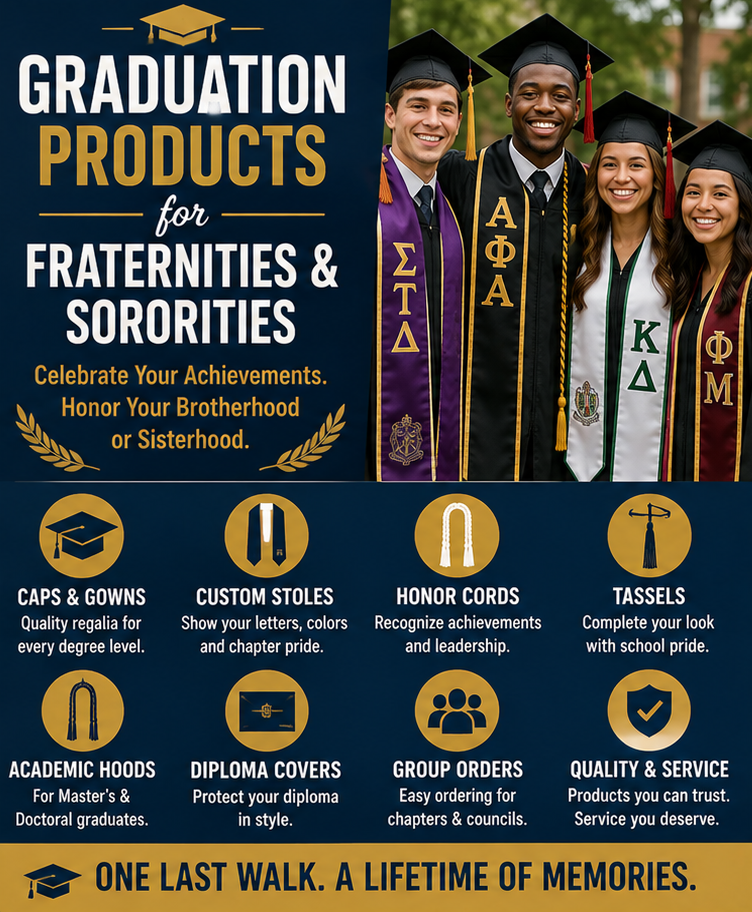
Cap and Gown Outlet is an independent commercial supplier of graduation apparel, academic regalia and educational recognition products for individuals, schools, educational organizations, groups and qualifying institutional purchasers. Relevant product categories can include graduation bachelors gowns, mortarboard caps, tassels, certificate covers, diploma covers, graduation stoles, honor cords, achievement cords, bachelor’s regalia, master’s regalia, doctoral regalia, academic hoods and related graduation merchandise. Federal education and government purchasers can evaluate available products according to their actual program requirements, institutional approvals, product specifications, quantities, sizes, purchasing procedures and delivery needs.Potential Institutional Ordering Capabilities
- Individual graduation products
- Small-group orders
- Bulk graduation orders
- No minimum quantity where applicable
- Multiple gown sizes
- Extended sizes where available
- Multiple gown colors
- Matte and shiny options where available
- Mortarboard caps
- Graduation tassels
- Certificate covers
- Diploma covers
- Graduation stoles
- Honor and achievement cords
- Bachelor’s regalia
- Master’s regalia
- Doctoral regalia
- Academic hoods
- Formal institutional quotations
- Institutional and volume pricing
- Nationwide U.S. shipping
- Fast processing for qualifying stocked merchandise
- Expedited shipping where available