Purchasing graduation regalia for a public school district involves more than selecting caps and gowns. District procurement teams may need to coordinate product specifications, student sizing, multiple high schools, institutional quotations, competitive purchasing requirements, purchase orders, custom merchandise, shipping and final delivery deadlines.
A structured graduation elementary regalia procurement process for public school districts can help administrators compare suppliers more accurately, control total costs and reduce problems as commencement approaches.
This guide explains how purchasing departments, business administrators, graduation coordinators and public schools can organize an institutional graduation order from initial planning through final receiving.
1. Identify the Purchasing Organization
Before requesting quotations, determine which organization will actually make the purchase. The purchaser might be:- A public school district
- An individual public high school
- A regional school district
- A career and technical school district
- An adult education program
- An alternative education program
- A state or local education agency
- Another authorized public education organization
2. Determine Whether the Purchase Will Be Centralized
A district operating several high schools can decide whether each school will order independently or whether the purchasing department will consolidate graduation requirements.A Centralized Procurement May Help With:
- Combining purchasing volume
- Standardizing supplier quotations
- Comparing district-wide costs
- Coordinating contract terms
- Maintaining consistent documentation
- Managing annual purchasing records
- Coordinating deliveries
3. Establish the Expected Number of Graduates
Begin with an estimated graduate count for every participating school or program. Early estimates can be used for budgeting and preliminary supplier discussions. Final quantities can be updated as commencement eligibility becomes clearer.For Each School, Record:
- Estimated graduating class
- Expected cap-and-gown quantity
- Potential replacement quantity
- Diploma-cover quantity
- Honor-cord quantity
- Stole quantity
- Other graduation accessories
4. Create a Written Graduation Regalia Specification
One of the most important procurement steps is defining exactly what the district wants suppliers to quote. A vague request for “500 graduation gowns” can produce quotations for products that differ significantly.A Strong Specification Can Identify:
- Gown style
- Gown color
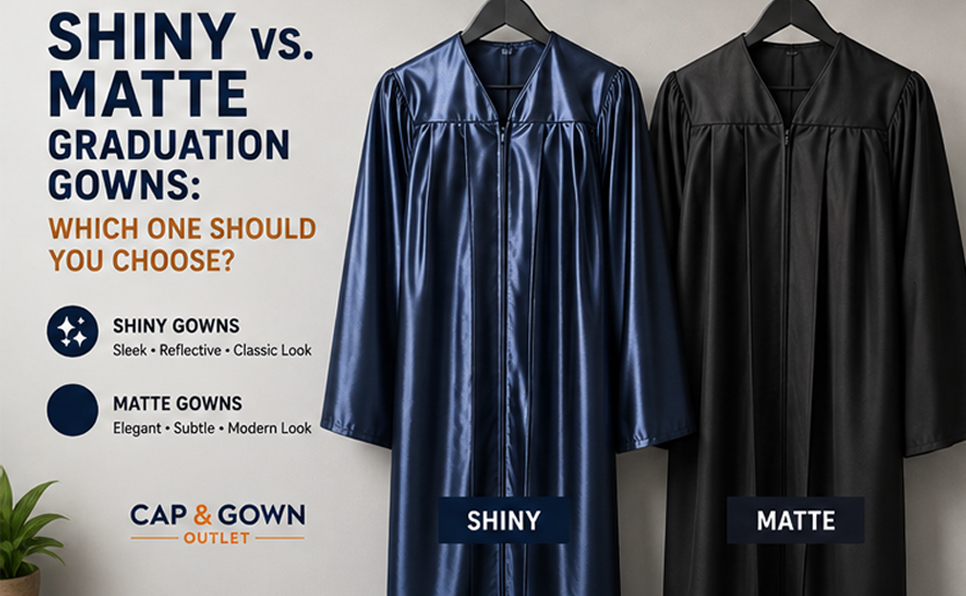
- Matte or shiny finish
- Required size range
- Extended-size requirements
- Mortarboard specifications
- Cap color
- Tassel color
- Graduation-year charm requirements
- Diploma-cover specifications
- Honor cords
- Graduation stoles
- Custom products
- Packaging requirements
- Required delivery dates
5. Separate Required Products From Optional Accessories
Not every graduate necessarily receives every graduation accessory. Separating core products from optional recognition items makes quantity planning and budget analysis easier.Core Graduation Products Might Include:
- Graduation gown
- Mortarboard cap
- Tassel
- Diploma or certificate cover
Additional Recognition Products Might Include:
- Honor cords
- Achievement cords
- Graduation stoles
- Program-specific accessories
- Customized recognition products
6. Specify Whether the District Wants Sets or Individual Components
Some suppliers offer complete cap, gown and tassel packages. Others may quote each component separately. The district should specify whether it wants:- Gown only
- Cap only
- Tassel only
- Cap and gown
- Cap, gown and tassel set
- Individual replacement products
7. Use Product-Specific Graduation Gown Sizing
Graduation gowns should be ordered according to the sizing system for the specific product selected. Do not assume ordinary clothing sizes automatically correspond to graduation gown sizes.A Practical Sizing Process Is:
- Identify the proposed gown
- Obtain its current size chart
- Provide sizing instructions to participating schools
- Collect required sizing information
- Convert responses into quantities by size
- Identify extended-size requirements
- Verify inventory across the complete size distribution
8. Protect Student Information During Sizing
A commercial supplier generally does not need unrelated educational records simply to fulfill a bulk gown order. Where district procedures permit, purchasing teams can provide aggregate quantities by size rather than unnecessary personally identifying student information.For Example:
- Gown Size A — 82
- Gown Size B — 146
- Gown Size C — 191
- Gown Size D — 154
- Gown Size E — 76
- Extended Sizes — 18
9. Verify Extended Sizes Before Award or Purchase
Large overall inventory does not guarantee that every required size is available. A supplier may have sufficient total gowns but limited inventory in a particular extended size or color. Districts should therefore confirm availability across the complete size distribution before finalizing the purchase.10. Define Graduation Gown Color and Finish
Public schools may use established commencement colors or other locally approved specifications.The Procurement Document Can Specify:
- Exact gown color
- Matte or shiny finish
- Matching cap color
- Whether different schools require different colors
- Whether replacement merchandise must match existing inventory
11. Specify Tassels Carefully
Tassels can create avoidable ordering problems when their details are not included in the procurement specification.Identify:
- Tassel color
- Quantity
- Dated or undated design
- Graduation-year charm
- Whether tassels are included in sets
- School-specific color differences
12. Consider the Inventory Risk of Dated Merchandise
Standard gowns and mortarboards may potentially be used for future ceremonies if specifications remain unchanged. Year-specific tassels and customized dated products have less flexibility. Districts can therefore establish different backup quantities for reusable and dated merchandise.13. Develop Diploma-Cover Specifications
Diploma and certificate covers should be treated as their own procurement category.Specifications Can Include:
- Document dimensions
- Cover dimensions
- Portrait or landscape orientation
- Cover color
- Interior configuration
- Blank or customized design
- Quantity
14. Distinguish Blank and Custom Diploma Covers
Blank diploma covers may offer flexibility across schools or future ceremonies when document dimensions are compatible. Customized covers can incorporate authorized school names, district names or approved artwork but may require additional production time, setup, minimum quantities or proof approval.15. Establish Rules for Logos and School Branding
School names, district logos, mascots, seals and other protected artwork should only be reproduced with appropriate authorization. Procurement documents for customized merchandise should identify:- Approved artwork
- Authorized colors
- Decoration location
- Proof requirements
- Who has authority to approve the final design
16. Define Honor Cord Requirements
Honor cords may recognize academic achievement, student organizations or other locally approved accomplishments. The district or school should determine the meaning of each cord. Commercial color descriptions should not be treated as universal academic standards.Specify:
- Single, double or intertwined configuration
- Color or color combination
- Quantity
- Length or style where applicable
- Eligibility established by the school
17. Define Graduation Stole Requirements
Graduation stoles can also be included as separate procurement line items.Specifications May Address:
- Plain stoles
- Trimmed stoles
- Honor stoles
- Program stoles
- Custom stoles
- Colors
- Decoration
- Quantities
18. Create a Bill of Materials for Every School
Instead of relying only on graduate count, prepare a detailed bill of materials.Example:
- 650 graduation gowns
- 650 mortarboard caps
- 650 tassels
- 625 diploma covers
- 145 single honor cords
- 48 double honor cords
- 72 graduation stoles
- 15 replacement gowns
- 20 replacement caps
19. Consolidate Multiple Schools Into a District Procurement Matrix
Districts operating several high schools can combine each school’s bill of materials into one purchasing matrix.Useful Fields Include:
- School name
- Item description
- Product specification
- Color
- Size
- Quantity
- Unit price
- Extended price
- Stock or custom
- Required delivery date
- Delivery destination
20. Decide Whether Samples Are Needed
Samples may be useful when the district is evaluating a new supplier, changing gown specifications or conducting a formal solicitation.If Samples Are Required, State:
- Which products must be submitted
- Quantity of samples
- Due date
- Labeling requirements
- Evaluation criteria
- Whether samples will be returned
21. Prepare a Detailed Request for Quote
A well-designed graduation regalia RFQ helps suppliers submit comparable pricing.The RFQ Can Include:
- District information
- Participating schools
- Product specifications
- Quantities
- Size distribution
- Colors
- Accessories
- Custom requirements
- Samples if required
- Packaging requirements
- Shipping destinations
- Delivery deadline
- Quote submission instructions
22. Request Line-Item Pricing
Line-item pricing can help purchasing departments understand exactly what the district is paying for each component.Potential Pricing Lines Include:
- Graduation gown
- Mortarboard cap
- Tassel
- Cap, gown and tassel package
- Diploma cover
- Single honor cord
- Double honor cord
- Intertwined honor cord
- Plain graduation stole
- Trimmed stole
- Custom stole
- Replacement gown
- Replacement cap
23. Clarify Whether Shipping Must Be Included
A solicitation should clearly state whether suppliers must include shipping in their unit prices, provide shipping as a separate line item or quote a complete delivered price. This prevents one vendor’s freight-inclusive pricing from being compared incorrectly with another vendor’s product-only pricing.24. Compare Total Delivered Cost
Unit price is only one part of the procurement decision.Total Delivered Cost May Include:
- Merchandise
- Extended-size charges
- Customization
- Artwork or setup charges
- Packaging
- Freight
- Split shipments
- Multiple destinations
- Other disclosed transaction charges
25. Ask for Institutional or Volume Pricing
Districts purchasing substantial quantities can ask whether institutional or volume pricing is available. Pricing may depend on quantity, product selection, colors, sizes, customization, inventory, packaging and delivery requirements.26. Determine the Required Procurement Method
Public school districts should follow applicable state law, board policy and local purchasing procedures.Depending on the Transaction, Procurement May Involve:
- Direct purchasing where permitted
- Informal quotation
- Multiple quotations
- Request for quotation
- Invitation for bid
- Request for proposal
- Cooperative purchasing
- An existing authorized contract
- Another approved procurement method
27. Understand RFQ, IFB and RFP Differences
Although terminology varies by organization, an RFQ is commonly used when specifications are reasonably clear and the purchaser needs pricing. An invitation for bid may be used for formal competitive bidding, while an RFP can evaluate broader technical, service or qualitative considerations in addition to price. The district should use the procurement method required by its governing rules rather than selecting a method based solely on convenience.28. Define the Basis of Award
If the district conducts a competitive solicitation, the documents should explain how the award will be determined under applicable procurement rules. For example, the district may need to determine whether products will be evaluated as:- One complete graduation package
- Separate product groups
- Individual line items
- School-specific groups
- Another defined award structure
29. Identify Acceptable Product Equivalents
When specifications reference particular characteristics, the district should clearly communicate whether equivalent products are acceptable and how equivalency will be evaluated.Relevant Characteristics Can Include:
- Fabric
- Finish
- Construction
- Color
- Size range
- Package contents
- Accessory design
30. Confirm Vendor Registration Requirements
Many districts require suppliers to complete a vendor-registration process before receiving a purchase order or contract.Potential Documentation May Include:
- Business information
- Tax documentation
- Vendor certifications
- Conflict-of-interest disclosures
- Electronic payment information
- Procurement certifications
- Insurance documentation where required
- Other district-specific forms
31. Confirm Insurance Requirements at the Correct Stage
Insurance requirements vary by solicitation and district. Some procurements may require evidence with the bid, while others may require a certificate before contract execution or performance. Suppliers should review the actual solicitation rather than assuming insurance can always be provided after award.32. Review Bond Requirements Separately
Bid, performance or payment bonds should only be treated as required when the applicable solicitation or purchasing rules require them. Graduation merchandise procurements should be reviewed individually because requirements can differ substantially among public entities.33. Confirm Purchase Order Acceptance
Many school districts prefer or require purchase orders. Supplier PO acceptance, however, may depend on the transaction. Before issuing a purchase order, confirm:- Whether POs are accepted
- Applicable payment terms
- Billing information
- Required purchasing documentation
- Where the PO should be submitted
34. Do Not Assume Contract or Approved-Vendor Status
A company that sells graduation merchandise to schools is not automatically an approved government vendor, awarded contractor or preferred school-district supplier. Those descriptions should only be used when the corresponding status has actually been established.35. Verify Inventory Before Final Award or Order
Availability should be checked across the entire required order.Confirm:
- All gown sizes
- Extended sizes
- Every required color
- Caps
- Tassels
- Diploma covers
- Honor cords
- Stoles
- Replacement merchandise
36. Separate Stocked and Custom Products
A district order may contain products with very different fulfillment timelines.Potential Stock Merchandise:
- Standard graduation gowns
- Mortarboards
- Standard tassels
- Selected honor cords
- Selected diploma covers
Potential Custom Merchandise:
- Printed graduation stoles
- Customized diploma covers
- Special tassels
- Special-order colors
- Other personalized products
37. Distinguish Processing Time From Shipping Time
Processing and transportation are separate parts of the fulfillment schedule. An expedited carrier service may shorten transit for qualifying merchandise, but it does not automatically shorten:- Procurement approval
- Artwork preparation
- Proof approval
- Custom production
- Supplier processing
38. Build the Procurement Calendar Backward From Commencement
Start with the ceremony date and work backward.Include Time For:
- Graduate-count forecasting
- Budget development
- Specification approval
- Supplier research
- RFQ, bid or RFP preparation
- Supplier response period
- Evaluation
- Approval or award
- Vendor onboarding
- Purchase-order processing
- Final sizing
- Artwork approval
- Custom production
- Order processing
- Transportation
- District receiving
- Campus distribution
- Inspection
- Replacement orders
39. Plan Multi-School Distribution Before Ordering
A district should determine whether products will be delivered to a central warehouse or directly to individual schools.Possible Delivery Structures Include:
- One district warehouse
- Central purchasing office
- Individual high schools
- Multiple district facilities
- Another approved commercial receiving location
40. Include School-Level Allocation Instructions
For multi-campus purchasing, provide the supplier with a detailed allocation.For Each Destination, Include:
- School name
- Shipping address
- Contact information permitted by district policy
- Gown quantities by size
- Cap quantity
- Tassel quantity and color
- Diploma covers
- Cords
- Stoles
- Required arrival date
41. Specify Special Packaging in Advance
If the district wants cartons separated, labeled or packed by school, those requirements should appear in the original quote request. Special sorting and packaging can affect supplier operations and potentially cost, so they should not be introduced after pricing has been finalized.42. Inspect Merchandise Immediately After Receiving
Districts should not wait until commencement week to open and inspect graduation shipments.Receiving Staff Should Check:
- Carton count
- Product quantities
- Gown colors
- Size distribution
- Caps
- Tassels
- Diploma covers
- Cords
- Stoles
- Custom artwork
- Visible shipping damage
43. Establish a Replacement Order Procedure
Even well-planned district orders may need last-minute adjustments.Replacement Needs Can Result From:
- Late graduating students
- Changes in eligibility
- Incorrect sizing
- Damaged products
- Lost caps
- Missing tassels
- Transfer students
44. Evaluate Supplier Performance After Graduation
Procurement does not have to end when commencement is over.Districts Can Review:
- Product quality
- Specification compliance
- Size accuracy
- Inventory availability
- Quote accuracy
- Order accuracy
- Delivery performance
- Custom product accuracy
- Replacement-order performance
- Final delivered cost
45. Preserve Data for Next Year’s Procurement
Graduation is a recurring event, so the previous year’s purchasing data can become valuable forecasting information.Maintain Records Of:
- Number of graduates
- Size distribution
- Product specifications
- Quantities ordered
- Quantities actually used
- Unused reusable inventory
- Unused dated inventory
- Replacement orders
- Pricing
- Shipping costs
- Delivery dates
- Supplier performance
Public School District Graduation Procurement Checklist
- Identify the legal purchasing organization
- Identify participating schools
- Estimate graduate counts
- Determine centralized or decentralized purchasing
- Define graduation gown specifications
- Confirm colors and finishes
- Select the proposed gown
- Obtain the product-specific size chart
- Collect sizing information
- Create quantities by size
- Identify extended sizes
- Specify caps
- Specify tassels
- Determine dated merchandise requirements
- Specify diploma or certificate covers
- Specify honor cords
- Specify graduation stoles
- Identify custom products
- Confirm authorization for school branding
- Create a bill of materials for each school
- Determine replacement inventory
- Decide whether samples are required
- Prepare detailed RFQ or solicitation specifications
- Request line-item pricing where appropriate
- Define shipping-price requirements
- Compare total delivered cost
- Ask about institutional pricing
- Determine the required procurement method
- Define the basis of award where applicable
- Complete required vendor registration
- Review insurance requirements
- Review bond requirements if applicable
- Confirm purchase-order acceptance if required
- Verify complete inventory
- Separate stocked and custom merchandise
- Establish artwork deadlines
- Build the schedule backward from graduation
- Determine delivery destinations
- Prepare school-level allocations
- Specify special packaging
- Inspect products promptly
- Handle replacements
- Document supplier performance
- Preserve purchasing data for the following year
Questions Procurement Teams Should Ask Graduation Regalia Vendors
- Which graduation gown styles are currently available?
- What colors are available?
- What size chart applies to the proposed gown?
- Are extended sizes available?
- Can gowns, caps and tassels be purchased separately?
- What is included in a complete graduation set?
- Can replacement products be purchased individually?
- Are dated and undated tassels available?
- What diploma-cover sizes are available?
- What honor cord configurations are available?
- What graduation stole options are available?
- Can authorized custom merchandise be produced?
- What minimum quantities apply to custom products?
- Can product samples be supplied if required?
- Can a formal institutional quote be provided?
- Can pricing be provided by line item?
- Is institutional or volume pricing available?
- Which products are stocked?
- Which products require production?
- What processing times apply?
- What shipping options are available?
- Can shipping be quoted separately?
- Can multiple schools receive separate shipments?
- Can cartons be labeled by school?
- Are purchase orders accepted for qualifying transactions?
- What documentation is required to establish institutional purchasing terms?
Cap and Gown Outlet as an Institutional Graduation Regalia Supplier
Cap and Gown Outlet is an independent academic regalia supplier that can be evaluated by public schools, school districts, career and technical education programs, adult education organizations and other qualifying institutional purchasers. Available product categories may include graduation gowns, mortarboard caps, tassels, diploma covers, certificate covers, honor cords, achievement cords, graduation stoles and other graduation accessories.Potential Cap and Gown Outlet Institutional Capabilities
- Individual products
- Small school orders
- Bulk graduation quantities
- No minimum quantity where applicable
- Multiple gown sizes
- Extended sizes where available
- Multiple colors
- Matte and shiny gown options where available
- Mortarboard caps
- Graduation tassels
- Diploma and certificate covers
- Honor and achievement cords
- Graduation stoles
- Authorized custom products where available
- Formal institutional quotations
- Institutional or volume pricing
- Nationwide U.S. shipping
- Fast processing for qualifying stocked merchandise
- Expedited shipping options where available