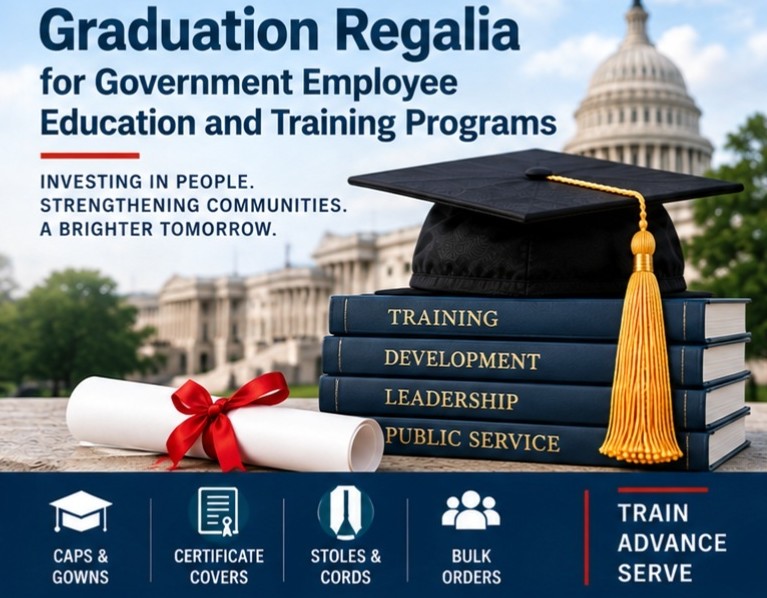
Veterans pursue education and career training through colleges, universities, technical schools, apprenticeship programs, workforce organizations, vocational programs and other education and training providers. When participants complete these programs, organizations may recognize their achievements through commencement ceremonies, certificate presentations, workforce recognition events or other completion ceremonies.
Graduation regalia for veterans education and training programs can include graduation Bachelors gowns, mortarboard caps, tassels, certificate and diploma covers, graduation stoles, recognition cords and academic regalia appropriate to the credential being awarded.
The right products depend on the actual achievement being recognized. A veteran earning a bachelor’s degree may have different regalia requirements from someone completing an apprenticeship, technical certificate, occupational training program or other non-degree credential.
Veterans Education Includes Many Different Pathways
Veterans can pursue education and training through a wide range of programs. Depending on the institution and individual program, these may include:- Undergraduate degree programs
- Graduate degree programs
- Community college programs
- Technical and vocational education
- Non-college degree programs
- Certificate programs
- Occupational skills training
- Apprenticeships
- On-the-job training
- Career and technical education
- Licensing and certification preparation
- High-technology training
- Workforce development programs
- Entrepreneurship training
- Other qualifying education and career pathways
Start With the Credential Being Awarded
Before purchasing graduation merchandise, determine what the participant actually earned. The ceremony might recognize:- Associate degree
- Bachelor’s degree
- Master’s degree
- Doctoral degree
- College certificate
- Technical certificate
- Vocational certificate
- Occupational credential
- Apprenticeship completion
- Industry certification
- Workforce training completion
- Other institution-defined achievement
Four Recognition Formats for Veterans Education Programs
1. Traditional Academic Commencement
When a veteran earns an academic degree, the degree-granting institution normally establishes the applicable commencement requirements. A ceremony package may include:- Academic gown
- Mortarboard or approved headwear
- Tassel
- Academic hood when required
- Approved stole or cord
- Diploma cover
2. Career and Technical Training Graduation
A vocational or technical program may choose a graduation-style presentation consisting of:- Graduation gown
- Mortarboard
- Tassel
- Certificate cover
- Optional recognition stole or cord
3. Certificate Recognition Ceremony
Programs that do not use traditional academic regalia may choose a simpler recognition format:- Completion certificate
- Certificate cover
- Optional stole
- Optional recognition cord
4. Workforce Achievement Ceremony
Career transition and occupational training organizations may design a formal recognition ceremony around the actual workforce milestone achieved. This can include gowns or other graduation products when appropriate without presenting a non-degree accomplishment as an academic degree.Graduation Gowns for Veterans Programs
A standard graduation gown can create a coordinated appearance for participants completing the same education or training program. Organizations should consider:- Credential level
- Institutional requirements
- Gown style
- Gown color
- Matte or shiny finish
- Fabric and construction
- Available sizes
- Extended sizes
- Quantity required
- Existing ceremony inventory
There Is No Universal Veterans Graduation Gown
Veteran status does not create one universal gown style or color. The appropriate gown should follow the requirements of the institution or organization awarding the degree, certificate or other recognition.Academic Degree Regalia for Veterans
Veterans earning degrees from colleges and universities should follow the commencement requirements of their degree-granting institution. Degree level can affect the gown, hood and other academic dress requirements. Students should verify their school’s specifications before purchasing outside regalia.Bachelor’s Regalia
A bachelor’s graduation package commonly includes a bachelor’s gown, mortarboard and tassel, although exact requirements vary by institution. Additional accessories such as stoles, cords or hoods should only be used when permitted or required by the institution.Master’s Regalia
Master’s degree regalia typically differs from bachelor’s apparel in gown construction and often includes an academic hood. The institution should determine the required gown, hood specifications, colors and approved accessories.Doctoral Regalia
Doctoral regalia can include a doctoral gown, academic hood and approved doctoral headwear such as a tam or mortarboard. Because doctoral specifications can vary considerably among institutions, graduates should verify requirements before purchasing.Academic Hoods Should Match the Credential
An academic hood should not automatically be added simply because a veteran completed advanced occupational or technical training. Academic hood requirements should correspond to the academic credential and the specifications of the degree-granting institution.Veterans Completing Technical and Vocational Programs
Veterans may pursue career-focused education in fields such as skilled trades, transportation, emergency services, technology and other occupations. Depending on the program, completion may result in a certificate, diploma, occupational credential or another defined achievement. A training provider can design its recognition ceremony around that specific accomplishment.Apprenticeship Completion Ceremonies
Veterans participating in apprenticeship programs may complete structured workplace and instructional requirements leading to an apprenticeship credential. Organizations recognizing apprenticeship completion can consider:- Graduation gown
- Mortarboard and tassel
- Certificate cover
- Program-approved stole
- Recognition cord
On-the-Job Training Recognition
Completion of an on-the-job training program is different from earning a college degree. Organizations may recognize completion through certificates, covers or other ceremony products while accurately describing the participant’s achievement.GI Bill Benefits and Graduation Regalia Are Separate Issues
Veterans may use eligible VA education benefits for approved education and training programs. However, participation in a program supported by GI Bill benefits does not by itself establish that graduation gowns, stoles, cords or other ceremony merchandise are covered expenses. Participants and organizations should verify applicable benefit rules, institutional requirements and funding policies rather than assuming graduation merchandise is reimbursable.VA Program Approval Does Not Mean Regalia Is VA Approved
An education or training program’s eligibility for VA education benefits should not be confused with approval of a particular graduation supplier or graduation product. Graduation merchandise should not be advertised as VA-approved merely because it is purchased for participants attending a VA-approved education or training program.Certificate Covers for Veterans Training Programs
Certificate presentation can be especially important for technical, vocational, apprenticeship and workforce programs. Before ordering covers, verify:- Document width
- Document height
- Portrait or landscape orientation
- Cover dimensions
- Cover color
- Quantity
- Blank or customized design
Measure the Actual Credential
College diplomas, technical certificates, apprenticeship credentials and workforce completion documents may use different dimensions. Measure the actual document or obtain its specifications before selecting covers.Graduation Stoles for Veteran Recognition
Some institutions permit veterans to wear a stole or other accessory recognizing military service during commencement. Whether a veteran stole is permitted, required or prohibited depends on the institution’s commencement policies. Students should verify those requirements before purchasing or wearing an additional stole.Veteran Recognition Should Remain Separate From Academic Honors
A stole recognizing veteran status and a stole representing an academic honor are not necessarily the same thing. Organizations should clearly define the meaning of each accessory used during the ceremony.Recognition Cords
Organizations may establish approved cord categories for achievements such as:- Academic achievement
- Leadership
- Service
- Program excellence
- Technical achievement
- Multiple credentials
- Other institution-defined recognition
Military Branch Colors and Symbols
Organizations should not assume that military branch colors, insignia, seals or other marks can automatically be reproduced on graduation merchandise. Any protected military, federal agency, school, program or organizational branding should only be reproduced with appropriate authorization.Veteran Students at Colleges and Universities
Colleges and universities may serve veterans alongside other students within the same academic programs. In these situations, academic regalia should generally follow the institution’s requirements for the degree being awarded. Veteran recognition can be incorporated separately when permitted by institutional policy.Community College Veteran Programs
Community colleges can serve veterans through degree, certificate, workforce and technical programs. A single commencement may therefore include several different credential types. Purchasing teams should distinguish between:- Degree regalia
- Certificate recognition merchandise
- Workforce completion supplies
- Veteran recognition accessories
Veterans Workforce Development Programs
Veterans may also participate in employment and workforce development programs designed to support civilian career transitions, occupational training and employment preparation. Recognition ceremonies for these programs should identify the actual training or employment milestone rather than implying an academic credential that was not awarded.Career Transition and Skills Training
Career training programs may recognize completion of occupational skills, technical instruction, licensing preparation or another defined curriculum. Depending on the program, a ceremony package might include:- Graduation gown
- Mortarboard
- Tassel
- Certificate cover
- Program-approved stole
- Recognition cord
Create a Credential-to-Regalia Matrix
Organizations serving veterans across several programs can create a planning matrix before requesting pricing. For each program, record:- Program name
- Credential awarded
- Awarding institution
- Number of completers
- Gown type
- Gown sizes
- Headwear
- Tassel specification
- Academic hood requirements
- Certificate or diploma cover size
- Approved stole
- Approved cords
- Required arrival date
Use Product-Level Quantities
Do not assume every participant needs every item. For example, an event could require:- 200 participants
- 150 gowns
- 150 mortarboards
- 150 tassels
- 200 certificate covers
- 75 recognition stoles
- 35 cords
- Academic hoods only for the applicable degree recipients
Graduation Gown Sizing
Use the sizing chart for the exact gown being ordered rather than relying solely on ordinary clothing sizes. A practical institutional process includes:- Selecting the gown first
- Obtaining the current product-specific size chart
- Collecting required participant sizing information
- Assigning sizes
- Identifying extended sizes
- Reviewing the size distribution
- Calculating final quantities by size
Plan Extended Sizes With the Main Order
Extended-size requirements should be identified early rather than handled only after the primary order is submitted. Before standardizing a gown for a large group, confirm that its available size range can serve the expected participants.Inventory Existing Regalia
Organizations conducting recurring ceremonies should count usable merchandise already on hand. Track:- Gowns by style and size
- Extended sizes
- Mortarboards
- Dated tassels
- Undated tassels
- Academic hoods
- Certificate covers
- Diploma covers
- Plain stoles
- Customized stoles
- Recognition cords
Be Conservative With Dated and Customized Inventory
Standard merchandise may have greater future flexibility than year-specific or highly customized products. Programs should consider likely future usability when establishing backup quantities.Prepare Institutional Product Specifications
Schools, training providers, workforce organizations and government purchasers can obtain more comparable quotations by preparing detailed specifications. Include:- Product type
- Credential level
- Gown style
- Color
- Finish
- Quantities by size
- Extended sizes
- Mortarboard specifications
- Tassel specifications
- Academic hood requirements
- Certificate or diploma-cover dimensions
- Stole requirements
- Cord requirements
- Customization
- Delivery destination
- Required arrival date
Request Line-Item Pricing
Itemized pricing can help institutional buyers compare products and modify quantities. Potential line items include:- Bachelor gown
- Master gown
- Doctoral gown
- Standard graduation gown
- Mortarboard
- Doctoral tam where applicable
- Tassel
- Academic hood
- Certificate cover
- Diploma cover
- Plain stole
- Customized stole
- Single cord
- Double cord
- Customization charges
- Shipping or freight
Compare Equivalent Products
Institutional buyers should compare equivalent specifications rather than price alone. Review:- Fabric
- Construction
- Color
- Finish
- Size range
- Extended sizes
- Package contents
- Academic specifications
- Accessories
- Customization
- Processing requirements
- Delivery terms
Evaluate Total Delivered Cost
The total institutional cost may include merchandise, customization, setup charges, special packaging, freight and multiple-location delivery. Comparing the complete delivered requirement can provide a clearer purchasing picture than comparing one advertised unit price.Government and Institutional Purchasing
A veterans education or training initiative may involve a federal agency, state agency, college, university, workforce organization, nonprofit provider, training institution or another entity. The organization delivering the program is not necessarily the organization legally making the purchase.Identify the Legal Purchaser
Before preparing an institutional order, determine which entity will issue the purchase. Possible purchasers may include:- College or university
- Community college
- Technical institution
- Government agency
- Workforce organization
- Nonprofit organization
- Training provider
- Program operator
- Another authorized purchaser
Possible Purchasing Methods
Depending on the purchaser and applicable requirements, an institutional transaction may involve:- Authorized direct purchasing
- Price quotations
- Requests for quotations
- Competitive solicitations
- Purchase orders
- Purchasing cards
- Existing contracts
- Other authorized procurement methods
Vendor Registration May Be Required
Some government and institutional purchasers require supplier registration or onboarding before issuing an order. The exact requirements depend on the purchasing organization and transaction.Purchase Orders Should Be Confirmed in Advance
If an organization intends to use a purchase order, it should confirm that the supplier accepts POs for the proposed transaction and review applicable payment terms before issuance. PO acceptance does not by itself establish VA-approved, government-contract, preferred-vendor or approved-supplier status.Do Not Assume Veterans Benefits Pay for Ceremony Merchandise
Eligibility for VA education benefits or participation in a VA-approved education or training program does not automatically establish that graduation regalia is a covered or reimbursable expense. The responsible student, institution or program should verify applicable benefit, funding and purchasing requirements.VA-Approved Training and Supplier Status Are Different
Education and training programs may undergo processes related to eligibility for VA education benefits. That status should not be used to imply that a graduation merchandise supplier is approved, endorsed or contracted by the Department of Veterans Affairs.Custom Branding Requires Authorization
VA marks, U.S. military seals and insignia, government agency logos, college marks, program logos and other protected branding should only be reproduced when the purchaser has appropriate authorization. Customization capability does not itself provide permission to reproduce protected marks.Verify Inventory for Large Orders
Institutional buyers should verify availability for the complete quantity and size distribution before final approval. Check:- Every required gown size
- Extended sizes
- Mortarboards or other required headwear
- Tassels
- Academic hoods
- Certificate and diploma covers
- Stoles
- Cords
Reconfirm Availability After Approval Delays
If substantial time passes between quotation and purchasing authorization, inventory should be checked again before placing the final order.Separate Standard and Customized Product Timelines
Standard stocked merchandise and customized products may have different processing requirements. Customized stoles or other personalized items can require additional time for artwork, authorization, proof approval, production and shipping.Establish a Required Arrival Date
The required delivery date should be earlier than the ceremony date. Allow time for:- Receiving
- Inspection
- Sorting
- Participant distribution
- Fit checks
- Legitimate corrections
Work Backward From the Ceremony
A planning timeline can include:- Ceremony date
- Participant distribution date
- Fit-check period
- Shipment inspection
- Required arrival date
- Carrier transit
- Supplier processing
- Custom production
- Proof approval
- Procurement authorization
- Final participant count
- Final sizing deadline
Inspect Institutional Shipments Promptly
After delivery, verify:- Carton count
- Total quantities
- Gown styles
- Gown sizes
- Extended sizes
- Colors and finishes
- Caps or tams
- Tassels
- Academic hoods
- Certificate and diploma covers
- Stoles
- Cords
- Customized merchandise
- Visible shipping damage
Distribute Regalia Before Ceremony Day
Early distribution gives participants time to confirm fit and package contents while staff still have time to address legitimate issues.Maintain Records for Future Veterans Ceremonies
Recurring programs can improve future purchasing by documenting:- Projected participants
- Confirmed completers
- Actual ceremony participants
- Gown sizes used
- Extended-size demand
- Academic hood requirements
- Size exchanges
- Late additions
- Supplemental orders
- Unused standard inventory
- Unused customized merchandise
- Delivery issues
Veterans Education and Training Graduation Checklist
- Identify the education or training program
- Identify the credential being awarded
- Identify the credential-granting organization
- Determine whether academic regalia requirements apply
- Select the ceremony format
- Separate degree regalia from workforce recognition
- Select gown style and color
- Confirm gown sizing requirements
- Identify extended sizes
- Select appropriate headwear
- Select tassels
- Determine whether academic hoods are required
- Measure certificates and diplomas
- Select appropriate covers
- Establish stole criteria
- Establish cord criteria
- Verify institutional rules for veteran recognition accessories
- Confirm authorization for custom branding
- Count existing inventory
- Calculate quantities by product
- Identify the legal purchaser
- Follow applicable purchasing procedures
- Prepare detailed product specifications
- Request institutional pricing
- Compare equivalent merchandise
- Evaluate total delivered cost
- Complete vendor onboarding when required
- Confirm PO acceptance when applicable
- Verify inventory for institutional quantities
- Plan custom products early
- Set a required arrival date
- Inspect shipments promptly
- Distribute regalia before the ceremony
- Document remaining inventory afterward
Graduation Products for Veterans Education and Training Programs
Cap and Gown Outlet is an independent academic regalia supplier offering graduation and recognition products for individuals and qualifying institutional purchasers. Products that veterans education and training organizations may consider include:- Bachelor’s graduation regalia
- Master’s graduation regalia
- Doctoral graduation regalia
- Standard graduation gowns
- Mortarboard caps
- Doctoral tams where appropriate
- Graduation tassels
- Academic hoods
- Certificate covers
- Diploma covers
- Plain graduation stoles
- Customized stoles where available and authorized
- Recognition and honor cords
- Related graduation accessories