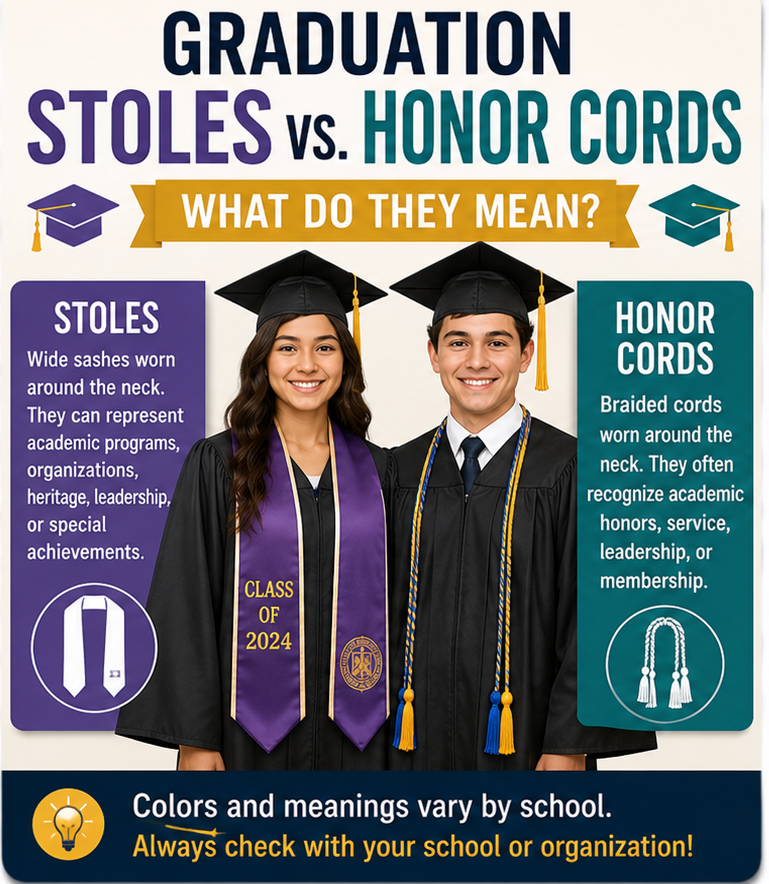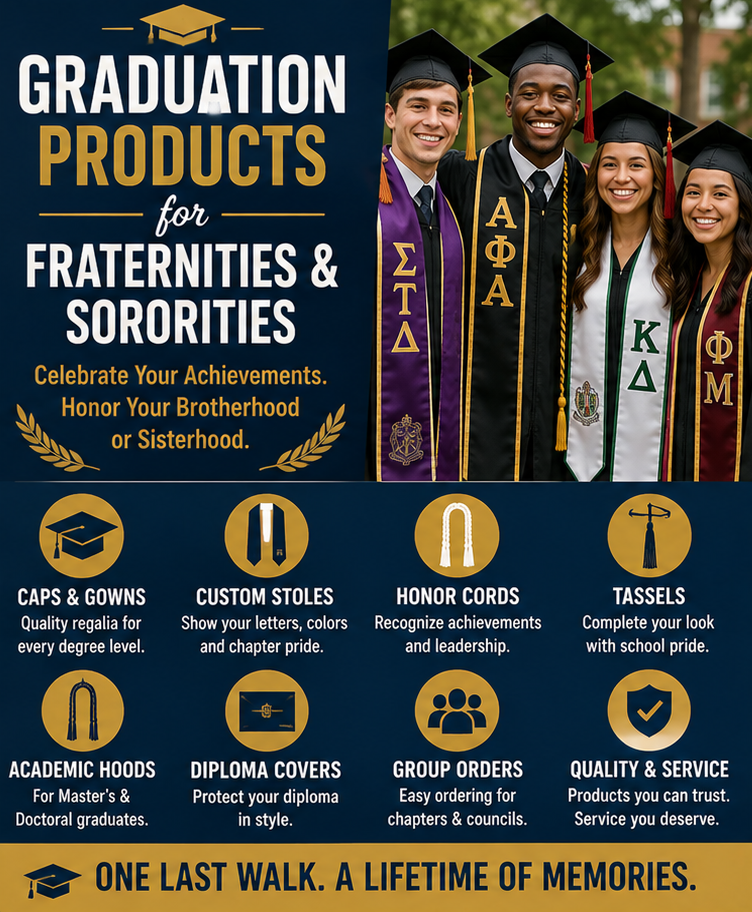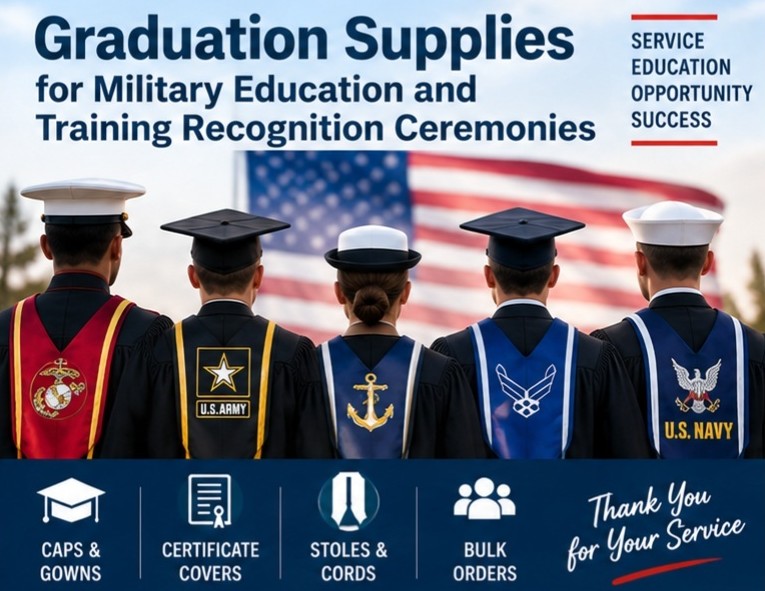
Education, technical instruction and professional training can play an important role throughout military service and during transitions into new career opportunities. When service members or other eligible participants complete an education or training milestone, organizations may choose to recognize that accomplishment through a graduation, certificate presentation or formal recognition ceremony.
Graduation supplies for military education and training recognition ceremonies can include graduation Bachelors gowns, mortarboard caps, tassels, certificate covers, diploma covers, graduation stoles, recognition cords and academic regalia when appropriate to the credential being awarded.
The appropriate merchandise depends on the actual accomplishment. Completion of occupational training, an apprenticeship, a certificate program and an academic degree are different achievements and should not automatically use identical regalia.
Start With the Achievement Being Recognized
Before selecting graduation merchandise, ceremony organizers should identify exactly what participants completed. A recognition event might involve:- Academic degree completion
- College certificate completion
- Technical education
- Occupational skills training
- Career development training
- Apprenticeship completion
- On-the-job training
- Professional education
- Licensing or certification preparation
- Leadership development
- Transition or workforce training
- Other organization-defined education or training milestones
Military Status and Academic Credentials Are Different
A participant’s military status should be distinguished from the education or training credential being awarded. For example, a service member earning a bachelor’s degree should generally follow the academic-regalia requirements established by the degree-granting institution. Someone completing occupational or technical training may instead participate in a certificate or workforce recognition ceremony.Four Recognition Ceremony Formats
1. Academic Commencement
When participants earn academic degrees, the degree-granting institution should establish the applicable academic dress. Depending on degree level and institutional requirements, products may include:- Academic gown
- Mortarboard or approved doctoral headwear
- Tassel
- Academic hood when required
- Diploma cover
- Approved recognition accessories
2. Formal Training Graduation
Organizations conducting a graduation-style event for a training program may consider:- Standard graduation gown
- Mortarboard cap
- Tassel
- Certificate cover
- Approved stole
- Recognition cord
3. Certificate Presentation Ceremony
Not every training milestone requires traditional cap-and-gown apparel. A certificate-focused ceremony might use:- Completion certificate
- Certificate cover
- Optional stole
- Optional recognition cord
4. Multi-Achievement Recognition Ceremony
Some organizations may recognize participants completing several types of education or training during the same event. A common base gown can provide a coordinated appearance while certificates and approved accessories distinguish individual achievements.Graduation Gowns for Military Education and Training
When a graduation-style ceremony is appropriate, a standard gown can provide a professional and coordinated appearance. Before selecting a gown, consider:- Type of credential
- Ceremony requirements
- Gown style
- Gown color
- Matte or shiny finish
- Fabric and construction
- Available size range
- Extended sizes
- Expected quantity
- Existing inventory
- Potential use for future ceremonies
There Is No Universal Military Training Graduation Gown
Organizations should not assume that one gown color, style or finish represents every military education or training program. Requirements should be established by the organization conducting the ceremony or, for academic degrees, by the credential-granting institution.Using a Standard Gown Across Several Training Groups
A recognition ceremony may include participants completing different technical or professional programs. Using one standard gown can simplify:- Sizing
- Purchasing
- Inventory management
- Participant distribution
- Supplemental orders
- Future ceremony planning
Graduation Gown Sizing
Institutional buyers should use the sizing chart associated with the exact gown product being purchased. A centralized process can include:- Selecting the gown product
- Obtaining the current size chart
- Establishing a sizing deadline
- Collecting the required sizing information
- Assigning appropriate gown sizes
- Identifying extended-size requirements
- Reviewing incomplete entries
- Calculating final quantities by size
Do Not Rely Solely on Uniform or Clothing Size
Graduation gowns may use sizing systems based on height and other product-specific information. Military uniform size or ordinary clothing size should not automatically be treated as an equivalent graduation gown size. Follow the sizing guidance for the selected gown.Plan Extended Sizes With the Main Order
Extended-size requirements should be identified during the primary sizing process rather than treated only as last-minute additions. For large institutional orders, verify that the selected gown’s complete size range can accommodate the expected participants.Mortarboard Caps
A mortarboard can be paired with a standard graduation gown when the ceremony organizer wants a traditional graduation appearance. Confirm:- Cap style
- Cap color
- Quantity
- Tassel specification
- Whether cap decoration is permitted
- Whether participants retain the caps
Graduation Tassels
Tassels may coordinate with the gown or another organization-approved ceremony design. Options can include:- Single-color tassels
- Two-color tassels
- Dated tassels
- Undated tassels
Dated or Undated Tassels?
Dated tassels can provide a year-specific keepsake, while undated tassels may offer more inventory flexibility for organizations conducting several training ceremonies or maintaining merchandise for future participant groups.Certificate Covers for Training Recognition
For many non-degree education and training programs, the certificate can be the central element of the recognition ceremony. Before ordering certificate covers, verify:- Document width
- Document height
- Portrait or landscape orientation
- Required cover dimensions
- Cover color
- Quantity
- Blank or customized format
Measure the Actual Certificate
Training certificates, academic diplomas, apprenticeship credentials and professional education documents may use different dimensions. Organizations should measure the actual document or obtain its specifications before purchasing covers.Graduation Stoles for Military-Connected Recognition
Stoles can be used when an organization has established an appropriate recognition purpose. Possible organization-defined categories might include:- Training completion
- Academic achievement
- Leadership
- Professional development
- Technical achievement
- Service recognition
- Multiple accomplishments
There Is No Universal Military Training Stole Color
Organizations should not assume that a particular stole color has the same official meaning across all military, educational or training environments. Where stoles are used, their meaning should follow the applicable ceremony requirements.Plain and Customized Stoles
Plain stoles can provide flexibility for recurring recognition ceremonies. Customized stoles may be considered when authorized wording or artwork is required. Customized merchandise can require additional time for:- Final wording
- Artwork preparation
- Authorization
- Proof review
- Approval
- Production
- Shipping
Military and Government Branding Requires Authorization
Military branch seals, insignia, unit marks, federal agency logos and other protected government or organizational branding should only be reproduced when the purchaser has appropriate authorization. A supplier’s ability to customize merchandise does not itself establish permission to reproduce protected marks.Recognition Cords
Organizations may establish cords for accomplishments such as:- Academic excellence
- Leadership
- Technical achievement
- Program excellence
- Service
- Multiple credentials
- Other approved distinctions
Academic Degree Regalia
When a service member earns an associate, bachelor’s, master’s or doctoral degree, the degree-granting college or university should establish the applicable commencement regalia. Participants should verify institutional requirements before purchasing outside academic apparel.Bachelor’s Regalia
Bachelor’s regalia commonly includes a bachelor’s gown, mortarboard and tassel, although exact requirements vary by institution. An academic hood should not automatically be added unless required or permitted by the institution.Master’s Regalia
Master’s regalia generally differs from bachelor’s apparel in gown construction and commonly includes an academic hood. The institution should determine the required gown, hood and approved accessories.Doctoral Regalia
Doctoral regalia can include a doctoral gown, academic hood and approved doctoral headwear such as a tam or mortarboard. Institutional requirements should be verified because doctoral regalia specifications can vary.Academic Hoods Should Match Academic Credentials
Completion of advanced military, occupational or technical training does not automatically require an academic hood. Academic hoods should correspond to the applicable academic credential and institutional requirements.Career and Technical Training Recognition
Technical education and occupational training can develop specialized knowledge and career skills without necessarily resulting in an academic degree. A formal recognition package might include:- Standard graduation gown
- Mortarboard
- Tassel
- Certificate cover
- Approved stole or cord
Apprenticeship Recognition
Military-connected participants may pursue apprenticeship pathways during or after service. When recognizing apprenticeship completion, organizations should distinguish the apprenticeship credential from an academic degree unless a separate degree has also been awarded.On-the-Job Training Recognition
Completion of structured on-the-job training can be recognized through certificates and appropriate ceremony products. Training completion should not automatically be represented as a college degree.Licensing and Certification Training
Organizations should distinguish between completing a training course and actually earning a professional license or industry certification. A ceremony should describe the participant’s accomplishment accurately.High-Technology Training
Technology-focused training can lead to non-degree certificates and career-development milestones. For these programs, a certificate-centered recognition ceremony may be appropriate when no academic degree is awarded.Professional Military Education and Other Military Training
Military organizations may have their own traditions, regulations, uniform requirements and recognition practices for professional education or military training. Those applicable requirements should take priority over generic graduation-apparel guidance. Organizations should verify whether civilian-style graduation gowns, stoles or other merchandise are appropriate before ordering for an official military ceremony.Create a Recognition Product Matrix
Organizations coordinating several education or training groups can create a product matrix before purchasing. For each group, record:- Program or course
- Achievement being recognized
- Credential or certificate
- Number of participants
- Gown required
- Gown sizes
- Cap required
- Tassel specification
- Academic hood requirement
- Certificate or diploma-cover size
- Approved stole
- Approved cord
- Required arrival date
Count Products Individually
Do not assume the total number of ceremony participants equals the quantity required for every product. For example, an event might include:- 250 participants
- 190 gowns
- 190 mortarboards
- 190 tassels
- 250 certificate covers
- 85 approved stoles
- 45 recognition cords
- Academic hoods only for applicable degree recipients
Use Preliminary and Final Participant Counts
Participant eligibility and ceremony attendance can change during the planning period. An early estimate can support budgeting and quotation requests, followed by a final count before the primary purchasing deadline.Inventory Existing Merchandise
Organizations conducting recurring ceremonies should count usable merchandise before ordering replacements. Track:- Gowns by size
- Extended-size gowns
- Mortarboards
- Dated tassels
- Undated tassels
- Academic hoods
- Certificate covers
- Diploma covers
- Plain stoles
- Customized stoles
- Recognition cords
Separate Reusable and Limited-Use Inventory
Standard gowns, mortarboards, plain stoles and undated tassels may provide greater future flexibility than year-specific or highly customized products.Prepare Detailed Institutional Specifications
Institutional purchasers can obtain more comparable quotations by providing suppliers with consistent specifications. Include:- Product type
- Gown style
- Color
- Finish
- Quantities by size
- Extended sizes
- Headwear specifications
- Tassel requirements
- Academic hood specifications where applicable
- Certificate-cover dimensions
- Diploma-cover dimensions
- Stole requirements
- Cord requirements
- Customization requirements
- Delivery destination
- Required arrival date
Request Line-Item Pricing
An institutional quotation can separate products such as:- Standard graduation gown
- Mortarboard
- Tassel
- Cap, gown and tassel set
- Academic gown
- Academic hood
- Certificate cover
- Diploma cover
- Plain stole
- Customized stole
- Single recognition cord
- Double cord
- Customization charges
- Shipping or freight
Compare Equivalent Merchandise
Institutional buyers should compare specifications as well as price. Review:- Material
- Construction
- Color
- Finish
- Size range
- Extended sizes
- Package contents
- Accessory specifications
- Customization
- Processing requirements
- Delivery terms
Evaluate Total Delivered Cost
The total cost of an institutional order can include merchandise, customization, setup charges, packaging, freight and multiple-location delivery. Buyers should evaluate the complete delivered requirement rather than comparing only a single advertised unit price.Identify the Legal Purchasing Entity
A military-connected education or training activity can involve several organizations. The organization providing instruction is not necessarily the organization legally purchasing graduation supplies. Depending on the program, a purchaser could include:- An educational institution
- A training provider
- A government organization
- An apprenticeship sponsor
- A workforce organization
- A nonprofit organization
- A contracted program operator
- Another authorized purchaser
Government Procurement Requirements
Government purchasing procedures can vary according to the purchasing entity, transaction value, funding source, contract requirements and applicable rules. Depending on those requirements, purchasing may involve:- Authorized direct purchasing
- Price quotations
- Requests for quotations
- Competitive solicitations
- Purchase orders
- Purchasing cards
- Existing contracts
- Other authorized purchasing methods
Vendor Registration May Be Required
Government and institutional purchasers may require vendor registration or onboarding before an order can be issued. Requirements depend on the purchasing organization and transaction.Confirm Purchase Order Acceptance
If an organization intends to use a purchase order, confirm that the supplier accepts POs for the proposed transaction and review applicable payment terms before issuance. PO acceptance does not establish official military supplier, government-contract, approved-vendor or preferred-supplier status.Education Benefits and Graduation Merchandise Are Separate
Eligibility for a government education or training benefit does not automatically establish that graduation apparel or ceremony merchandise is a covered or reimbursable expense. The responsible participant or organization should verify applicable benefit, funding and purchasing requirements before assuming ceremony merchandise can be charged to a particular program.Program Approval Does Not Approve the Regalia Supplier
An education or training program may have government recognition, approval or benefit eligibility without a graduation merchandise supplier being approved or endorsed by that government organization. Supplier and product claims should remain separate from program eligibility or approval.Verify Inventory for Institutional Quantities
Availability of a small quantity online does not establish availability for a large ceremony. Before approving an institutional order, verify:- Total gown quantity
- Every required gown size
- Extended sizes
- Mortarboards
- Tassels
- Academic hoods where applicable
- Certificate and diploma covers
- Stoles
- Cords
Reconfirm Inventory After Long Approval Cycles
If significant time passes between quotation and purchasing authorization, availability should be verified again before the final order is submitted.Plan Custom Merchandise Earlier
Customized stoles and other personalized merchandise may require artwork review, authorization, proof approval, production and shipping. Custom merchandise should therefore be planned earlier than standard stocked products.Set a Required Arrival Date
The target arrival date should occur before participant distribution and well before the ceremony. Allow time for:- Receiving
- Inspection
- Sorting
- Participant distribution
- Fit checks
- Legitimate corrections
Build a Reverse Ceremony Timeline
Work backward from the event:- Ceremony date
- Participant distribution
- Fit-check period
- Shipment inspection
- Required arrival date
- Carrier transit
- Supplier processing
- Custom production
- Proof approval
- Procurement authorization
- Final participant count
- Final sizing deadline
Processing Time and Shipping Time Are Different
Supplier processing takes place before merchandise enters carrier transit. Expedited shipping, when available, should not be assumed to eliminate customization, processing or institutional approval time.Inspect the Shipment Promptly
After delivery, verify:- Carton count
- Total quantities
- Gown sizes
- Extended sizes
- Colors and finishes
- Mortarboards
- Tassels
- Academic hoods where applicable
- Certificate and diploma covers
- Stoles
- Cords
- Customized merchandise
- Visible shipping damage
Distribute Regalia Before the Ceremony
Early distribution gives participants time to verify fit and package contents while staff still have time to address legitimate issues.Maintain Records for Future Ceremonies
Recurring education and training programs can improve future purchasing by recording:- Projected participants
- Confirmed completers
- Actual ceremony participants
- Gown sizes used
- Extended-size demand
- Size exchanges
- Supplemental orders
- Unused standard merchandise
- Unused dated merchandise
- Unused customized products
- Delivery issues
Military Education and Training Ceremony Purchasing Checklist
- Identify the education or training program
- Identify the actual achievement
- Identify the credential or certificate
- Identify the credential-granting organization
- Determine whether academic regalia requirements apply
- Determine whether civilian-style graduation apparel is appropriate
- Follow applicable military or institutional ceremony requirements
- Select gown style and color
- Obtain the product-specific sizing chart
- Collect participant sizing information
- Identify extended sizes
- Select caps and tassels
- Determine whether academic hoods are required
- Measure certificates and diplomas
- Select appropriate covers
- Establish stole criteria
- Establish cord criteria
- Confirm authorization for military or government branding
- Count existing inventory
- Calculate quantities by individual product
- Identify the legal purchaser
- Follow applicable procurement procedures
- Prepare supplier-ready specifications
- Request itemized institutional pricing
- Compare equivalent products
- Evaluate total delivered cost
- Complete vendor onboarding when required
- Confirm PO acceptance when applicable
- Verify institutional-scale inventory
- Plan customized products early
- Set the required arrival date
- Inspect merchandise promptly
- Distribute apparel before the ceremony
- Document remaining inventory afterward
Graduation Products for Military Education and Training Recognition
Cap and Gown Outlet is an independent academic regalia supplier offering graduation and recognition merchandise for individuals and qualifying institutional purchasers. Products that organizations may consider for appropriate education and training recognition ceremonies include:- Standard graduation gowns
- Mortarboard caps
- Graduation tassels
- Cap, gown and tassel sets
- Bachelor’s regalia
- Master’s regalia
- Doctoral regalia
- Academic hoods when appropriate
- Certificate covers
- Diploma covers
- Plain graduation stoles
- Customized stoles where available and authorized
- Recognition and honor cords
- Related graduation accessories