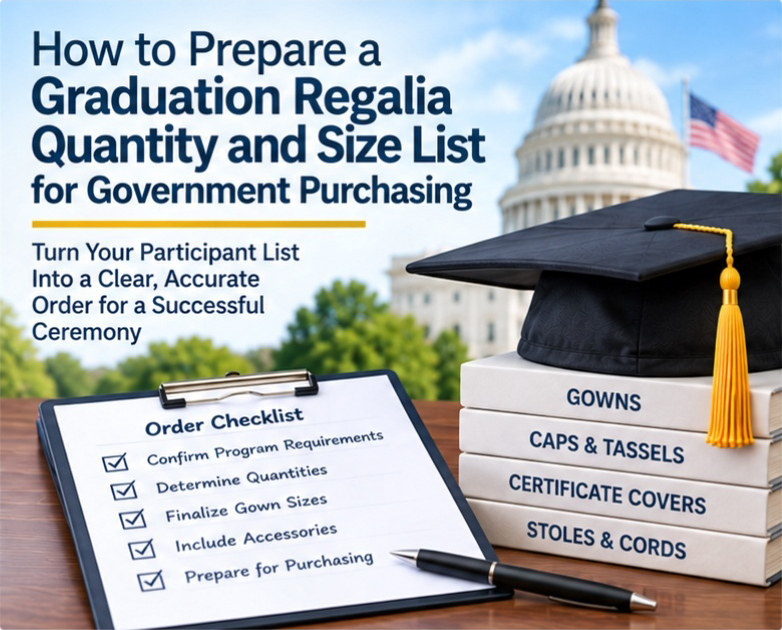
A government organization preparing to purchase graduation regalia needs more than an estimated number of graduates. Before requesting a quote, preparing an RFQ or submitting an institutional order, the organization should convert participant requirements into a clear product-by-product quantity and size list.
A well-organized graduation regalia quantity and size list for government purchasing can identify exactly how many Masters gowns are needed in each size, how many caps and tassels are required, which participants need certificate covers, and how many stoles, cords or degree-specific academic regalia items should be included.
The objective is to turn a participant roster into purchasing information that a procurement office and supplier can understand without transferring unnecessary participant-level information.
What Is a Graduation Regalia Quantity and Size List?
A graduation regalia quantity and size list is a purchasing summary showing the products and quantities required for a graduation or recognition ceremony. Depending on the program, it may include:- Graduation gowns by size
- Extended-size gowns where applicable
- Mortarboard caps
- Graduation tassels
- Certificate covers
- Diploma covers
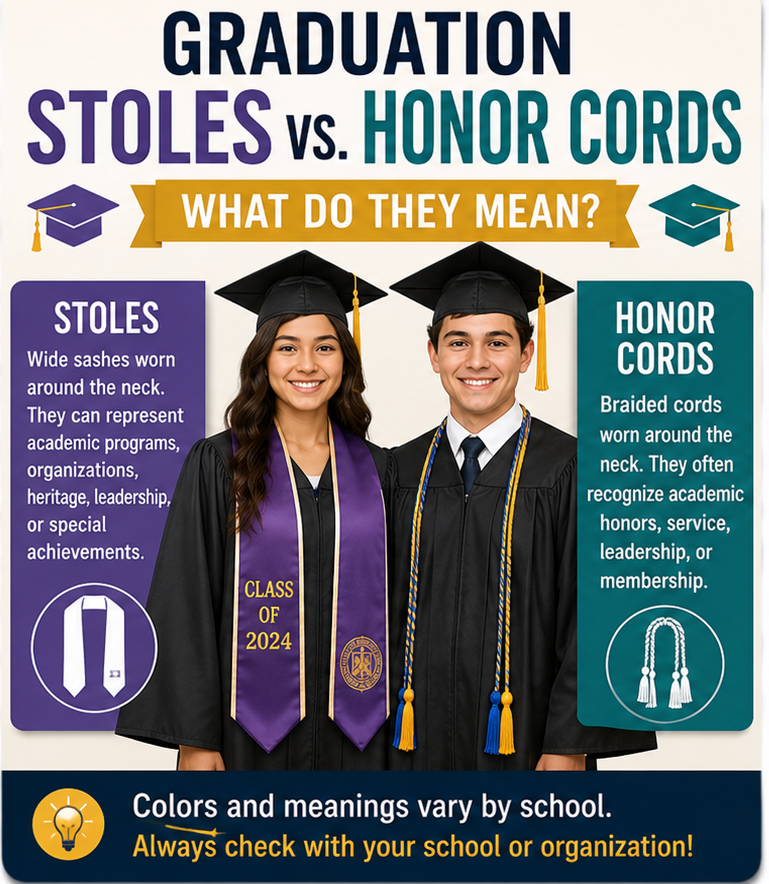
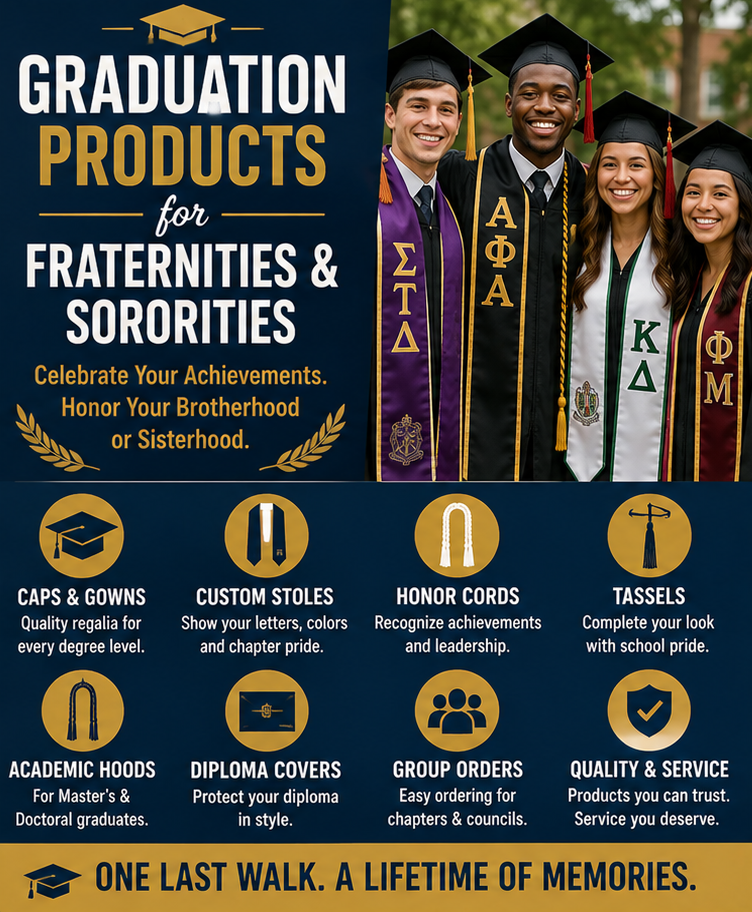
- Graduation stoles
- Honor or recognition cords
- Bachelor’s regalia
- Master’s regalia
- Doctoral regalia
- Academic hoods where applicable
- Other approved graduation accessories
Why Government Purchasers Need Product-Level Quantities
A participant count does not necessarily equal the quantity required for every product. Suppose a public education program expects 100 participants. The actual merchandise requirement might be:- 92 graduation gowns
- 92 mortarboards
- 92 tassels
- 100 certificate covers
- 24 recognition cords
- 15 approved stoles
Step 1: Confirm the Programs Included in the Purchase
Start by identifying every program or ceremony covered by the proposed purchase. Examples may include:- Adult education
- GED or high school equivalency
- Career and technical education
- Vocational training
- Workforce development
- Occupational skills training
- Apprenticeship completion
- Government employee education
- Reentry education
- Correctional education
- Public high school graduation
- Other approved education or training programs
Step 2: Determine What Each Program Actually Requires
Do not assume that every program needs identical graduation merchandise. Create a product requirement for each program. For example:- Program A — gown, cap, tassel and certificate cover
- Program B — certificate cover only
- Program C — gown, cap, tassel and approved recognition cord
- Program D — degree-specific academic regalia according to the degree-granting institution
Step 3: Establish the Current Participant Count
Separate participant counts according to their current status. An internal planning sheet can distinguish:- Projected participants
- Confirmed participants
- Participants awaiting final confirmation
- Participants with complete sizing information
- Participants with missing sizing information
- Late additions
Step 4: Select the Gown Before Creating the Final Size List
Choose the appropriate graduation gown and obtain its current sizing chart before assigning sizes. Different gowns may use different sizing systems. Do not automatically convert everyday clothing sizes such as Small, Medium, Large or XL into graduation gown sizes unless those are the actual categories used by the selected product and its sizing instructions.Step 5: Collect the Information Required by the Size Chart
Build the internal participant-sizing form around the exact gown being purchased. Depending on the product, the internal record may include:- Participant ID
- Program
- Location
- Information required by the current gown size chart
- Assigned gown size
- Extended-size designation where applicable
- Verification status
Use Participant IDs Where Appropriate
A government program may not need to send participant names or other unnecessary personal information to the graduation supplier. Where names are not needed for fulfillment, maintain participant-level information internally and convert it into aggregate product quantities for purchasing.Step 6: Assign Gown Sizes Using the Selected Product
Use the current product-specific sizing instructions to assign each participant to the appropriate available size. Avoid:- Guessing sizes
- Using an unrelated gown’s chart
- Using an outdated chart without verification
- Automatically relying on normal clothing size
- Creating an unofficial size conversion
Step 7: Include Extended Sizes in the Main List
Extended sizes should be part of the normal sizing workflow. Before standardizing a gown for the program, verify that its available size range can accommodate expected participants. Use the selected product’s instructions for any additional sizing information required for extended-size options.Step 8: Convert the Participant Roster Into a Gown Size Summary
Once sizes have been assigned, total the number of gowns required in each size. A purchasing summary might look like:- Gown Size A — 14
- Gown Size B — 26
- Gown Size C — 34
- Gown Size D — 22
- Gown Size E — 11
- Applicable extended-size options — 5
Step 9: Reconcile the Size Total With the Participant Requirement
Add all gown-size quantities. If 112 confirmed participants require gowns, the participant-level sizing records should account for 112 gown assignments before inventory adjustments. If the size total is only 109, determine which three participant records are missing before proceeding.Use a Simple Reconciliation Formula
The internal planning process can use: Confirmed Participants Requiring Gowns = Total Participants Assigned a Gown Size After that number is verified, existing usable inventory can be considered when determining how many new gowns must be purchased.Step 10: Count Existing Inventory by Size
Do not subtract existing inventory only from the overall gown total. Inventory should be counted by the actual sizes required. For example:- Size A required — 14
- Usable Size A in inventory — 2
- New Size A quantity — 12
Inspect Existing Inventory Before Deducting It
Verify that existing gowns:- Match the required style
- Match the approved color
- Are the correct size
- Are in suitable condition
- Have the necessary components
Step 11: Calculate the Net Gown Purchase by Size
A useful internal formula is: Required Quantity by Size − Usable Existing Inventory by Size = Net New Quantity to Purchase This calculation should be performed separately for every gown size.Step 12: Calculate Graduation Cap Quantities
Determine which participants require mortarboards. Do not automatically assume that the cap quantity equals the gown quantity if the ceremony plan differs. Record:- Cap style
- Color
- Quantity
- Whether tassels are included
Step 13: Calculate Tassel Quantities
Specify:- Tassel color
- Dated or undated style
- Year charm if required
- Quantity
Step 14: Calculate Certificate Cover Quantities
Certificate-cover quantities may differ from gown quantities. A program may issue certificates to every completer even when only some participants wear graduation gowns. Record:- Certificate dimensions
- Portrait or landscape orientation
- Cover dimensions
- Cover color
- Quantity
- Customization requirement, if any
Measure the Actual Certificate
Do not assume every government or training certificate uses the same dimensions. Verify the document before selecting its cover.Step 15: Calculate Graduation Stoles Separately
Stoles may be provided only to participants who meet organization-defined criteria. The quantity list should therefore identify:- Stole type
- Color
- Plain or customized
- Eligibility group
- Quantity
Step 16: Calculate Recognition Cord Quantities
If cords are used for specific achievements, create an internal recognition key. Record:- Cord color
- Recognition represented
- Eligibility criteria
- Quantity
Step 17: Keep Academic Degree Regalia Separate
If participants are earning bachelor’s, master’s or doctoral degrees, follow the requirements of the degree-granting institution. Do not combine degree-specific academic regalia with generic training-program gowns simply because both groups participate in the same recognition event.Bachelor’s Regalia
Bachelor’s regalia commonly includes a bachelor’s gown, mortarboard and tassel, subject to institutional requirements. Do not automatically add an academic hood unless the degree-granting institution requires or permits one.Master’s Regalia
Master’s requirements commonly include a master’s gown and academic hood according to institutional specifications.Doctoral Regalia
Doctoral requirements may include a doctoral gown, academic hood and institution-approved doctoral headwear.Step 18: Separate Standard and Customized Products
The purchasing list should distinguish standard merchandise from customized merchandise. Standard items might include:- Plain gowns
- Standard mortarboards
- Undated tassels
- Plain certificate covers
- Plain stoles
- Standard cords
Step 19: Identify Every Delivery Location
If one purchasing office is ordering for several programs or facilities, maintain both an organization-wide quantity list and location-level allocations. For example:- Location A — 42 gowns plus accessories
- Location B — 27 gowns plus accessories
- Location C — 36 gowns plus accessories
- Location D — 18 gowns plus accessories
Create a Separate Size Breakdown for Each Location
The total agency requirement may be correct while an individual location receives the wrong mix of sizes. Each location should therefore have its own gown-size distribution.Step 20: Combine Location Lists Into a Master Purchasing List
After each location verifies its quantities, combine the data into one master summary when centralized purchasing is appropriate. The master list can show:- Product
- Specification
- Size
- Total quantity
- Location allocation
- Existing inventory
- Net quantity to purchase
Recommended Graduation Regalia Purchasing Table
A supplier-ready list can use columns such as:- Line Item
- Product Description
- Color
- Size
- Quantity
- Customization
- Ship-To Location
- Required Arrival Date
Example Government Graduation Regalia Quantity List
A simplified purchasing list might contain:- Standard matte graduation gown / Size A / 18
- Standard matte graduation gown / Size B / 31
- Standard matte graduation gown / Size C / 40
- Standard matte graduation gown / Size D / 24
- Applicable extended-size gown option / 7
- Mortarboards / 120
- Undated tassels / approved color / 120
- Certificate covers / specified dimensions / 125
- Plain recognition stoles / approved color / 35
- Recognition cords / approved color / 22
Step 21: Add a Required Arrival Date
Do not provide only the ceremony date. The supplier-facing list should identify when the merchandise needs to arrive. The required arrival date should allow time for:- Receiving
- Inspection
- Counting
- Sorting
- Location distribution
- Participant distribution
- Approved corrections
Step 22: Perform a Final Quantity Audit
Before submitting the list for purchasing, review the totals. Check:- Participant count
- Participants requiring gowns
- Participants assigned gown sizes
- Total gowns by size
- Existing usable gowns
- Net gowns to purchase
- Cap quantity
- Tassel quantity
- Certificate-cover quantity
- Stole quantity
- Cord quantity
- Academic regalia quantities
- Location totals
Do Not Assume Every Product Quantity Must Match
A well-prepared purchasing list may legitimately contain different totals for gowns, Masters caps, tassels, covers, stoles and cords. Each quantity should reflect the actual approved requirement for that product.Step 23: Remove Unnecessary Participant Information From the Supplier List
The internal roster and supplier purchasing list can serve different purposes. The internal roster may contain participant-level data necessary for administration. The supplier-facing list may only need:- Product
- Specification
- Size
- Quantity
- Customization requirements
- Delivery information
Step 24: Turn the List Into a Quote or RFQ Requirement
Once quantities and sizes are verified, the purchasing list can help support a request for quotation or another authorized procurement process. A detailed request can include:- Product specifications
- Quantity by size
- Colors
- Accessories
- Certificate-cover dimensions
- Customization
- Packaging requirements
- Delivery destination or destinations
- Required arrival date
Request Itemized Pricing
Where appropriate, request pricing by line item rather than receiving only one combined total. This can make it easier to evaluate:- Gown cost
- Cap cost
- Tassel cost
- Certificate-cover cost
- Stole cost
- Cord cost
- Customization
- Packaging
- Shipping or freight
Compare Equivalent Products
When evaluating quotations, confirm that suppliers are pricing substantially equivalent requirements. Compare:- Gown style
- Material
- Finish
- Color
- Size range
- Extended sizes
- Included accessories
- Customization
- Packaging
- Delivery terms
Step 25: Preserve the Final List for Receiving
The purchasing list remains useful after the order is placed. When the shipment arrives, receiving personnel can compare delivered merchandise with the approved quantities. Verify:- Products received
- Gown quantities by size
- Extended-size quantities
- Caps
- Tassels
- Certificate covers
- Stoles
- Cords
- Customized merchandise
- Location allocations
Step 26: Update the List After Distribution
After the ceremony, record what actually happened. Useful information includes:- Final participant count
- Gowns distributed by size
- Size exchanges
- Late additions
- Supplemental purchases
- Unused gowns by size
- Unused accessories
- Remaining reusable inventory
Common Quantity and Size List Mistakes
Using Only the Total Number of Participants
The purchasing office needs product-level quantities and gown quantities by size.Ordering Every Product in the Same Quantity
Caps, gowns, certificate covers, stoles and cords may have different requirements.Using Clothing Sizes Instead of the Gown Size Chart
Use the current sizing instructions for the selected gown.Ignoring Extended Sizes
Include applicable extended-size options during the original sizing process.Subtracting Inventory From the Overall Total
Existing gown inventory should be deducted from the corresponding size requirement.Combining Multiple Locations Without Allocations
Maintain location-level size distributions even when purchasing is centralized.Sending Unnecessary Personal Information
Provide the supplier only the information reasonably necessary for fulfillment, consistent with applicable requirements.Forgetting the Required Arrival Date
The supplier should know when the merchandise needs to arrive, not merely when the ceremony occurs.Government Graduation Regalia Quantity and Size Checklist
- Identify every participating program
- Confirm the ceremony or recognition requirements
- Separate projected and confirmed participants
- Select the graduation gown
- Obtain the current product-specific size chart
- Collect required participant sizing information
- Include extended-size options
- Assign gown sizes
- Create the size distribution
- Reconcile size totals with participant requirements
- Inspect existing inventory by size
- Calculate net gown quantities by size
- Calculate cap quantities
- Calculate tassel quantities
- Measure certificates
- Calculate certificate-cover quantities
- Calculate stole quantities
- Calculate cord quantities
- Separate academic regalia
- Separate standard and customized products
- Create location-level allocations
- Combine approved requirements into a master list
- Add the required arrival date
- Perform a final quantity audit
- Remove unnecessary participant information from supplier-facing documents
- Prepare the quote or RFQ specification
- Request itemized pricing where appropriate
- Use the final list during receiving
- Update inventory after the ceremony
Institutional Graduation Regalia Ordering
Cap and Gown Outlet is an independent academic regalia supplier serving individual customers and qualifying institutional purchasers. Depending on program requirements and current product availability, organizations may consider:- Graduation gowns
- Mortarboard caps
- Graduation tassels
- Cap, gown and tassel packages
- Extended-size gown options where available
- Certificate covers
- Diploma covers
- Plain graduation stoles
- Customized stoles where available and appropriately authorized
- Honor and recognition cords
- Bachelor’s regalia
- Master’s regalia
- Doctoral regalia
- Academic hoods when applicable
Preparing a Government or Institutional Quote Request
A detailed quantity and size list can help government education programs, public training organizations, workforce programs, vocational programs, GED programs and other qualifying institutional purchasers request a more specific quotation. Useful information can include:- Product description or specification
- Color
- Quantity by size
- Extended-size quantities
- Accessory quantities
- Certificate-cover dimensions
- Customization requirements
- Delivery destination
- Required arrival date