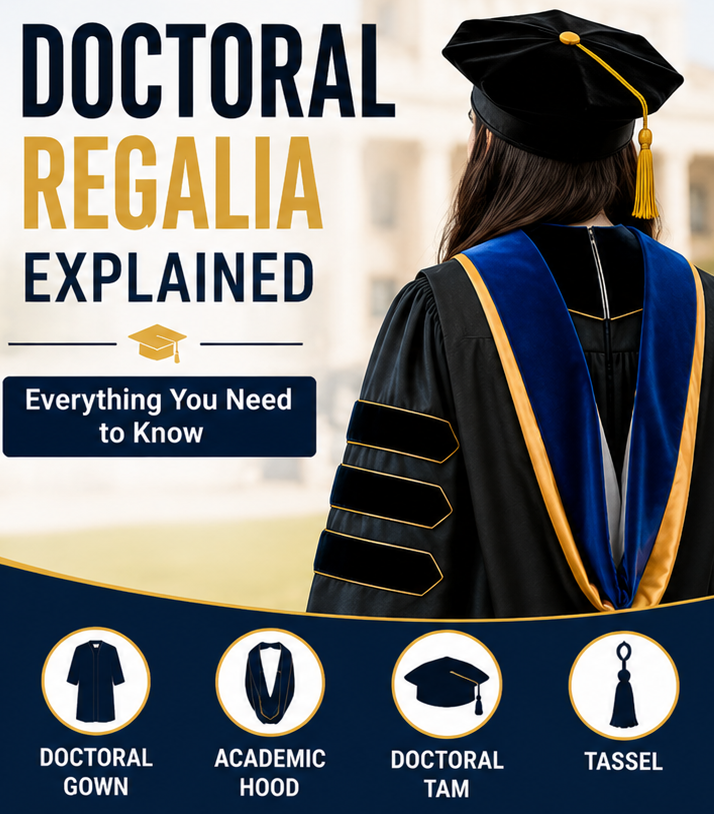
Planning graduation apparel for an entire school requires more than selecting a Doctoral cap and gown. Graduation coordinators must estimate how many students will participate, confirm approved gown colors, collect accurate measurements, establish purchasing deadlines, and coordinate delivery before commencement.
For a small graduating class, these responsibilities may be relatively straightforward. For a high school with hundreds of seniors or a university with thousands of graduates, however, even minor mistakes can create additional expenses, incorrect apparel orders, and last-minute distribution problems.
A structured school graduation regalia ordering guide helps administrators organize every purchasing decision and prepare students for a successful ceremony.
This guide explains how to calculate graduation apparel quantities, select appropriate gown colors, manage student sizes, establish ordering deadlines, compare suppliers, and create a reliable purchasing checklist.
What Is Included in a School Graduation Regalia Order?
Graduation regalia refers to the academic clothing and accessories worn during commencement ceremonies.
The exact products required depend on the school’s policies, ceremony traditions, and academic level.
Common Graduation Regalia Products
- Graduation gowns
- Graduation caps or mortarboards
- Graduation tassels
- Academic hoods, where required
- Doctoral tams, where required
- Graduation stoles and sashes
- Honor cords
- Faculty academic regalia
- Other institution-approved ceremonial accessories
Preschool and elementary school programs may use simpler Doctoral cap and gown packages, while colleges and universities may require different academic dress for bachelor’s, master’s, doctoral, and faculty participants.
Schools should confirm their actual requirements before requesting supplier quotations.
Step 1: Confirm the Graduation Date and Establish a Planning Team
The first step in planning a school graduation regalia order is confirming the commencement date.
Every purchasing milestone should be calculated backward from the date when students need their apparel.
Schools should also assign clear responsibilities to staff members involved in graduation apparel purchasing.
Suggested Graduation Apparel Planning Team
| Role | Responsibility |
|---|---|
| Graduation Coordinator | Oversee the overall ordering schedule |
| Student Records Coordinator | Verify commencement participation |
| Sizing Coordinator | Collect and verify measurements |
| Purchasing Officer | Manage quotations and approvals |
| Receiving Coordinator | Inspect delivered products |
| Distribution Team | Prepare packages and track pickup |
Smaller schools may combine these responsibilities, while large districts and universities may need separate teams.
Step 2: Calculate How Many Graduation Gowns Your School Needs
One of the most common purchasing mistakes is ordering graduation gowns based only on total enrollment.
The number of enrolled students may differ from the number participating in commencement or requiring school-purchased apparel.
Schools should calculate purchasing demand using verified participation records.
Example: High School With 750 Seniors
| Planning Category | Illustrative Quantity |
|---|---|
| Expected Graduating Seniors | 750 |
| Not Participating in Commencement | 30 |
| Using Approved Existing Apparel | 25 |
| Purchasing Separately Through Approved Arrangements | 15 |
| Students Requiring School-Ordered Regalia | 680 |
These figures are hypothetical.
The school should base its initial purchasing quantity on the 680 students requiring apparel through the school program, then consider whether a limited amount of spare inventory is appropriate.
Step 3: Determine Whether Extra Graduation Gowns Are Needed
Some schools purchase a limited number of spare gowns, caps, and tassels to address unexpected problems.
Possible reasons include:
- Late additions to the commencement roster
- Incorrect student measurements
- Damaged graduation gowns
- Missing or lost caps
- Lost tassels
- Unexpected size exchanges
However, excess inventory increases purchasing costs and may not be returnable.
Schools should use previous graduation records, supplier policies, available storage, and budget limitations to determine whether spare quantities are appropriate.
Illustrative Spare Inventory Calculation
Suppose a school needs 680 graduation gowns and decides, based on its own historical experience, to purchase 12 additional gowns.
The resulting order would include:
- 680 gowns for verified participants
- 12 approved spare gowns
- 692 total gowns
This is an example, not a recommended universal spare inventory percentage.
Spare gowns should be selected in sizes that reflect actual school needs.
Step 4: Choose the Correct Graduation Gown Colors
Graduation gown color is an important part of a school’s commencement identity.
Some institutions use traditional black gowns, while others select colors associated with their school.
Colors may also vary by academic level, campus, or institution-approved ceremony requirements.
Questions to Ask Before Selecting Gown Colors
- Does the school have an approved graduation gown color?
- Must all students wear the same color?
- Are different colors approved for different programs?
- Is the gown fabric matte or shiny?
- Does the supplier offer the required shade?
- Are matching caps available?
- What tassel colors are required?
- Are customized colors necessary?
Schools should not assume that two suppliers use identical shades simply because they describe a gown as navy, royal blue, maroon, or green.
When color matching is important, request an appropriate product reference or sample according to the supplier’s policies.
Step 5: Decide Between Matte and Shiny Graduation Gowns
Graduation gowns are available in different fabric finishes and styles.
Matte and shiny gowns can create different appearances during commencement and graduation photography.
Matte Graduation Gowns
Matte gowns generally have a less reflective appearance.
They may be preferred by schools seeking a traditional or understated look.
Shiny Graduation Gowns
Shiny gowns have a more reflective surface and may create a brighter appearance under certain lighting conditions.
The appropriate choice depends on school preferences, available products, and approved ceremony requirements.
Schools should verify fabric specifications and product appearance before ordering large quantities.
Step 6: Confirm Graduation Regalia Requirements by Academic Level
Different academic levels may require different graduation apparel.
| Academic Level | Common Apparel | Additional Considerations |
|---|---|---|
| Preschool and Kindergarten | Cap and Gown | Children’s sizes and colors |
| Elementary and Middle School | Cap and Gown | School-approved ceremony style |
| High School | Cap, Gown and Tassel | School colors and recognition accessories |
| Associate Degree | Institution-Approved Academic Apparel | College-specific requirements |
| Bachelor’s Degree | Bachelor’s Gown and Approved Headwear | Institution-specific accessories |
| Master’s Degree | Master’s Gown and Required Academic Accessories | Academic hood requirements |
| Doctoral Degree | Doctoral Gown and Approved Academic Accessories | Hood and headwear specifications |
| Faculty | Institution-Approved Faculty Regalia | Degree and institutional traditions |
These are general descriptions. Academic dress requirements vary by institution and should be confirmed with authorized school or university personnel.
Step 7: Obtain the Supplier’s Official Graduation Gown Size Chart
Graduation gown sizes are not universally standardized across manufacturers.
Some gowns are sized primarily by height, while others may require additional measurements.
Schools should obtain the official size chart for the exact gown product before collecting final student measurements.
Information to Confirm
- Available height ranges
- Required body measurements
- Additional-fit options
- Children’s sizing requirements
- Bachelor’s and master’s gown sizing differences
- Doctoral and faculty sizing requirements
- Cap or tam sizing, where applicable
Students should not substitute everyday clothing sizes unless the manufacturer specifically uses those categories.
Step 8: Create a Graduation Gown Measurement Collection Form
A standardized measurement form helps schools collect consistent information from large groups.
Recommended Measurement Form Fields
| Field | Purpose |
|---|---|
| Student Identifier | Match measurements to the correct participant |
| School or Department | Organize group orders |
| Academic Level | Identify the required gown style |
| Height | Support size selection |
| Additional Required Measurements | Confirm fit where necessary |
| Assigned Manufacturer Size | Record the approved size code |
| Approved Gown Color | Prevent color-related mistakes |
| Additional-Fit Requirement | Support appropriate apparel selection |
| Verification Status | Track record accuracy |
Schools should collect only necessary information and follow applicable student privacy requirements.
Step 9: Use Digital Forms and a Controlled Master Spreadsheet
Large schools should avoid collecting measurements through unstructured email messages or disconnected spreadsheets.
A standardized digital form can help maintain consistent records.
Possible collection methods include:
- School-approved online forms
- Institutional registration systems
- Approved student information platforms
- Controlled spreadsheets
- Paper forms entered into an authorized master record
Recommended Master Spreadsheet Columns
- Student identifier
- School or campus
- Participation status
- Gown style
- Gown color
- Required measurements
- Manufacturer size code
- Size verification status
- Purchasing status
- Receiving status
- Distribution status
Only authorized staff should have access to identifiable student records.
Step 10: Verify Graduation Gown Sizes Before Ordering
Collecting measurements is not the same as verifying them.
Schools should review submitted information before calculating purchasing quantities.
Common Sizing Data Problems
- Missing height
- Incorrect measurement units
- Duplicate student submissions
- Invalid manufacturer size codes
- Conflicting measurements
- Incorrect gown color
- Unconfirmed participation
- Unresolved additional-fit requirements
Each problem should be reviewed before the final order is approved.
Three-Stage Verification Process
- Submission review: Check for missing information and duplicate records.
- Size assignment review: Confirm that each size matches the manufacturer’s official chart.
- Final quantity review: Reconcile the size summary with verified purchasing records.
Step 11: Calculate Graduation Gown Quantities by Size and Color
Once student measurements are verified, schools should prepare a purchasing summary organized by gown style, color, and manufacturer size code.
Illustrative Bulk Graduation Gown Size Summary
| Illustrative Size Group | Navy Gowns | Maroon Gowns | Total |
|---|---|---|---|
| Size Group A | 40 | 30 | 70 |
| Size Group B | 70 | 55 | 125 |
| Size Group C | 105 | 85 | 190 |
| Size Group D | 90 | 75 | 165 |
| Size Group E | 70 | 60 | 130 |
| Total | 375 | 305 | 680 |
These quantities and size groups are hypothetical and do not represent an actual manufacturer size chart.
The total should match the number of verified students requiring school-ordered apparel.
Step 12: Establish Graduation Regalia Ordering Deadlines
Schools should create a purchasing schedule that allows enough time for supplier processing, production where applicable, shipping, receiving, inspection, and distribution.
The appropriate order date depends on the ceremony date and confirmed supplier lead times.
Illustrative Timeline for June 2027 Graduation
| Planning Stage | Suggested Period |
|---|---|
| Review Requirements and Budget | October–December 2026 |
| Collect Student Measurements | December 2026–February 2027 |
| Request Supplier Quotations | January–February 2027 |
| Finalize Quantities and Approvals | February–March 2027 |
| Place Orders | According to Confirmed Supplier Lead Times |
| Receive and Inspect Apparel | April–May 2027, as Scheduled |
| Distribute Graduation Apparel | Before Commencement |
| Graduation Ceremony | June 2027 |
This schedule is illustrative and should be adjusted for actual purchasing and fulfillment requirements.
Step 13: Work Backward From the Student Distribution Date
The most useful deadline is often the date when students need to receive their graduation apparel, not the ceremony date itself.
Schools should allow time for fitting and corrections after distribution.
Illustrative Backward Planning Example
Suppose a school holds commencement on June 19, 2027, and plans to distribute apparel on June 5.
The school might establish the following hypothetical allowances:
| Activity | Illustrative Time |
|---|---|
| Supplier Processing or Production | 4 Weeks |
| Shipping | 1 Week |
| Receiving and Inspection | 1 Week |
| Total Before Distribution | 6 Weeks |
Under these assumptions, the school would need to place its order approximately six weeks before the planned June 5 distribution date.
This is not a guaranteed lead time. Schools should confirm actual supplier estimates and consider ordering earlier where practical.
Step 14: Request Detailed Bulk Graduation Regalia Quotations
Schools should provide suppliers with clear product requirements.
Information to Include in a Quote Request
- School or institution name
- Commencement date
- Expected quantities
- Gown style
- Approved colors
- Manufacturer sizes
- Required caps and tassels
- Academic hoods, where applicable
- Stoles, cords, or additional accessories
- Customization requirements
- Delivery address
- Required delivery date
- Purchasing documentation requirements
Schools should request itemized quotations that identify product costs, shipping charges, and any applicable customization expenses.
Step 15: Compare Graduation Regalia Suppliers
Supplier selection should consider more than the advertised unit price.
| Evaluation Factor | What Schools Should Verify |
|---|---|
| Product Specifications | Correct gown style, fabric, and color |
| Size Availability | Required manufacturer sizes |
| Quantity Availability | Ability to accommodate the requested order |
| Package Contents | Caps, gowns, tassels, and accessories |
| Bulk Pricing | Applicable quantity pricing, if offered |
| Customization | Available options and production requirements |
| Fulfillment | Written processing or production estimates |
| Shipping | Available arrangements and costs |
| Returns | Applicable return and exchange policies |
| Purchasing Terms | Accepted institutional payment methods |
Public institutions should follow applicable procurement procedures when evaluating suppliers.
Step 16: Establish a Graduation Regalia Budget
Graduation apparel budgets should include all required products and delivery costs.
Schools should consider gowns, caps, tassels, accessories, customization, shipping, and applicable taxes.
Illustrative Budget for 680 Students
| Expense | Illustrative Amount |
|---|---|
| 680 Graduation Gowns at $19 | $12,920 |
| 680 Caps and Tassels at $6 | $4,080 |
| Shipping | $550 |
| Total Before Applicable Taxes | $17,550 |
These are hypothetical prices and do not represent current supplier quotations.
The illustrative delivered cost is approximately $25.81 per student before applicable taxes.
Any approved spare apparel should be budgeted separately.
Step 17: Coordinate Public School Purchasing Requirements
Public schools and government-funded institutions may need additional purchasing approvals.
Depending on the jurisdiction and purchase, requirements may include:
- Budget authorization
- Competitive quotations
- Formal bidding procedures
- Vendor registration
- Purchase orders
- Contract review
- Institutional payment approval
Graduation coordinators should work with their purchasing departments before committing funds.
Purchase order acceptance depends on the supplier’s current policies.
Step 18: Review the Final Graduation Regalia Purchase Order
Before submitting the order, schools should reconcile the purchasing summary with the verified student records.
Final Purchase Order Review
- Confirm total participant demand.
- Verify quantities by gown style.
- Verify quantities by color.
- Verify quantities by manufacturer size.
- Check caps and tassels.
- Confirm academic hoods and other accessories.
- Review customization specifications.
- Confirm approved spare quantities.
- Verify total pricing.
- Confirm the delivery address.
- Review expected fulfillment and delivery dates.
- Obtain required purchasing authorization.
Unresolved differences should be corrected before the order is approved.
Step 19: Inspect Graduation Apparel When It Arrives
Schools should inspect delivered graduation apparel promptly rather than waiting until distribution day.
Receiving Checklist
- Record shipment arrival.
- Count cartons and packages.
- Compare the packing list with the purchase order.
- Verify gown quantities by size and color.
- Check gown styles and fabric finishes.
- Count caps and tassels.
- Inspect academic hoods, stoles, and cords.
- Document damaged or missing products.
- Contact the supplier promptly about discrepancies.
Step 20: Organize Graduation Regalia Distribution
After receiving and inspecting the shipment, schools should prepare apparel packages for distribution.
Packages may be organized by student identifier, homeroom, department, or another school-approved system.
Recommended Distribution Records
- Student identifier
- Assigned gown size
- Approved gown color
- Required accessories
- Pickup status
- Exchange status
- Outstanding issues
Students should be encouraged to try on their gowns promptly and report fit or package concerns before commencement.
How to Handle Last-Minute Graduation Regalia Problems
Even well-planned school orders may encounter unexpected changes.
Students may join commencement late, submit corrected measurements, or need replacement apparel.
Recommended Last-Minute Issue Process
- Identify the exact apparel requirement.
- Check approved spare inventory.
- Verify the required size and color.
- Contact the supplier about available replacement products.
- Confirm realistic fulfillment and shipping estimates.
- Review additional costs.
- Update purchasing and distribution records.
Schools should not assume that expedited production or shipping will always be available.
Special Considerations for Colleges and Universities
College and university graduation regalia orders may involve multiple academic dress categories.
Institutions may need bachelor’s gowns, master’s gowns, academic hoods, doctoral gowns, doctoral tams, and faculty regalia.
Academic hood colors, gown designs, and headwear requirements should be verified with authorized institutional personnel.
Specialized doctoral and faculty apparel may require additional planning time.
Special Considerations for Multiple Schools or Campuses
School districts and universities with multiple campuses may benefit from coordinated purchasing oversight.
However, each location may have different gown colors, student sizes, commencement dates, and delivery requirements.
Multi-School Order Planning Checklist
- Assign a school or campus identifier.
- Confirm each ceremony date.
- Document approved gown specifications.
- Prepare quantities by school.
- Verify manufacturer sizes.
- Confirm delivery locations.
- Assign receiving contacts.
- Maintain separate distribution records.
- Reconcile institution-wide purchasing totals.
Common School Graduation Regalia Ordering Mistakes
Ordering Based Only on Enrollment
Confirm actual commencement participation and purchasing demand.
Choosing the Wrong Gown Color
Verify institution-approved colors and product specifications.
Using Generic Clothing Sizes
Follow the selected manufacturer’s official size chart.
Failing to Verify Measurements
Review incomplete, duplicate, and unusual records.
Forgetting Caps, Tassels, or Academic Hoods
Confirm required accessories and package contents.
Ordering Too Close to Graduation
Establish deadlines based on confirmed supplier lead times.
Comparing Only Unit Prices
Evaluate complete delivered costs.
Ignoring Purchasing Approvals
Allow time for school or district procurement procedures.
Failing to Inspect Shipments
Verify delivered products promptly.
Not Tracking Student Distribution
Maintain accurate pickup and exchange records.
School Graduation Regalia From Cap and Gown Outlet
Cap and Gown Outlet is an independent graduation apparel supplier serving individual graduates, families, schools, colleges, universities, faculty members, and educational organizations.
Depending on current product availability, graduation apparel categories may include:
- Preschool and kindergarten graduation caps and gowns
- Elementary and middle school graduation apparel
- High school graduation caps and gowns
- Bachelor’s graduation gowns
- Master’s graduation gowns and academic hoods
- Doctoral gowns, hoods, and tams
- Faculty academic regalia
- Graduation caps and tassels
- Graduation stoles and sashes
- Honor cords
- Diploma and certificate covers
- Bulk graduation apparel
Schools preparing group orders should organize their purchasing requirements by gown style, approved color, manufacturer size, quantity, required accessories, and delivery date.
Buyers should verify current product availability, sizing specifications, applicable quantity pricing, customization options, fulfillment estimates, shipping arrangements, and purchasing terms before placing an order.
Independent Supplier Disclosure
Cap and Gown Outlet is an independent graduation apparel supplier and is not affiliated with, sponsored by, endorsed by or officially authorized by any school, college, university, educational organization or government agency unless an actual relationship exists.
Frequently Asked Questions About School Graduation Regalia Orders
How do schools plan a graduation regalia order?
Schools should confirm commencement dates, estimate participation, select approved apparel, collect measurements, verify quantities, compare suppliers, and establish purchasing and delivery deadlines.
How many graduation gowns should a school order?
Order quantities should reflect verified participants who need school-purchased apparel, plus any approved spare inventory.
How do schools choose graduation gown colors?
Schools should follow approved institutional specifications and verify available product colors with the supplier.
Are graduation gown sizes standardized?
No. Sizing can vary by manufacturer and product.
What measurements are required for graduation gowns?
Requirements vary by supplier. Height is commonly used, while additional measurements may be required for certain styles.
Should schools use digital forms for gown sizing?
School-approved digital forms can simplify data collection and improve consistency.
How early should schools order graduation regalia?
Many schools benefit from planning several months before commencement. Large or customized orders may require earlier preparation.
Can schools order graduation apparel in bulk?
Yes. Schools can request quotations for group quantities from suppliers offering the required products.
Are bulk graduation gowns always cheaper?
Not necessarily. Schools should compare actual supplier quotations and complete delivered costs.
Should schools order extra graduation gowns?
Limited spare inventory may help address unexpected needs, but schools should consider budget and return policies.
How should schools compare graduation regalia suppliers?
Compare product specifications, sizes, colors, availability, total costs, fulfillment estimates, and purchasing terms.
Can public schools use purchase orders?
Some suppliers may accept purchase orders. Schools should verify supplier terms and applicable procurement requirements.
Do universities need different regalia for each degree?
Academic dress may differ by degree level and institution. Requirements should be verified with authorized personnel.
When should graduation apparel arrive?
Apparel should arrive early enough for inspection, student distribution, fitting, and issue resolution.
What if a graduation gown arrives in the wrong size?
Document the issue and contact the supplier promptly under the applicable exchange and return policies.
Can schools place supplemental graduation apparel orders?
Some suppliers may accommodate additional quantities, depending on availability and delivery requirements.
How should schools distribute graduation apparel?
Prepare packages by participant identifier, verify contents, and track pickup and exchanges.
What is the biggest school graduation regalia ordering mistake?
Failing to verify product specifications, student sizes, purchasing quantities, and supplier fulfillment requirements before ordering.
Final School Graduation Regalia Ordering Checklist
- Confirm the graduation ceremony date.
- Assign a graduation apparel coordinator.
- Establish purchasing responsibilities.
- Review previous graduation apparel records.
- Estimate commencement participation.
- Identify students requiring school-ordered apparel.
- Determine appropriate spare inventory.
- Verify approved gown styles.
- Confirm gown colors and fabric finishes.
- Identify required caps and tassels.
- Confirm academic hoods and other accessories.
- Obtain manufacturer-specific size charts.
- Create a standardized measurement form.
- Collect student measurements.
- Review incomplete and duplicate records.
- Verify manufacturer size assignments.
- Calculate quantities by size and color.
- Reconcile quantities with verified participants.
- Establish the required delivery date.
- Confirm supplier lead times.
- Request itemized supplier quotations.
- Compare complete delivered costs.
- Establish the purchasing budget.
- Review institutional procurement requirements.
- Obtain required approvals.
- Verify the final purchase order.
- Place the approved order.
- Review supplier confirmations.
- Monitor delivery arrangements.
- Inspect received apparel.
- Document missing or incorrect products.
- Organize student distribution.
- Track pickup and exchanges.
- Resolve outstanding apparel issues.
- Complete commencement preparations.
- Review purchasing improvements for future ceremonies.
Plan Your School Graduation Regalia Order With Confidence
A successful school graduation regalia order begins with accurate information and a realistic purchasing schedule.
Schools that verify student participation, select approved gown colors, collect manufacturer-specific measurements, and establish clear ordering deadlines can reduce avoidable purchasing and distribution problems.
Whether preparing a small school graduation or a large university commencement, organized planning helps ensure that students receive the appropriate academic apparel before their ceremony.
Plan quantities carefully, confirm colors and sizes, establish realistic deadlines, and prepare every graduate for commencement.