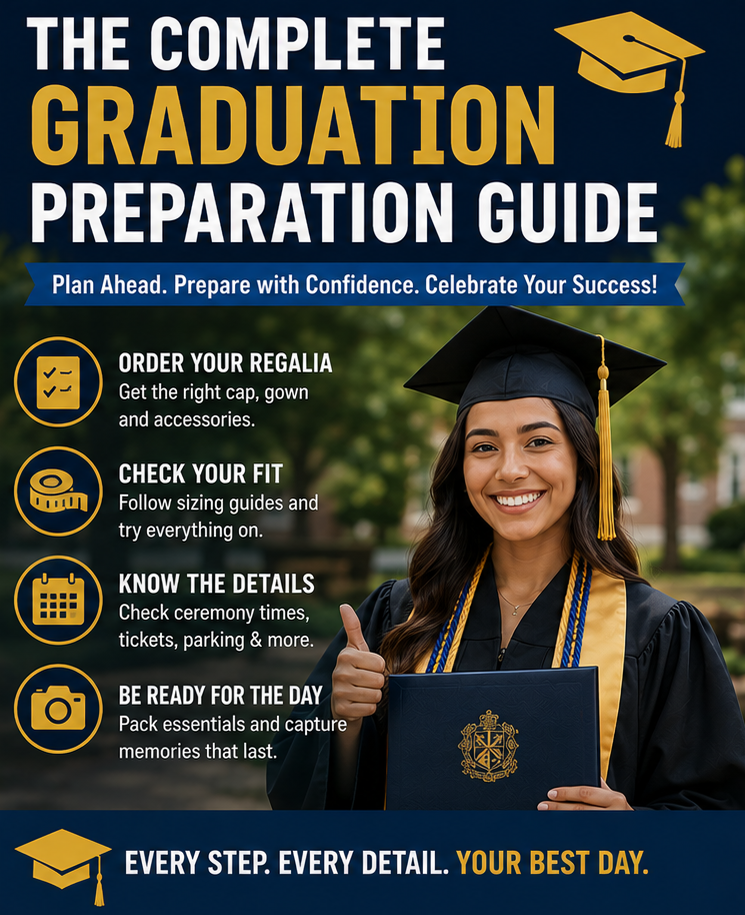
Graduation day is the culmination of years of work, but preparing for commencement involves more than simply arriving in a cap and gown. Graduates need to confirm ceremony requirements, order the correct graduation cap and gown regalia, check sizing, prepare accessories, understand ceremony instructions, and make sure everything is ready before the big day. This complete graduation preparation guide walks students and families through the process from the first planning steps to the moment the graduate walks across the stage.
When Should You Start Preparing for Graduation?
Start as soon as your school releases commencement information. Graduation requirements, regalia ordering dates, ticket policies, rehearsal schedules, and guest instructions may be announced weeks or months before the ceremony. Creating a simple calendar with important deadlines can prevent several common last-minute problems.Important Dates to Track
- Graduation application deadline
- Cap and gown ordering deadline
- Custom regalia deadline
- Graduation ticket deadline
- Commencement rehearsal
- Regalia pickup or delivery
- Graduation photo appointments
- Commencement date and arrival time
Step 1: Confirm That You Are Eligible to Graduate
Before concentrating on graduation attire, complete any academic and administrative requirements established by your institution. Procedures vary, so follow the instructions provided by your school. College and university students may need to apply for graduation separately from registering for commencement.Step 2: Read Your School’s Commencement Instructions
Graduation requirements are not identical from one institution to another. Read the official commencement information before purchasing attire or accessories.Look for Information About
- Required academic regalia
- Approved gown color and style
- Matte or shiny gown requirements
- Cap or doctoral tam requirements
- Tassel specifications
- Academic hood requirements
- Permitted stoles and honor cords
- Guest tickets
- Arrival and check-in procedures
- Prohibited items
Step 3: Order Your Graduation Cap and Gown
Your graduation cap and gown should satisfy the specifications established for your ceremony. Do not assume that every black gown—or every gown labeled for your degree level—is interchangeable. Confirm the gown style, color, finish, size, and included accessories before ordering.Know Your Degree-Level Regalia
Bachelor’s Graduation Regalia
Bachelor’s attire commonly includes a bachelor’s-style gown, mortarboard, and tassel. Exact requirements vary by institution.Master’s Graduation Regalia
Master’s graduates generally wear a distinctive master’s gown and academic hood in addition to approved headwear and a tassel.Doctoral Graduation Regalia
Doctoral attire may include a doctoral gown, academic hood, and doctoral tam or mortarboard. Institutions can establish specific requirements concerning gown construction, velvet details, colors, and headwear.Step 4: Choose the Correct Graduation Gown Size
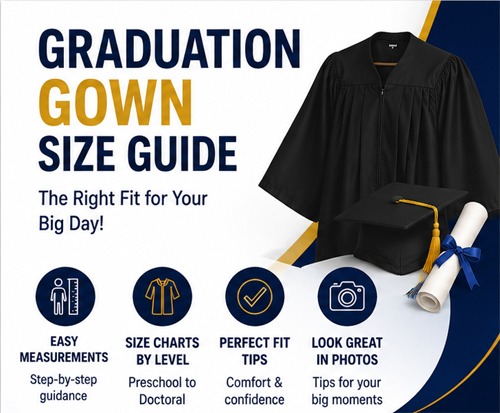
Academic gown sizing often differs from everyday clothing sizing. Graduation gowns are commonly selected primarily according to height, although some manufacturers use additional weight, chest, or body measurements. Use the size chart provided for the exact gown you are purchasing rather than simply selecting your usual clothing size.Check Your Gown After Delivery
Try it on well before commencement. Make sure the gown provides sufficient room for comfortable movement and that the length is appropriate for the product and your height.Step 5: Verify Your Graduation Cap
The traditional graduation cap is called a mortarboard. It should sit securely and comfortably on the head. If your institution uses doctoral tams or another style of academic headwear, confirm those requirements before purchasing.Step 6: Check Your Graduation Tassel
A tassel may be included with a cap and gown set or sold separately. Check the required color and whether your tassel includes the appropriate graduation-year charm when desired.Which Side Does the Tassel Go On?
Tassel traditions can vary by institution and degree. Many ceremonies provide instructions regarding the starting position and whether graduates move the tassel during commencement. Follow your school’s directions rather than relying solely on a general rule.Step 7: Confirm Whether You Need an Academic Hood
Master’s and doctoral graduates may need an academic hood. A hood is part of academic regalia and should not be confused with a decorative graduation stole. Hood construction and colors may correspond with the degree and institution. Verify the exact specifications before ordering.Step 8: Organize Graduation Stoles and Honor Cords
Some graduates may be eligible to wear approved stoles, honor cords, medals, or other recognition items.Graduation Stoles
Stoles may recognize an academic program, student organization, service, leadership, cultural organization, or another institution-approved distinction.Honor Cords
Honor cords may represent academic achievement, membership, service, leadership, or another recognized accomplishment. Do not assume that every stole or cord can be worn during commencement. Verify your institution’s policies and eligibility requirements.Step 9: Decide What to Wear Under Your Graduation Gown
Choose clothing that is appropriate for the ceremony, comfortable for the expected weather, and compatible with the gown. Remember that portions of your clothing—particularly the neckline, lower legs, and shoes—may remain visible.Consider
- Ceremony dress expectations
- Indoor or outdoor location
- Temperature
- Walking distance
- Stairs and stage movement
- Comfortable footwear
- How clothing appears beneath the gown
Step 10: Prepare Comfortable Shoes
Graduates may spend considerable time standing, walking, waiting in line, and crossing a stage. Choose footwear that you can comfortably and safely wear for the entire event. If you purchase new shoes for graduation, consider wearing them beforehand rather than trying them for the first time at commencement.Step 11: Remove Wrinkles From the Graduation Gown
Graduation gowns can arrive folded and may have packaging creases. Remove the gown from its package well before the ceremony and hang it properly. Always follow the garment’s care instructions. Avoid applying excessive heat directly to synthetic graduation fabrics, as high temperatures can potentially damage the material.Step 12: Try On the Complete Graduation Outfit
Do one complete fitting several days before graduation rather than testing individual pieces separately.Wear Everything Together
- Clothing underneath the gown
- Graduation gown
- Mortarboard or tam
- Tassel
- Academic hood when required
- Approved stole
- Honor cords
- Medals or other permitted recognition items
- Graduation shoes
Step 13: Learn How to Wear Your Academic Regalia
Do not wait until the ceremony lineup to figure out how every piece is worn. Master’s and doctoral hoods in particular may require additional preparation. Review instructions from your institution regarding gown closure, hood placement, tassel position, and recognition accessories.Step 14: Plan Your Graduation-Day Transportation
Commencement venues can become extremely busy. Parking lots, campus roads, public transportation, and venue entrances may experience heavier traffic than usual. Review the school’s transportation and parking instructions ahead of time and allow sufficient time to arrive at the designated graduate check-in location.Step 15: Understand Graduate Arrival Procedures
The ceremony start time may not be the time graduates are expected to arrive. Students may need to report significantly earlier for check-in, lineup, seating instructions, or processional organization.Know Before Leaving Home
- Graduate entrance
- Check-in location
- Required arrival time
- Student identification requirements
- Lineup location
- Assigned seating or section
Step 16: Organize Guest Tickets
If the ceremony requires tickets, distribute or transfer them to guests before graduation day whenever possible. Guests should also receive the venue address, parking information, entrance instructions, accessibility information when relevant, and recommended arrival time.Step 17: Check the Graduation-Day Weather
Outdoor commencements can be affected by heat, cold, wind, or rain. Check the forecast and review your school’s weather policies. Graduates should also remember that academic gowns can add an additional layer of fabric, which may affect comfort during warm-weather ceremonies.Step 18: Prepare for Graduation Photos
Graduation photographs are often kept for decades, so it is worth spending a few minutes preparing the regalia before taking pictures.Before Photos
- Smooth the gown
- Center the cap
- Arrange the tassel neatly
- Position the academic hood correctly
- Straighten stoles
- Untangle honor cords
- Remove unnecessary items from pockets
Take Photos Before and After the Ceremony
Taking some photographs before commencement can reduce pressure after the ceremony when graduates and families may be separated by large crowds.Graduation Photo Ideas
- Traditional cap and gown portrait
- Graduate with family
- Graduate with friends
- Graduate with faculty or mentors
- Campus landmark photograph
- Full-length regalia portrait
- Diploma or diploma-cover photograph
- Graduating-class group photo
Step 19: Pack a Small Graduation Essentials Kit
Bring only items permitted by the venue. Many ceremonies limit bags and personal belongings, so check the rules first.Useful Items When Permitted
- Required identification
- Phone
- Necessary tickets or credentials
- Small number of safety pins
- Hairpins for securing a cap
- Comfortable permitted essentials
Step 20: Know What Not to Bring
Graduates may not have secure storage during commencement. Avoid bringing unnecessary valuables or large personal items. Review venue rules regarding bags, umbrellas, signs, food, beverages, cameras, and other restricted items before leaving home.Prepare Your Family for the Ceremony
Family members should know more than the ceremony time. Give them clear logistical information in advance.Share With Guests
- Venue address
- Parking instructions
- Guest entrance
- Ticket requirements
- Security policies
- Expected ceremony duration when provided
- Meeting location after graduation
Choose a Post-Ceremony Meeting Location
Mobile networks can become congested around large events, and thousands of people may exit simultaneously. Agree on a specific meeting point with family and friends before the ceremony begins. A recognizable campus landmark or designated area can make reunions easier.Graduation Preparation for High School Students
High school graduates should follow their school’s instructions regarding gown color, tassels, honor cords, stoles, rehearsals, tickets, and arrival procedures. If students purchase their own regalia, verify the exact gown specifications so the attire matches the rest of the graduating class.Graduation Preparation for College Students
College graduates should pay particular attention to degree-specific academic regalia. Bachelor’s, master’s, and doctoral attire can differ substantially. Students should also confirm whether their college, department, or university holds separate ceremonies requiring different arrival times or instructions.Graduation Preparation for Master’s Students
Master’s graduates should confirm the correct gown and academic hood well before commencement. Practice wearing the hood before graduation day or review institution-provided instructions so it can be positioned correctly.Graduation Preparation for Doctoral Students
Doctoral graduates should verify gown construction, academic hood specifications, headwear, and tassel requirements carefully. Some institutions conduct hooding ceremonies separately or incorporate hooding into commencement, so review the ceremony procedures in advance.Graduation Preparation for Preschool and Kindergarten
Parents and teachers preparing younger graduates should prioritize comfort and simplicity. Try the cap and gown on before the event, label individual regalia for group ceremonies, and make sure children can comfortably walk and sit while wearing their outfits.Graduation Preparation for Schools and Group Orders
Schools, homeschool groups, and organizations coordinating bulk graduation cap and gown orders should begin with a confirmed graduate roster and clear regalia specifications.Group Order Information to Collect
- Graduate name
- Degree level when applicable
- Height
- Additional sizing information when required
- Gown size
- Cap or tam requirement
- Tassel requirement
- Academic hood when applicable
- Approved accessories
Create a Graduation Regalia Distribution Plan
For large groups, sort the delivered regalia into individually labeled packages before distribution. Give students enough time to try everything on and report potential sizing or product concerns before the ceremony.One Week Before Graduation
Complete These Tasks
- Try on the complete regalia
- Check the gown for wrinkles
- Confirm the cap or tam fits
- Verify tassel and year charm
- Check the academic hood
- Organize approved cords and stoles
- Confirm ceremony arrival time
- Confirm guest tickets
- Review parking and transportation
- Check venue policies
The Night Before Graduation
Prepare everything in one location so commencement morning is simple.Set Out
- Graduation gown
- Cap or tam
- Tassel
- Academic hood
- Stoles and honor cords
- Clothing for underneath the gown
- Shoes
- Required identification
- Permitted graduation essentials
Graduation Morning Checklist
- Eat before leaving when appropriate
- Dress comfortably
- Put all regalia pieces together
- Bring required identification
- Check traffic and transportation conditions
- Leave with sufficient time
- Follow school check-in instructions
During the Graduation Ceremony
Follow instructions from commencement staff regarding the processional, seating, stage movement, tassel tradition, diploma presentation, recessional, and other ceremony procedures. Keep phones and other personal items secured and avoid carrying unnecessary belongings onto the stage.After the Ceremony
Meet your guests at the location selected in advance, take photographs, and check that you still have all important belongings and regalia pieces. If your institution provides a diploma cover during the ceremony rather than the final diploma itself, follow the school’s instructions regarding diploma delivery or pickup.Common Graduation Preparation Mistakes
- Waiting too long to order graduation regalia
- Ordering before checking school requirements
- Choosing the wrong gown size
- Purchasing the wrong degree-level gown
- Forgetting an academic hood
- Assuming all stoles and cords are permitted
- Leaving the gown folded until graduation morning
- Wearing new uncomfortable shoes for the first time
- Forgetting graduate arrival is often earlier than ceremony time
- Failing to distribute guest tickets in advance
- Not planning where to meet family afterward
- Opening the cap and gown package for the first time on graduation day
The Complete Graduation Checklist
Academic Regalia
- Graduation gown
- Mortarboard or doctoral tam
- Tassel
- Graduation-year charm when applicable
- Academic hood when required
- Approved graduation stole
- Approved honor cords
- Approved medals or recognition items
Ceremony Preparation
- Graduation eligibility confirmed
- Commencement registration completed
- Arrival time confirmed
- Graduate entrance located
- Guest tickets distributed
- Parking or transportation planned
- Venue policies reviewed
- Post-ceremony meeting location selected
Personal Preparation
- Graduation outfit selected
- Comfortable shoes prepared
- Regalia tried on
- Gown wrinkles addressed according to care instructions
- Phone charged
- Required identification packed
- Photography plans confirmed