A graduation gown should look polished, feel comfortable, and allow you to walk, sit, and move naturally throughout commencement. The right fit is usually looser than everyday clothing because academic gowns are designed to drape over the clothes worn underneath. Even so, choosing the correct size is important for appearance, comfort, and safety.
This complete graduation gown sizing guide explains how a gown should fit through the shoulders and body, where the hem should fall, how sleeve length works, how sizing differs by degree level, and what to do if you are between sizes.
How Should a Graduation Gown Fit Overall?
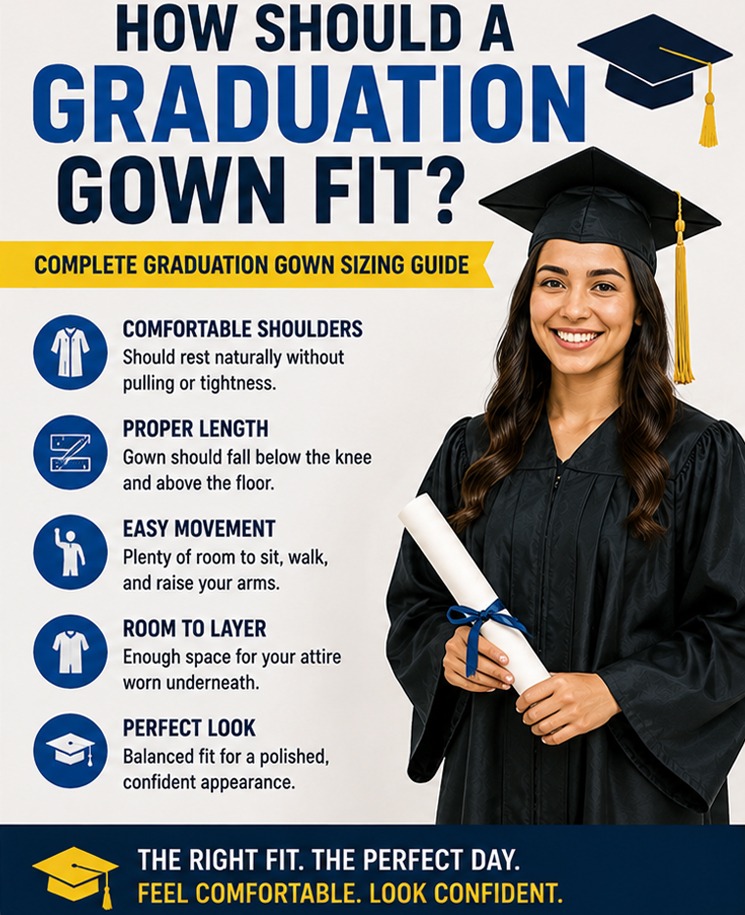
A properly fitted graduation gown should have a relaxed, flowing appearance without looking excessively oversized. It should provide enough room for the clothing underneath while still hanging neatly from the shoulders.A Well-Fitting Graduation Gown Should
- Sit comfortably across the shoulders
- Allow free arm movement
- Provide enough room through the chest and body
- Fall to an appropriate length below the knee
- Not drag on the floor
- Allow you to walk and use stairs safely
- Hang evenly when standing
Graduation Gowns Are Designed to Fit Loose
Do not expect a graduation gown to fit like a suit jacket, dress, or fitted robe. Academic gowns traditionally have a loose silhouette. A slightly roomy fit is normal because graduates may wear dress shirts, dresses, suits, sweaters, or other clothing underneath. The important factor is whether the gown looks proportionate and allows comfortable movement.How Long Should a Graduation Gown Be?
The gown should generally fall somewhere between the lower knee and lower calf area, depending on the gown style, manufacturer, and graduate’s height. The hem should not reach the floor. A gown that is too long can make walking more difficult and may become a tripping concern during the processional or while crossing the stage.Check the Length While Wearing Your Graduation Shoes
Try on the gown with the shoes you expect to wear at commencement. Heel height or thicker soles can slightly change how the overall outfit looks.Where Should the Graduation Gown Hem Fall?
Many gowns are designed to end approximately around the mid-calf area, though exact placement varies by style. The goal is to maintain the traditional academic appearance while leaving enough clearance above the floor for safe walking. If the gown reaches your ankles or touches your shoes, double-check the sizing chart because the gown may be too long.How Should a Graduation Gown Fit at the Shoulders?
The shoulder area should feel comfortable rather than tight. The gown should hang naturally from the shoulder seams without pulling across the upper back or chest. If raising your arms causes strong pulling or discomfort, the gown may be too small or too narrow for your build.How Should the Body of the Gown Fit?
The body should be loose enough to accommodate your graduation-day clothing. You should be able to sit, stand, turn, and walk without feeling restricted. However, an excessively wide gown may appear bulky and can create unnecessary fabric around the arms and body.Should a Graduation Gown Be Zipped?
Many graduation gowns have a front zipper and are intended to be worn closed during the ceremony, although institutional practices can vary. When checking your size, zip the gown completely to make sure there is enough room through the chest, waist, and hips.How Should Graduation Gown Sleeves Fit?
Sleeve design depends on degree level. Bachelor’s, master’s, and doctoral gowns may have distinctly different sleeve shapes, so sleeve appearance should not be judged by everyday clothing standards. The sleeves should allow comfortable arm movement and should not create significant pulling at the shoulders.Bachelor’s Graduation Gown Fit
A bachelor’s gown typically has relatively simple, pointed sleeves and a flowing body.A Bachelor’s Gown Should
- Fit comfortably across the shoulders
- Provide room for clothing underneath
- Allow normal arm movement
- Fall below the knee without touching the floor
- Zip comfortably when applicable
Master’s Graduation Gown Fit
Master’s gowns typically have distinctive elongated sleeves or sleeve panels. These features are intentional and should not be mistaken for incorrect sizing. When trying on a master’s gown, focus primarily on shoulder fit, body room, overall gown length, and whether the sleeves hang correctly according to the gown’s design.Doctoral Graduation Gown Fit
Doctoral gowns often have a more structured appearance because of velvet facings, sleeve bars, or other academic details. A doctoral gown should still provide comfortable movement, but buyers should pay close attention to chest and shoulder measurements, especially when selecting a tailored or higher-end doctoral style.How Do Graduation Gown Sizes Work?
Graduation gown sizing often differs from standard clothing sizing. Many gowns are selected primarily according to height rather than small, medium, or large. Some manufacturers also use weight ranges, chest measurements, or special fit categories.Common Sizing Information May Include
- Graduate height
- Weight range
- Chest measurement
- Plus-size or extended-size designation
- Custom measurements for doctoral regalia
Measure Your Height Accurately
Because many graduation gowns are sized by height, accurate measurement is important. Stand straight without shoes and measure from the floor to the top of your head. Use the exact size chart for the gown you are ordering rather than relying on memory or an estimated height.Should You Measure With or Without Shoes?
Unless the product instructions say otherwise, gown height sizing is generally based on your actual height rather than your height while wearing graduation shoes. Use the manufacturer’s instructions as the final guide.Does Weight Matter for Graduation Gown Sizing?
For some graduation gowns, yes. Height may determine the gown length while weight or body measurements help determine the amount of room through the chest and body. If the sizing chart includes a weight range, do not ignore it. Two graduates of the same height can require different gown sizes depending on body build.What If You Are Between Graduation Gown Sizes?
If your height falls between two size ranges, review the manufacturer’s recommendation carefully. Consider overall body measurements and the clothing you expect to wear underneath. When in doubt, choosing the option that provides enough room through the body may be more comfortable, but avoid selecting a gown so large that the hem becomes too long.What If You Are Tall and Slim?
Tall graduates may need a longer gown size even if they have a slim build. Choose based on the supplier’s height range first and then review any additional fit information.What If You Are Shorter With a Larger Build?
In this situation, you may need a gown designed with additional body room while maintaining the correct length. Look for extended, full-fit, or plus-size options when available instead of simply choosing a taller standard gown, which could create excessive length.Plus-Size Graduation Gown Sizing
Extended-size graduation gowns are designed to provide additional room through the chest, body, or sleeves while maintaining an appropriate gown length. Use the product’s specific chart because extended-size measurements can vary between suppliers.Petite Graduation Gown Sizing
Shorter graduates should be especially careful about gown length. Selecting a gown intended for a much taller person can cause the hem to fall too close to the floor. Look for size ranges that closely match your actual height.How Much Room Should You Have Under the Gown?
You should be able to comfortably wear your planned graduation outfit underneath the gown without the fabric pulling across the chest or shoulders. During your fitting, wear clothing similar to what you expect to wear on graduation day.What Should You Wear When Trying On a Graduation Gown?
For the most accurate fit check, try the gown over your planned ceremony clothing or something with similar thickness.Consider Wearing
- Dress shirt
- Blouse
- Dress
- Suit jacket if you plan to wear one
- Sweater for a cold-weather ceremony
- Your planned graduation shoes
How Can You Tell If a Graduation Gown Is Too Small?
A gown may be too small if it feels tight through the shoulders, chest, or upper arms.Signs the Gown May Be Too Small
- Zipper is difficult to close
- Fabric pulls across the chest
- Shoulders feel restrictive
- Raising your arms is uncomfortable
- Sleeves appear unusually short for the design
- Gown feels tight when sitting
How Can You Tell If a Graduation Gown Is Too Large?
A graduation gown should be loose, so some extra room is expected. However, excessive fabric can indicate that the size is too large.Signs the Gown May Be Too Large
- Hem is extremely close to the floor
- Shoulder seams sit far beyond the shoulders
- The gown looks unusually bulky
- Sleeves interfere with hand movement
- You have difficulty walking safely
Can a Graduation Gown Be Altered?
Minor adjustments may sometimes be possible, but altering academic regalia can affect the gown’s intended proportions and may not be permitted if the institution requires a standardized appearance. When possible, choosing the correct size from the start is preferable to making major alterations.Should You Hem a Graduation Gown?
A gown should not normally require hemming if the correct size has been selected. If the gown is excessively long, first verify that you received the correct size. If alteration is being considered, check school requirements and garment care instructions before making permanent changes.Do Graduation Gowns Shrink?
Many modern graduation gowns are made from synthetic materials such as polyester. These fabrics generally do not behave like cotton clothing and may be sensitive to heat. Do not attempt to intentionally shrink a graduation gown. Follow the care label provided with the garment.How Should a High School Graduation Gown Fit?
A high school graduation gown should have a traditional loose fit with enough room to move comfortably. Since high school ceremonies often require a uniform appearance, matching the class’s designated gown style, color, and finish is just as important as sizing.How Should a College Graduation Gown Fit?
College graduates should select a gown appropriate to their degree level and institution. The body should remain comfortable and loose, while the length should provide sufficient clearance above the floor.How Should a Preschool or Kindergarten Graduation Gown Fit?
For younger children, prioritize safe movement and comfort. The gown should not be so long that the child can step on it, and the sleeves should allow easy arm movement.For Children’s Graduation Gowns
- Check length carefully
- Make sure the child can walk easily
- Avoid excessive fabric
- Check cap fit
- Try everything on before the ceremony
How Should a Doctoral Gown Fit With a Hood?
Doctoral graduates should complete a fitting while wearing the academic hood because the hood adds additional fabric around the shoulders and back. The gown should still sit naturally and comfortably without the hood causing significant pulling.Does the Academic Hood Affect Gown Size?
Usually the hood does not determine the gown size, but wearing it during your final fitting helps confirm that the entire ensemble sits correctly.How Should a Graduation Cap Fit?
Although the cap is separate from gown sizing, the complete regalia fit should include the mortarboard or tam. A mortarboard should sit securely without feeling painfully tight or falling off when you move your head.When Should You Try On Your Graduation Gown?
Try it on as soon as the order arrives. Waiting until graduation morning leaves little time to address sizing problems, missing pieces, or other concerns.During the First Fitting
- Check gown length
- Check shoulders
- Zip the gown
- Raise your arms
- Sit down
- Walk normally
- Practice using stairs
Do a Second Fitting Before Commencement
Several days before graduation, try on the complete outfit again with your cap, tassel, hood, stole, cords, clothing, and shoes. This final fitting confirms that all pieces work together.How to Check Graduation Gown Fit in a Mirror
Look at the gown from the front, side, and back.Check Whether
- The shoulders sit evenly
- The zipper hangs straight
- The hem appears level
- The sleeves look balanced
- The gown is not twisted
- The length allows comfortable walking
Ask Someone Else to Check the Back
A family member or friend can help identify fit issues you may not notice in a mirror, especially around the shoulders, hood, and back hem.Graduation Gown Fit for Outdoor Ceremonies
Outdoor graduations may involve grass, stairs, slopes, or uneven surfaces. Proper gown length becomes especially important in these environments. Make sure the hem has enough clearance so it does not catch under your shoes while walking.Graduation Gown Fit for Hot Weather
Academic gowns add another layer over your clothing, so comfort matters during warm-weather ceremonies. Choose appropriate clothing underneath while still following your school’s dress expectations.Graduation Gown Fit for Cold Weather
If you expect to wear heavier clothing underneath, complete your fitting with a similar layer. A gown that fits comfortably over a thin shirt may feel different over a sweater or jacket.Common Graduation Gown Sizing Mistakes
- Guessing your height
- Ordering your normal clothing size without checking the gown chart
- Ignoring weight or chest measurements
- Choosing a taller size simply for more body room
- Waiting until graduation day to try on the gown
- Not testing the zipper
- Ignoring gown length
- Trying the gown without the clothes you will wear underneath
- Assuming all manufacturers use identical sizing
Graduation Gown Sizing Checklist
Before Ordering
- Confirm your degree level
- Measure your height
- Check your weight if required
- Measure your chest if the chart requests it
- Review the exact product size chart
- Choose standard or extended sizing when appropriate
- Confirm gown color and finish
After the Gown Arrives
- Open the package promptly
- Verify the size label
- Try on the gown
- Zip it completely
- Check shoulder comfort
- Check sleeve movement
- Check hem length
- Walk and sit while wearing it
- Try it with graduation shoes
Before Graduation Day
- Complete a full outfit fitting
- Add the cap or tam
- Add the academic hood when required
- Add approved stoles and cords
- Check movement again
- Prepare the gown according to its care instructions