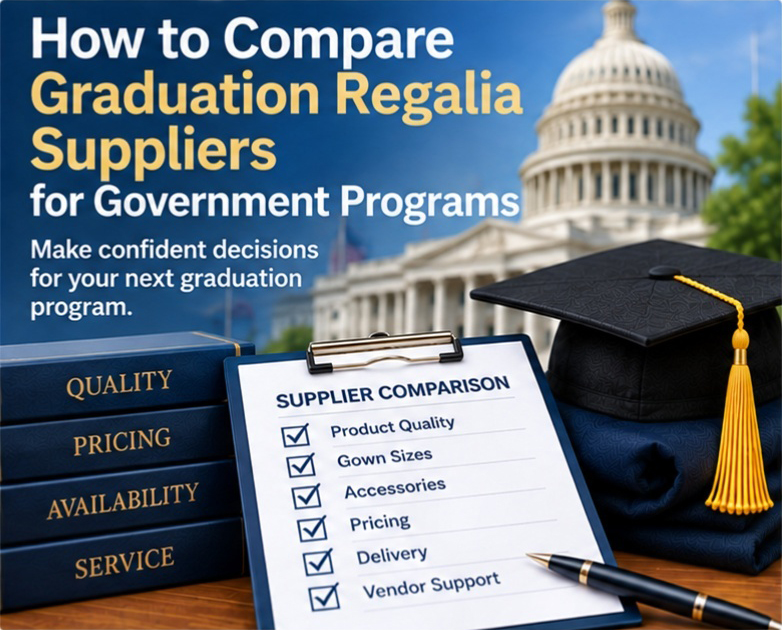
Comparing graduation regalia suppliers for a government education or training program should begin with a clearly defined requirement. A purchasing department cannot make a meaningful product or pricing comparison when different suppliers are quoting different gowns, accessories, size ranges, shipping arrangements or delivery schedules.
A useful graduation regalia supplier comparison therefore looks beyond the advertised price of a Doctoral cap and gown. Purchasing personnel may need to compare product specifications, available sizes, inventory, accessories, customization, packaging, delivery capability, commercial terms and documentation required by the applicable procurement process.
This guide provides a practical framework for organizing supplier information. The responsible government organization should use the procurement procedures and evaluation basis applicable to its particular purchase.
Start With One Common Requirement
Before requesting quotations, prepare one product requirement that can be provided consistently to prospective suppliers. The requirement may identify:- Program or department
- Type of graduation or recognition ceremony
- Expected participant quantity
- Required gown style
- Required gown color
- Quantity by gown size
- Extended-size requirements
- Cap quantity
- Tassel quantity and color
- Certificate-cover requirements
- Stoles and cords
- Academic regalia where applicable
- Customization requirements
- Delivery destination or destinations
- Required arrival date
Compare the Actual Product, Not Just the Product Name
Two vendors may both quote a “graduation gown,” but that does not necessarily mean they are quoting equivalent products. Compare relevant characteristics such as:- Gown style
- Material
- Matte or shiny finish
- Color
- Construction
- Sleeve design
- Closure
- Academic level
- Included accessories
- Available sizes
Create a Product Comparison Table
A simple internal worksheet can make product differences easier to identify. Possible columns include:- Required specification
- Supplier A response
- Supplier B response
- Supplier C response
- Exception or difference
Compare Graduation Gown Size Systems
Graduation gown sizing can vary by product and supplier. For each proposed gown, review:- Current product-specific size chart
- Information used to determine size
- Standard size range
- Extended-size options
- Availability of required sizes
- Any special sizing instructions
Do Not Compare Gown Sizes by Label Alone
A size designation used for one gown does not necessarily correspond to the same fit in another supplier’s product. Compare the actual sizing instructions and available size ranges for the products being proposed.Compare Extended-Size Availability
Extended-size capability can be important when selecting a gown for a diverse participant group. For each supplier, determine:- Which extended sizes are available
- Whether they are available in the required color
- Whether the product differs from the standard gown
- Whether pricing differs
- Whether processing time differs
Compare Inventory Against the Size Breakdown
Total inventory alone can be misleading. Suppose a program needs 200 gowns. A supplier having 200 gowns available does not necessarily satisfy the requirement if the inventory is concentrated in sizes the program does not need. Compare availability against the actual quantity required in each size.Ask Whether Inventory Is Reserved
Inventory can change between quotation and purchase authorization. Determine whether stated availability represents:- Current inventory only
- Inventory reserved for the purchaser
- Expected replenishment
- Availability that must be reconfirmed at order placement
Compare What Is Included in Each Graduation Package
A supplier may quote one combined price while another prices each component separately. For every package, determine whether it includes:- Gown
- Mortarboard
- Tassel
- Year charm
- Stole
- Certificate cover
- Other accessories
Compare Mortarboards
Review:- Cap style
- Color
- Construction
- Quantity
- Whether a tassel is included
Compare Tassels
Review:- Color
- Dated or undated design
- Year charm where required
- Quantity
- Whether the tassel is included with another product
Compare Certificate and Diploma Covers
Certificate-cover pricing is meaningful only when suppliers are quoting covers suitable for the same document. Compare:- Document dimensions
- Portrait or landscape orientation
- Cover dimensions
- Color
- Construction
- Plain or customized configuration
- Quantity
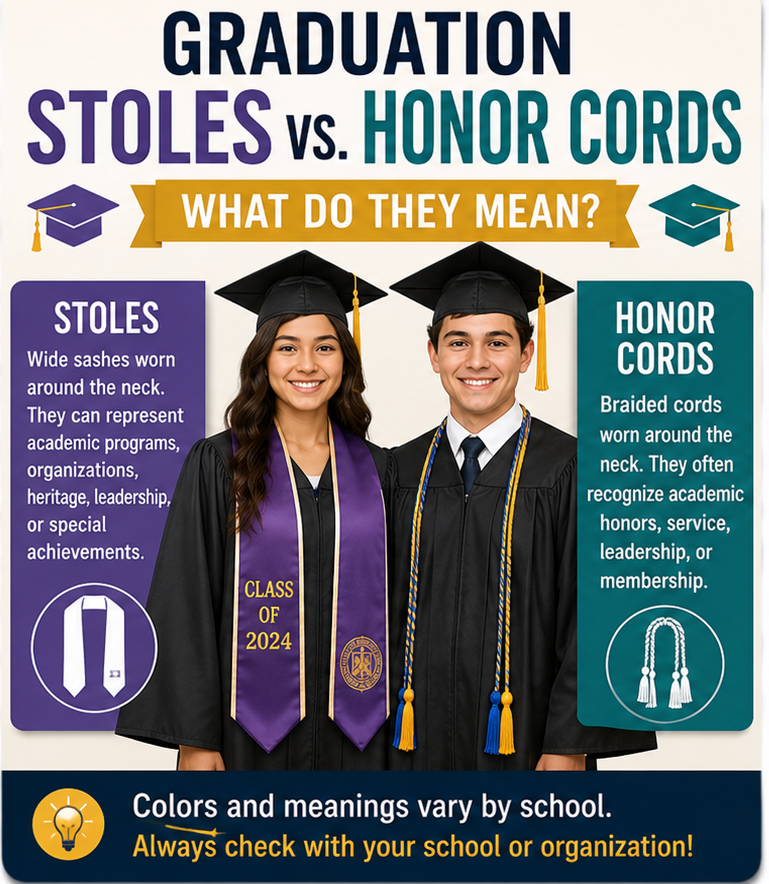
Compare Graduation Stoles
For stoles, compare:- Material
- Color
- Dimensions or style where relevant
- Plain or customized design
- Minimum quantity
- Production schedule
- Unit price
Compare Honor and Recognition Cords
For cords, compare:- Color or color combination
- Construction where relevant
- Quantity
- Unit price
- Availability
Compare Degree-Specific Academic Regalia Carefully
When participants are earning degrees through a college or university, first verify the degree-granting institution’s requirements. Then compare supplier products for:- Bachelor’s gowns
- Master’s gowns
- Doctoral gowns
- Academic hoods
- Mortarboards
- Doctoral tams
- Tassels
- Institution-specific requirements
Compare Standard and Custom Products Separately
Stock merchandise and custom merchandise can have substantially different ordering requirements. For customized products, compare:- Minimum quantities
- Artwork requirements
- Setup charges
- Proof procedures
- Revision procedures
- Production time
- Reorder requirements
Verify Authorization for Logos and Protected Artwork
If customization involves a government seal, agency logo, school mark, Tribal mark or other protected design, the purchaser should ensure that appropriate authorization exists before requesting reproduction. A supplier’s willingness or technical ability to reproduce artwork does not establish authorization to use it.Compare Unit Pricing
Where appropriate under the purchasing process, organize each quotation by line item. For each product, record:- Quantity
- Unit price
- Extended price
Do Not Stop at the Gown Unit Price
A supplier offering a lower gown price may have different package contents, shipping costs, customization charges or product specifications. Compare the complete requirement rather than relying on one advertised number.Compare the Merchandise Subtotal
Separating the merchandise subtotal from shipping and other charges can make quotations easier to analyze. Potential merchandise lines include:- Gowns
- Caps
- Tassels
- Certificate covers
- Stoles
- Cords
- Academic hoods
- Other approved products
Compare Customization Charges
Record customization separately when possible. Potential charges may include:- Setup
- Artwork preparation
- Embroidery
- Printing
- Other authorized customization
Compare Shipping and Freight
Determine whether each quotation:- Includes shipping
- Lists freight separately
- Provides only an estimate
- Includes multiple-destination delivery
- Includes expedited shipping
Compare Total Delivered Pricing
When appropriate under the established procurement method, organize the commercial information so the purchasing department can understand the total delivered requirement. A comparison may include:- Merchandise subtotal
- Customization
- Packaging charges
- Shipping or freight
- Other disclosed charges
- Total quoted amount
Compare Quote Validity Periods
One supplier may hold pricing longer than another. Record:- Quote date
- Expiration date
- Whether inventory is guaranteed during that period
- Whether freight is fixed or estimated
Compare Processing Time
Separate processing time from shipping time. For each supplier, record:- Stocked-product processing time
- Custom-production time
- Estimated shipment date
- Estimated transit time
- Expedited options
Compare Suppliers Against the Required Arrival Date
The relevant operational question is not simply which vendor can ship fastest. It is whether the proposed fulfillment schedule satisfies the purchasing organization’s required arrival date. The program may need merchandise before the ceremony for:- Receiving
- Inspection
- Counting
- Sorting
- Distribution among program sites
- Participant distribution
- Approved corrections
Compare Multi-Location Delivery Capability
If the order serves several locations, compare whether suppliers can provide:- One consolidated shipment
- Separate cartons by location
- Separate cartons by program
- Size-labeled cartons
- Direct shipment to multiple destinations
Compare Packaging
For a large institutional order, packaging can affect receiving and distribution efficiency. Compare whether suppliers can provide:- Gowns grouped by size
- Clearly labeled cartons
- Location-specific packing
- Program-specific packing
- Detailed packing lists
Compare Size-Exchange Procedures
Even with careful sizing, legitimate corrections may occur. Compare:- Exchange eligibility
- Condition requirements
- Deadlines
- Return shipping responsibility
- Replacement shipping
- Restrictions on custom products
Compare Return Policies
Review the treatment of unused standard merchandise separately from customized merchandise. Determine:- Which products are returnable
- Return deadline
- Required product condition
- Applicable charges
- Products excluded from return
Compare Shortage and Damage Procedures
Ask how each supplier handles:- Missing merchandise
- Incorrect quantities
- Incorrect sizes
- Incorrect products
- Shipping damage
- Manufacturing defects
Compare Purchase-Order Capability When Relevant
If the organization intends to use a purchase order, determine whether each supplier accepts institutional or government purchase orders. Compare:- PO acceptance
- Approval requirements
- Payment terms
- Minimum-order requirements
- Required documentation
Compare Vendor Documentation Against the Actual Requirement
Do not require documents merely because another agency requested them on an unrelated procurement. Identify the documentation required for this transaction and determine whether each prospective supplier can provide it. Depending on the purchase, documentation may include:- Tax documentation
- Vendor-registration forms
- Applicable business certifications
- Insurance documentation when required
- Solicitation-specific representations or certifications
- Other purchasing-office requirements
Verify Business Certifications When Relevant
If a supplier claims a federal, state or local certification that matters to the acquisition, verify the certification through the appropriate official source. Do not treat a general claim such as “small business” as evidence of a particular government certification.Understand Unique Entity ID and SAM Registration
For federal purchasing, a Unique Entity ID and full SAM registration are not equivalent. SAM.gov allows an organization to obtain only a Unique Entity ID without completing entity registration. An organization seeking to bid directly on federal awards generally needs registration, subject to applicable federal requirements and exceptions. When active SAM registration is required for a particular federal acquisition, it should be verified through the appropriate federal system rather than inferred from possession of a Unique Entity ID.Compare Relevant Past Performance Only When Applicable
If past performance is an established evaluation factor, information may include:- Comparable institutional orders
- Comparable order quantities
- References
- Documented delivery experience
- Other relevant performance information permitted by the procurement process
Require Suppliers to Identify Exceptions
A supplier comparison becomes more useful when differences are visible. Ask suppliers to identify exceptions involving:- Product specification
- Color
- Size
- Quantity
- Availability
- Customization
- Packaging
- Shipping
- Delivery
- Commercial terms
Compare Proposed Substitutions
If alternatives are permitted, identify any proposed substitution and compare it with the original requirement. Do not assume a substitute is equivalent merely because it is described as similar.Compare Backorder Exposure
For any unavailable item, record:- Quantity currently available
- Quantity backordered
- Expected replenishment date
- Proposed substitute
- Effect on required arrival date
Compare Partial-Shipment Terms
Determine whether each quotation assumes:- One complete shipment
- Multiple partial shipments
- Additional freight for split shipments
- Different delivery dates for different products
Build a Side-by-Side Supplier Comparison Worksheet
An internal worksheet can organize the commercial and product information received from each supplier. Useful rows include:- Gown specification
- Gown color
- Standard size range
- Extended-size availability
- Inventory availability
- Cap specification
- Tassel specification
- Certificate-cover specification
- Stoles
- Cords
- Customization
- Unit pricing
- Merchandise subtotal
- Shipping
- Total delivered amount
- Processing schedule
- Required-arrival-date response
- Packaging
- Exchange terms
- Return terms
- PO capability when applicable
- Required documentation
- Exceptions
Do Not Create an Unstated Scoring System
A supplier-comparison worksheet is useful for organizing information, but it should not introduce new evaluation factors or informal scoring criteria that are inconsistent with the established procurement process. Use the evaluation basis stated for the acquisition.Federal Simplified-Acquisition Comparison Considerations
For federal simplified acquisitions, current Federal Acquisition Regulation procedures require quotations or offers to be evaluated impartially and on the basis established in the solicitation. Transportation charges from the supplier’s shipping point to the delivery destination are included in the evaluation. When price and other factors are used, the FAR permits efficient comparative evaluation procedures and identifies past performance as one possible factor. The specific evaluation approach remains the responsibility of the contracting activity.Check Required Sources Before Comparing Commercial Vendors
Federal agencies should determine whether the requirement can be satisfied through applicable required sources, existing indefinite-delivery contracts or other established contracts before proceeding under the simplified acquisition procedures addressed by FAR Part 13. State, local and Tribal organizations may have different required contracts, cooperative purchasing arrangements or source requirements.Do Not Divide a Known Requirement to Avoid Purchasing Requirements
Federal FAR 13.003 prohibits breaking down a known requirement into smaller purchases merely to permit use of simplified acquisition procedures or avoid requirements that apply above the micro-purchase threshold. Other government organizations should follow their own applicable procurement rules concerning purchase aggregation and competition.Verify Funding Allowability Separately
A supplier’s willingness to sell graduation merchandise to a government program does not establish that the expense is allowable under a particular grant, appropriation or program funding source. The responsible organization should verify applicable:- Law
- Regulations
- Grant or award terms
- Cost requirements
- Program guidance
- Agency policy
Graduation Regalia Supplier Comparison Checklist
- Same requirement provided to suppliers
- Gown specifications compared
- Gown colors compared
- Product-specific size charts reviewed
- Standard size ranges compared
- Extended-size options compared
- Size-level inventory reviewed
- Package contents compared
- Caps compared
- Tassels compared
- Certificate covers compared
- Stoles compared
- Cords compared
- Academic regalia requirements verified
- Customization compared
- Artwork authorization confirmed where applicable
- Unit prices compared
- Extended prices compared
- Merchandise subtotals compared
- Customization charges compared
- Shipping reviewed
- Total delivered amounts identified
- Quote validity reviewed
- Processing times compared
- Required arrival date considered
- Multi-location capability reviewed
- Packaging compared
- Exchange procedures reviewed
- Return policies reviewed
- Shortage and damage procedures reviewed
- PO acceptance confirmed when relevant
- Required vendor documentation reviewed
- Relevant certifications verified
- SAM registration verified when applicable
- Past performance considered only when applicable
- Exceptions identified
- Substitutions identified
- Backorders identified
- Partial-shipment terms reviewed
- Applicable required sources checked
- Established evaluation basis followed
- Funding allowability verified separately
Graduation Regalia for Government and Institutional Programs
Cap and Gown Outlet is an independent academic regalia supplier serving individual customers and qualifying institutional purchasers. Depending on current availability and the purchasing organization’s requirements, institutional buyers may request information or quotations for:- Graduation gowns
- Mortarboard caps
- Graduation tassels
- Cap, gown and tassel packages
- Extended-size gown options where available
- Certificate and diploma covers
- Graduation stoles
- Honor and recognition cords
- Bachelor’s regalia
- Master’s regalia
- Doctoral regalia
- Academic hoods where applicable
Information to Provide When Comparing Suppliers
A purchasing department can prepare one requirement containing:- Products required
- Product specifications
- Gown color
- Quantity by gown size
- Extended-size requirements
- Cap and tassel quantities
- Certificate-cover dimensions
- Stole and cord requirements
- Customization specifications
- Delivery destination or destinations
- Required arrival date