Government education and training programs do not always graduate hundreds of participants at one time. A local workforce program may recognize 18 completers. A vocational training class may have 12 graduates. An adult education program may need graduation apparel for only seven participants, while another public program may need a single replacement Bachelors gown after its main order has already arrived.
For these organizations, large mandatory order quantities can create unnecessary inventory and expense. No-minimum graduation regalia ordering for small government programs, where available for the selected products, gives institutional purchasers greater flexibility to order according to actual ceremony needs.
Small-quantity purchasing can be useful for government education, workforce, vocational, GED, training and recognition programs that need standard graduation merchandise without committing to a large bulk order.
What Does No-Minimum Graduation Regalia Ordering Mean?
No-minimum ordering generally means a qualifying product can be purchased without meeting a mandatory large-quantity threshold. Depending on the merchandise, this may allow an organization to order:- One graduation gown
- A few caps and gowns
- A small set of tassels
- Several certificate covers
- A limited number of plain stoles
- Recognition cords in small quantities
- Replacement items for an existing institutional order
Why Small Government Programs Need Flexible Ordering
Public-sector education and training programs can operate at very different scales. Some programs serve a small number of participants because of:- Program capacity
- Specialized training
- Local population
- Multiple completion dates
- Rolling enrollment
- Small regional cohorts
- Individual credential completion
- Separate program locations
Programs That May Benefit From Small-Quantity Ordering
Where appropriate under their purchasing and program requirements, flexible graduation-regalia ordering may be useful for:- Adult education programs
- GED and high school equivalency programs
- Vocational education programs
- Career and technical education programs
- Workforce development programs
- Occupational skills programs
- Apprenticeship completion ceremonies
- Reentry education programs
- Correctional education programs
- Government employee training programs
- Small public education programs
- Regional training programs
- State-operated education programs
- Other qualifying government-supported education and training programs
Order for the Actual Number of Participants
A small program should begin with its actual expected participant count rather than selecting an arbitrary bulk quantity. For example, if a program expects 14 participants, its initial requirement might be:- 14 graduation gowns
- 14 mortarboards
- 14 tassels
- 14 certificate covers
- 4 approved recognition cords
Small Orders Can Reduce Excess Inventory
Ordering significantly more merchandise than required can leave an organization with products it may not use. Excess inventory can be especially difficult when merchandise includes:- A specific graduation year
- Program-specific wording
- Customized artwork
- Unusual colors
- Sizes that may not match future participants
Small Orders Are Also Useful for Supplemental Needs
No-minimum or low-quantity purchasing can be useful even when the original institutional order was large. Supplemental needs can occur when:- A participant is added late
- A gown size changes
- A replacement item is needed
- A certificate cover is damaged
- An additional program completer becomes eligible
- A participant requires a different available gown size
Standard Graduation Gowns for Small Programs
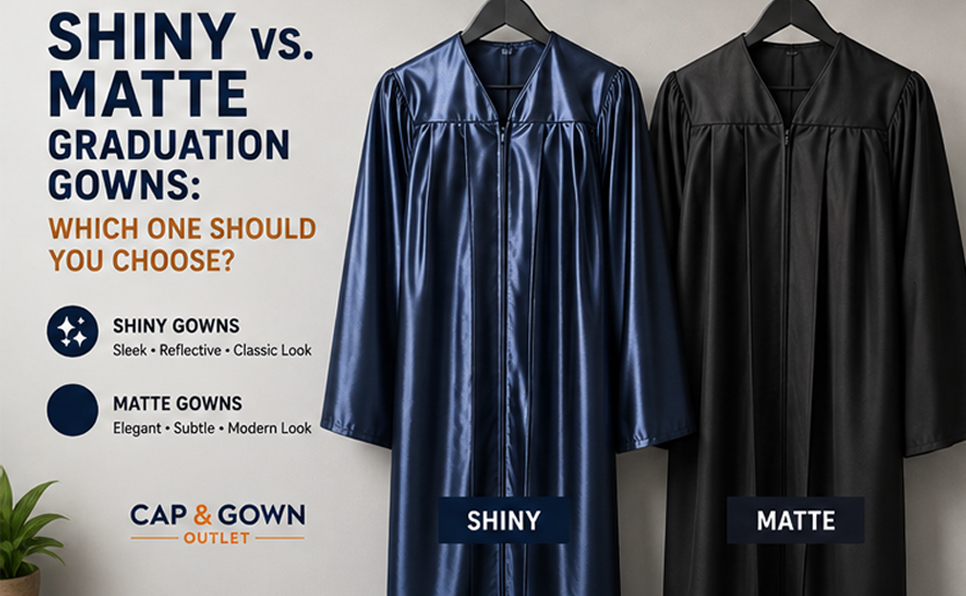
A standard graduation gown can provide a traditional ceremony appearance without requiring complex customization. Before purchasing, review:- Gown style
- Material
- Color
- Matte or shiny finish
- Available size range
- Extended-size availability
- Package contents
- Current inventory availability
Use the Product-Specific Gown Size Chart
Small orders still require accurate sizing. Do not rely only on everyday clothing sizes. Use the current sizing instructions for the exact graduation gown being purchased. Collect participant information before placing the order whenever possible so the organization can purchase the appropriate size distribution.Include Extended Sizes During Initial Planning
Extended sizes should be considered as part of the normal sizing process. Before selecting a Doctoral gown for the program, verify that the available size range can accommodate expected participants.Caps and Tassels for Small Graduation Groups
A mortarboard and tassel can complete a traditional graduation package. Programs should determine:- Cap color
- Cap style
- Tassel color
- Dated or undated tassel
- Year charm requirement
- Quantity
Consider Undated Tassels for Programs With Multiple Ceremonies
When program requirements permit, undated tassels can provide additional flexibility for organizations holding several small recognition ceremonies throughout the year. Unused standard merchandise may remain suitable for a future cohort, subject to condition and current program requirements.Certificate Covers for Small Government Programs
Some education and training programs may prefer a certificate-centered recognition ceremony instead of full cap-and-gown apparel. Certificate covers can be useful for presenting:- Training completion certificates
- Vocational certificates
- Workforce credentials
- Adult education recognition documents
- Skills-training certificates
- Other approved completion documents
Measure the Certificate Before Ordering Covers
Do not assume all certificates use the same dimensions. Verify:- Certificate width
- Certificate height
- Portrait or landscape orientation
- Required cover dimensions
- Cover color
- Quantity
Recognition Cords for Small Cohorts
A small graduating class may have only a few participants qualifying for a particular distinction. Recognition cords can be ordered according to actual eligibility where the selected product allows small-quantity purchasing. The organization should maintain an internal recognition key identifying:- Cord color
- Achievement represented
- Eligibility criteria
- Approving authority
Plain Graduation Stoles
Plain stoles can provide recognition without requiring program-specific printing or embroidery. For small programs, this may offer greater purchasing flexibility than customized merchandise.Customized Products May Have Minimum Quantities
No-minimum availability for standard merchandise should not be assumed to apply to customization. Custom products may involve:- Minimum order quantities
- Artwork requirements
- Setup requirements
- Proof approval
- Additional processing time
- Different pricing structures
Government Logos and Seals Require Appropriate Authorization
Government seals, agency logos, official insignia and other protected marks should only be reproduced when the purchaser has appropriate authorization. The ability of a supplier to customize a product does not itself establish permission to reproduce government artwork.Academic Degree Regalia Requires Separate Planning
Government-supported participants who are earning academic degrees should follow the regalia requirements established by their degree-granting institution.Bachelor’s Regalia
Bachelor’s regalia commonly includes a bachelor’s gown, mortarboard and tassel, subject to institutional requirements. Do not automatically add an academic hood unless the institution requires or permits one.Master’s Regalia
Master’s graduates generally use a degree-specific gown and commonly an academic hood according to institutional requirements.Doctoral Regalia
Doctoral requirements may include a doctoral gown, academic hood and institution-approved doctoral headwear.Do Not Use Generic Training Regalia When Academic Specifications Apply
No-minimum availability should not take priority over academic requirements. If a college or university specifies particular regalia for its graduates, those specifications should guide the purchase.Small Programs Should Still Check Existing Inventory
Before ordering, review merchandise already available from previous ceremonies. Count:- Gowns by size
- Extended-size gowns
- Mortarboards
- Undated tassels
- Dated tassels
- Certificate covers
- Plain stoles
- Recognition cords
Example: Ordering for a 12-Person Training Program
Consider a public training program recognizing 12 participants. After reviewing its ceremony requirements and existing inventory, it might determine that it needs:- 10 new gowns because two suitable gowns are already in inventory
- 12 mortarboards
- 12 undated tassels
- 12 certificate covers
- 3 recognition cords for participants meeting defined criteria
Example: One Replacement Gown
A program may complete its main order and later discover that one participant needs a different gown size. When the selected standard gown is available individually, the organization may be able to purchase the required replacement without placing another large bulk order.Example: Rolling Completion Ceremonies
Some programs recognize participants several times throughout the year rather than holding one large annual ceremony. For example:- January: 8 participants
- April: 11 participants
- July: 6 participants
- October: 9 participants
When Bulk Purchasing May Still Make Sense
No-minimum ordering is not automatically the best purchasing approach for every program. An organization with predictable recurring demand may determine that a larger order is more practical after considering:- Expected annual participation
- Storage capability
- Product consistency
- Inventory management
- Shipping
- Quantity-based pricing where available
- Future ceremony schedules
Compare Small-Order and Bulk-Order Costs
When both options are available, compare the total delivered cost rather than looking only at unit price. Review:- Merchandise price
- Quantity-based pricing if applicable
- Customization
- Packaging
- Shipping
- Potential unused inventory
Shipping Matters More on Very Small Orders
For small quantities, freight can represent a larger portion of the total delivered cost. Purchasers should evaluate merchandise and shipping together when comparing ordering strategies.Prepare a Small-Order Product Worksheet
A simple worksheet can identify:- Product
- Required quantity
- Existing inventory
- Quantity to purchase
- Size or specification
- Estimated product cost
- Estimated shipping
- Required arrival date
Small Government Purchases Still Require Procurement Compliance
A small order does not eliminate applicable government purchasing requirements. Federal, state, local and Tribal organizations may have different procurement procedures, approval requirements and purchasing authorities. The responsible purchasing office should determine the appropriate method for the particular transaction.Federal Micro-Purchase Procedures
Federal acquisition rules establish procedures for purchases at or below the applicable micro-purchase threshold. Authorized and trained federal purchasers may use permitted purchasing methods under applicable agency procedures. Required sources and other acquisition requirements can still apply. A small graduation merchandise order is not automatically authorized merely because its dollar value falls below a particular threshold.Government Purchase Cards
Federal acquisition rules identify the Governmentwide commercial purchase card as the preferred method to purchase and pay for federal micro-purchases. The card may only be used by appropriately designated personnel and for purchases otherwise authorized by law or regulation.Do Not Split a Larger Requirement Into Small Orders
No-minimum product availability should not be used as a reason to divide an otherwise larger government requirement into smaller purchases to avoid procurement requirements. The purchasing organization should evaluate its legitimate requirement and follow the acquisition rules applicable to that requirement.Purchase Orders for Small Institutional Orders
If an organization intends to use a purchase order, supplier PO acceptance and applicable payment terms should be confirmed before issuance. PO acceptance may vary and should not be assumed merely because standard products are available individually.Funding Allowability Must Be Verified
Government funding for an education, workforce, vocational or training program does not automatically make graduation merchandise an allowable expense. The responsible organization should verify applicable law, regulations, award or grant terms, cost requirements, program guidance and agency policies before charging graduation products to a particular funding source.Small-Quantity Ordering Checklist
- Confirm the number of participants
- Identify the achievement being recognized
- Determine whether full graduation regalia is appropriate
- Identify essential products
- Check existing inventory
- Select the graduation gown
- Obtain the current size chart
- Collect accurate sizing information
- Include extended sizes
- Select caps and tassels
- Measure certificates before ordering covers
- Determine stole eligibility
- Determine cord eligibility
- Calculate every product separately
- Verify no-minimum availability for each selected product
- Check minimums for customized merchandise
- Compare small-order and bulk-order options where relevant
- Calculate total delivered cost
- Follow applicable government purchasing procedures
- Confirm PO acceptance when applicable
- Verify funding allowability
- Verify authorization for government artwork
- Set the required arrival date
- Inspect merchandise after delivery
- Record remaining inventory for future ceremonies
Small-Quantity Graduation Products
Cap and Gown Outlet is an independent academic regalia supplier serving individual customers and qualifying institutional purchasers. Depending on the selected product and current availability, organizations may be able to purchase small quantities of:- Graduation gowns
- Mortarboard caps
- Graduation tassels
- Cap, gown and tassel packages
- Certificate covers
- Diploma covers
- Plain graduation stoles
- Recognition and honor cords
- Bachelor’s regalia
- Master’s regalia
- Doctoral regalia
- Academic hoods where applicable
- Related graduation accessories