Pre-K and kindergarten graduation celebrates one of a child’s earliest educational milestones. For families, it can be a memorable opportunity to recognize how much a young student has learned and grown. For schools, preschools and early-learning programs, it can be a joyful way to bring students, teachers and families together.
Unlike college commencement, however, preschool and kindergarten graduation does not need to follow a universal academic dress tradition. Programs can create ceremonies appropriate for their students while considering comfort, sizing, appearance, school preferences and age-appropriate safety.
If Bachelors caps and gowns will be part of the celebration, a little planning can make a significant difference.
This Pre-K and kindergarten graduation cap and gown guide walks parents, teachers, school administrators and graduation coordinators through the entire process—from choosing children’s gown sizes and colors to organizing group orders, preparing young graduates and planning for ceremony day.
What Do Children Usually Wear for Pre-K or Kindergarten Graduation?
Graduation attire varies by school and program, but a children’s graduation set may include:
- Graduation gown
- Mortarboard-style graduation cap
- Tassel
Programs may also choose approved accessories such as:
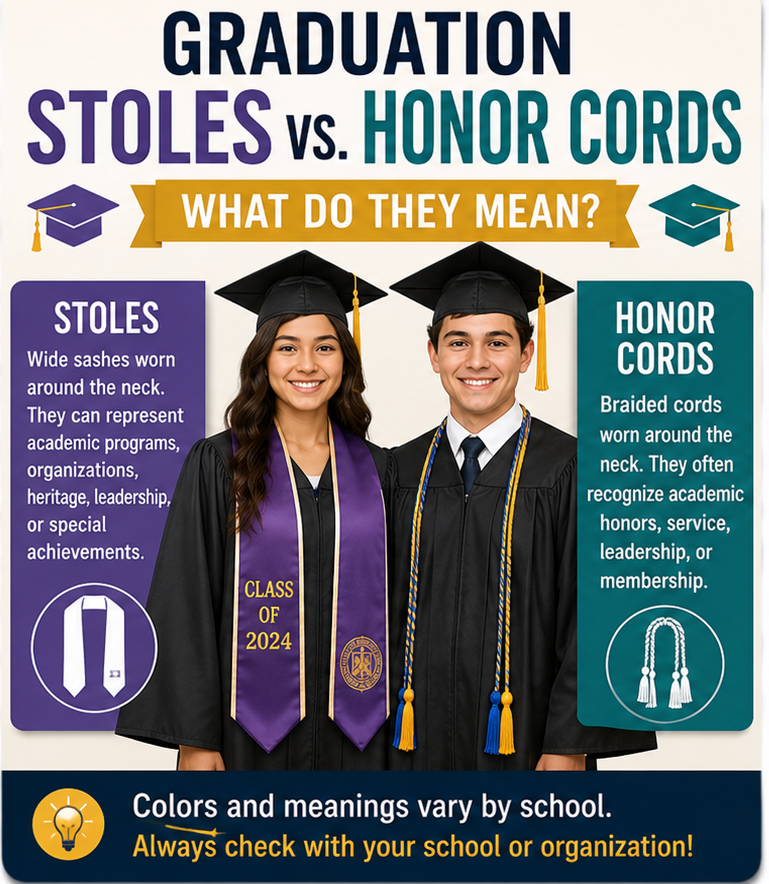
- Graduation stoles
- Recognition cords
- Medallions
- Diploma or certificate covers
Not every program uses every item. Some schools prefer only caps and gowns, while others hold simpler celebrations without formal regalia.
Pre-K vs. Kindergarten Graduation Regalia
There is no universal rule requiring different graduation regalia for Pre-K and kindergarten.
Instead, schools generally choose products based on:
- Student sizes
- School preferences
- Ceremony format
- Selected colors
- Budget
- Whether the regalia will be kept or reused
The most important consideration is selecting graduation apparel designed or appropriately sized for young children rather than assuming adult graduation products will fit.
Step 1: Decide What the School Will Provide
Schools planning a graduation ceremony should first define the complete student package.
For example:
| Item | Included? |
|---|---|
| Graduation Gown | Yes / No |
| Graduation Cap | Yes / No |
| Tassel | Yes / No |
| Stole | Yes / No |
| Recognition Cord | Yes / No |
| Certificate or Diploma Cover | Yes / No |
Establishing the package before ordering helps prevent parents and teachers from assuming different items are included.
Step 2: Choose the Graduation Gown Color
Pre-K and kindergarten graduation gowns are available in a variety of colors depending on the supplier and product.
Possible choices may include:
- Royal blue
- Navy
- Red
- White
- Black
- Green
- Purple
- Gold
- Other available colors
Schools may choose a color that complements their school identity or simply select a color they feel works well for the ceremony.
Do Kindergarten Gown Colors Have Special Meanings?
There is no universal color system for kindergarten graduation gowns.
A blue kindergarten gown does not automatically represent one achievement, and a white or gold gown does not automatically represent another.
The school or program determines its own ceremony colors.
Should Boys and Girls Wear Different Graduation Gown Colors?
There is no requirement to assign graduation gown colors by gender.
A school may choose one color for the entire graduating class, multiple colors for a particular visual theme, or another arrangement appropriate to its program.
Using one standardized gown color can make group ordering and class photographs particularly simple.
Step 3: Choose the Correct Kindergarten Graduation Gown Size
Young children’s heights can vary considerably within the same class.
That makes accurate sizing important.
Do not assume that every kindergarten student needs the same gown size simply because the children are approximately the same age.
Use the Product-Specific Size Chart
Graduation gown sizing systems can differ by manufacturer and product.
Always use the size chart provided for the specific children’s gown being purchased.
Do not automatically transfer a size from another brand or previous year’s order.
Measure Each Child’s Current Height
Height is commonly an important measurement when selecting graduation gown sizes.
For an accurate measurement:
- Have the child stand upright on a level floor.
- Position the child against a flat wall when practical.
- Have the child look straight ahead.
- Measure from the floor to the top of the head.
- Record the measurement.
- Compare it with the product-specific sizing information.
Should Children Wear Shoes While Being Measured?
Follow the measurement instructions provided with the specific product.
If the size chart requests height without shoes, measure without shoes. If it specifies another method, follow that instruction.
Consistency matters when collecting measurements for an entire class.
Do Not Guess Gown Size From the Child’s Age
Two five-year-old children can have very different heights and builds.
Age alone is therefore not a reliable graduation gown measurement.
Use actual measurements whenever possible.
Do Not Use Everyday Clothing Size as a Substitute
A child’s regular clothing size—such as 5T or size 6—does not necessarily correspond directly to a graduation gown size.
Graduation garments use their own sizing systems.
Follow the gown manufacturer’s chart.
Consider the Child’s Build When Necessary
If a child requires additional room through the body, check whether the selected product offers an appropriate fit option.
Do not automatically select a gown intended for a much taller child simply to gain additional width. That can create excessive length.
How Long Should a Kindergarten Graduation Gown Be?
There is no single universal hem position for every children’s graduation gown.
The intended length depends on the product design and sizing system.
However, the gown should allow the child to:
- Walk comfortably
- Stand comfortably
- Sit comfortably
- Use stairs safely when applicable
- Participate in the ceremony without repeatedly stepping on the garment
If a gown appears excessively long, recheck the selected size against the manufacturer’s specifications.
Step 4: Choose a Child-Friendly Graduation Cap
Young children may be unfamiliar with mortarboards and may be excited, curious or distracted by them.
A cap should fit securely enough for normal ceremony movement without creating unnecessary discomfort.
Before graduation day, have each child try on the cap.
Check the Cap Before the Ceremony
Make sure:
- The cap sits comfortably
- It is not obstructing the child’s vision
- The child understands that the cap should remain on unless instructed otherwise
- The tassel is positioned so it is not continually falling into the child’s face
Be Careful With Pins and Small Accessories
Because Pre-K and kindergarten graduates are young children, schools and parents should carefully evaluate any pins, clips, fasteners or small decorative pieces used with graduation attire.
Avoid improvising with sharp objects or unsecured small parts that could create an unnecessary hazard.
Adult supervision and the school’s safety policies should guide preparation.
Step 5: Add the Graduation Tassel
A tassel adds the familiar finishing touch to a mortarboard.
Available tassel colors vary by product and supplier.
A school may select:
- A color matching the gown
- A contrasting school-related color
- A neutral or metallic-style color
- Another available combination
Which Side Should a Kindergarten Tassel Go On?
There is no universal rule requiring every Pre-K or kindergarten program to follow a specific tassel-side tradition.
The school should decide how students will wear their tassels and communicate that instruction consistently.
If the ceremony includes a symbolic tassel movement, teachers should practice it with the children beforehand.
Should Kindergarten Students Move Their Tassels?
They can if the school chooses to include that activity.
For young students, simplicity is usually helpful.
If a tassel movement is part of the program, teachers can demonstrate it during rehearsal so children know what to expect.
Step 6: Decide Whether to Use Stoles or Recognition Cords
Some early-childhood programs may add stoles or cords, while others keep the graduation outfit simple.
There is no requirement to use them.
If a school does include additional accessories, it should establish:
- Who receives them
- What they represent
- Which colors are used
- How they should be worn
Keep Young Children’s Regalia Simple
More accessories do not necessarily make a better graduation outfit.
For very young graduates, a simple cap, gown and tassel combination can provide a clean traditional appearance while making dressing and ceremony management easier.
Step 7: Decide What Children Should Wear Under the Graduation Gown
Parents should receive guidance about clothing before ceremony day.
Comfort should be a priority.
Consider:
- Indoor or outdoor ceremony
- Expected temperature
- Length of the event
- School dress expectations
- Footwear
- How much clothing will show below the gown
Avoid Overdressing Under the Gown
Graduation gowns add another clothing layer.
If the ceremony is outdoors or held in a warm room, heavy clothing underneath can make children uncomfortable.
Choose clothing appropriate for the conditions.
Choose Shoes for Walking, Not Just Photographs
Young graduates may need to walk:
- Across a classroom
- Into an auditorium
- Across a stage
- On grass
- Up or down steps
Footwear should be secure and comfortable for the environment.
Step 8: Create a Student Size Roster
Schools ordering for an entire class should collect sizing information in one organized document.
| Student | Height | Selected Gown Size | Cap/Gown Color | Package Checked |
|---|---|---|---|---|
| Student 1 | ________ | ________ | ________ | Yes / No |
| Student 2 | ________ | ________ | ________ | Yes / No |
| Student 3 | ________ | ________ | ________ | Yes / No |
A roster is much more reliable than estimating how many gowns of each size a class will need.
Measure Students Close Enough to the Ceremony
Young children can grow quickly.
If measurements are collected far in advance, consider whether they are likely to remain appropriate by graduation.
Schools should balance ordering lead time with the value of using reasonably current measurements.
Step 9: Standardize the School’s Group Order
Before ordering, create one final specification for the entire class.
For example:
- Gown style: ________
- Gown color: ________
- Cap style: ________
- Tassel color: ________
- Stole: Yes / No
- Recognition cord: Yes / No
- Total graduates: ________
- Required arrival date: ________
This helps prevent inconsistent products from being ordered by different staff members.
Should Parents Buy Kindergarten Caps and Gowns Individually?
Schools can choose different purchasing models.
Possible approaches include:
- School purchases the complete class order
- Parents purchase an approved set independently
- School coordinates orders and families pay individually
- Regalia is reused from year to year when appropriate
If families purchase independently, the school should provide a clear specification so students do not arrive in noticeably different Masters gown colors or styles when a coordinated appearance is intended.
School Group Orders vs. Individual Family Orders
A coordinated school order can simplify:
- Color consistency
- Product selection
- Size tracking
- Distribution
- Ceremony preparation
Individual ordering may provide families more direct control over purchasing, but it requires especially clear instructions from the school.
Step 10: Order With Enough Time for Inspection
Do not plan for the graduation products to arrive immediately before the ceremony.
The school needs time to:
- Open the shipment
- Count the products
- Confirm colors
- Match sizes to students
- Check caps and tassels
- Address permitted corrections if necessary
- Conduct a rehearsal
Processing and shipping timelines vary by supplier and product, so review current information before ordering.
Processing Time Is Different From Shipping Time
Processing is the period needed to prepare an order before shipment.
Shipping is the transportation time after the package is handed to the carrier.
Schools should consider both when planning a graduation order.
Step 11: Inspect Every Graduation Set
When a group order arrives, do not leave the cartons unopened until graduation week.
Verify each package.
Check the Gown
- Correct size
- Correct color
- Expected style
- No obvious damage
Check the Cap
- Included when expected
- Correct color
- Usable condition
Check the Tassel
- Included when expected
- Correct color
- Properly assembled
Check Optional Accessories
- Correct quantity
- Correct color
- Correct approved design
Step 12: Label Student Packages
Once sizes have been verified, schools can organize graduation sets by student.
Each package can be labeled with information such as:
- Student name
- Class or teacher
- Gown size
- Accessories included
This can make distribution much easier than sorting dozens of identical packages immediately before the ceremony.
Step 13: Conduct a Graduation Dress Rehearsal
A rehearsal is particularly useful with young children.
Students can practice:
- Putting on the gown
- Wearing the cap
- Walking in a line
- Sitting while wearing the gown
- Standing when instructed
- Walking across the ceremony area
- Receiving a certificate
- Returning to their seat
If a tassel movement is planned, practice that too.
Perform a Child-Friendly Movement Check
During rehearsal, watch each student walk normally.
Make sure:
- The gown is not being stepped on
- The child can use any required steps comfortably
- The cap is reasonably secure
- The tassel is not obstructing vision
- Accessories are not creating unnecessary distractions
Step 14: Prepare the Graduation Gowns
Graduation gowns may arrive folded and develop packaging wrinkles.
Follow the garment’s care instructions.
Schools should avoid applying excessive heat without first confirming that the fabric can tolerate the selected wrinkle-removal method.
Preparing gowns before distribution or ceremony day is easier than trying to address an entire class at the last minute.
Step 15: Plan for Graduation Photos
For many families, photographs become the lasting memory of kindergarten graduation.
Schools can create a simple photo area using:
- A clean neutral background
- A classroom graduation display
- A school-approved backdrop
- A simple outdoor location
Before taking the photograph, check:
- Cap position
- Tassel position
- Gown closure
- Collar and neckline
- Approved accessories
Take Photos Before Children Become Tired
Young children may become less cooperative after a long ceremony.
When practical, schools and parents may find it easier to capture formal cap-and-gown photographs before the main event or early in the celebration.
Planning an Outdoor Kindergarten Graduation
Outdoor ceremonies require additional planning.
Consider:
- Temperature
- Sun exposure
- Wind
- Ground conditions
- Footwear
- Availability of shade
- Backup plans for poor weather
Wind can be particularly challenging for mortarboards, so schools should consider weather conditions when planning outdoor activities.
Keep the Ceremony Appropriate for Young Children
Pre-K and kindergarten graduates generally do better with ceremonies designed around their age and attention span.
A program might include:
- Student entrance
- Short welcome
- Song or class presentation
- Teacher remarks
- Certificate presentation
- Optional tassel moment
- Class photograph
- Family celebration
The ceremony does not need to imitate a lengthy college commencement to feel meaningful.
Pre-K Graduation Planning
For younger preschool graduates, simplicity becomes even more important.
Schools should consider whether students can comfortably manage:
- Long gowns
- Mortarboards
- Tassels
- Additional accessories
- Extended periods of sitting
The ceremony should be adapted to the children rather than expecting young children to adapt to an overly complicated ceremony.
Kindergarten Graduation Supplies for Schools
A school planning a complete celebration may need more than caps and gowns.
Depending on the ceremony, supplies can include:
- Children’s graduation gowns
- Mortarboards
- Tassels
- Approved stoles or cords
- Diploma or certificate covers
- Printed certificates
- Student package labels
Graduation Certificate Covers
A certificate or diploma cover can provide a polished way to present a completion certificate.
If using covers, schools should confirm that the selected certificate dimensions are compatible with the cover.
Should Schools Reuse Kindergarten Graduation Gowns?
Some programs may consider maintaining reusable gowns rather than providing each student with a keepsake set.
If gowns will be reused, the school should consider:
- Cleaning requirements
- Garment condition
- Storage
- Size inventory
- Replacement needs
- How caps and tassels will be handled
Whether reuse makes sense depends on the school’s ceremony model and the specific products involved.
Parent Checklist for Kindergarten Graduation
- Confirm ceremony date and time
- Confirm whether the school provides cap and gown
- Submit measurements by the deadline
- Review clothing guidance
- Select comfortable shoes
- Have the child try on the complete outfit
- Check gown length
- Check cap fit
- Keep tassel away from the child’s eyes
- Follow school instructions for accessories
- Prepare the gown according to its care instructions
- Bring required items on ceremony day
School Graduation Coordinator Checklist
- Confirm number of graduates
- Select gown style and color
- Select cap and tassel configuration
- Decide whether optional accessories will be used
- Collect current student measurements
- Create size roster
- Confirm final quantities
- Order with sufficient lead time
- Inspect shipment
- Match sizes to students
- Label packages
- Prepare gowns
- Conduct rehearsal
- Perform movement and fit checks
- Communicate clothing guidance to parents
- Prepare ceremony-day backup supplies as appropriate
Common Kindergarten Cap and Gown Ordering Mistakes
Mistake 1: Ordering Every Child the Same Size
Children of the same age can vary substantially in height and build.
Measure students and use the product-specific chart.
Mistake 2: Ordering by Clothing Size
Everyday children’s clothing sizes do not necessarily correspond to graduation gown sizes.
Mistake 3: Ordering a Taller Gown Just for More Width
This can result in excessive length. Review available fit options instead.
Mistake 4: Waiting Until the Last Minute
Schools need time not only for delivery but also for inspection, sorting, distribution and rehearsal.
Mistake 5: Never Trying the Gown On
A size chart is important, but the actual fit should still be checked after the garment arrives.
Mistake 6: Forgetting About Shoes
Children need footwear suitable for walking through the actual ceremony environment.
Mistake 7: Making the Outfit Too Complicated
Multiple accessories can create unnecessary distractions for very young graduates.
Mistake 8: Choosing Color Without Standardizing the Class Order
If a uniform class appearance is intended, establish the exact color and product before families or staff place separate orders.
Bulk Pre-K and Kindergarten Graduation Orders
Schools, preschools, daycare programs, early-learning centers and other educational organizations may coordinate group graduation orders for an entire class or program.
Before requesting pricing or placing a larger order, prepare:
- Total number of graduates
- Quantity by size
- Gown color
- Cap color
- Tassel color
- Optional accessories
- Required arrival date
- Delivery destination
Why a Size Breakdown Matters for Bulk Orders
“We have 75 kindergarten graduates” is not a complete gown order.
A more useful specification is:
- Size A: _____
- Size B: _____
- Size C: _____
- Size D: _____
- Other required fit options: _____
- Total: 75
Always use the actual size designations for the specific product being ordered.
Graduation Supplies for Educational and Institutional Programs
Children’s graduation and recognition products may also be relevant to qualifying early-childhood programs operated by schools, educational organizations or public institutions.
Institutional buyers should establish student counts, sizing, product specifications, delivery requirements and applicable purchasing procedures before ordering.
Public-sector organizations should follow their own procurement requirements and internal approval processes. Product availability from a commercial supplier does not establish government approval, contract status or eligibility for a particular purchasing method.
Pre-K and Kindergarten Graduation Regalia From Cap and Gown Outlet
Cap and Gown Outlet is an independent graduation apparel supplier serving individual customers, schools and qualifying group and institutional buyers.
Depending on current product availability, graduation selections may include:
- Pre-K graduation caps and gowns
- Kindergarten graduation caps and gowns
- Children’s graduation gowns
- Graduation caps
- Tassels
- Graduation stoles
- Honor and recognition cords
- Diploma and certificate covers
- Elementary and middle school graduation products
- High school graduation regalia
- College and university academic regalia
Available sizes, colors, package configurations, quantities, inventory and processing options vary by product.
For group orders, schools can simplify purchasing by preparing a complete size roster and final product specification before placing an order or requesting pricing.
Independent Supplier Disclosure
Cap and Gown Outlet is an independent graduation apparel supplier and is not affiliated with, sponsored by, endorsed by or officially authorized by any preschool, daycare center, school, school district, college, university, government agency or other educational organization unless an actual relationship has been established.
Schools and families should follow the requirements and policies of the educational program conducting the ceremony.
Frequently Asked Questions About Pre-K and Kindergarten Graduation Caps and Gowns
What do kindergarten students wear for graduation?
Many programs use a graduation gown, mortarboard-style cap and tassel. Some schools may add approved accessories, while others use simpler ceremony attire.
Do Pre-K students wear caps and gowns?
Some Pre-K programs use caps and gowns for graduation or promotion celebrations, but there is no universal requirement.
How do I choose a kindergarten graduation gown size?
Measure the child’s current height according to the product instructions and compare it with the size chart for the specific gown. Do not rely only on age or everyday clothing size.
Are kindergarten graduation gowns based on age?
Not necessarily. Children of the same age can differ significantly in height and build, so actual measurements are more useful.
How long should a kindergarten graduation gown be?
Intended gown length varies by product. Use the manufacturer’s sizing guidance and make sure the child can walk, sit and participate comfortably without repeatedly stepping on the gown.
What color should a kindergarten graduation gown be?
There is no universal required color. Schools and programs can choose an available color appropriate for their ceremony.
Do boys and girls need different graduation gown colors?
No universal graduation rule requires different colors based on gender. Schools can choose the arrangement appropriate for their program.
Which side should a kindergarten graduation tassel be on?
There is no universal requirement for every kindergarten ceremony. The school should establish its procedure and communicate it to students and families.
Should kindergarten students move their tassels during graduation?
A school may include a symbolic tassel movement if desired. If so, practicing the movement during rehearsal can help young students understand what to do.
What should a child wear under a kindergarten graduation gown?
Choose comfortable clothing appropriate for the school’s dress expectations, ceremony location and temperature. Remember that the gown adds another clothing layer.
What shoes should children wear for kindergarten graduation?
Secure, comfortable footwear appropriate for the ceremony surface is generally practical, particularly if students will use stairs, cross a stage or walk outdoors.
Can kindergarten students wear graduation stoles?
Schools may choose to use stoles, but they are not universally required. The program should establish which accessories are appropriate.
Can kindergarten students wear honor cords?
Some programs may use recognition cords, while others do not. Their meaning and eligibility should be established by the school or organization.
Can parents buy a kindergarten cap and gown online?
Children’s graduation regalia is available from graduation-apparel retailers. If the school expects a coordinated appearance, parents should obtain the required product specifications before purchasing independently.
Can schools order kindergarten caps and gowns in bulk?
Group quantities may be available depending on the supplier and product. Schools should prepare student counts, a size breakdown, colors and the required delivery date before ordering.
Should a school measure every student before placing a group order?
Collecting individual measurements and using the product-specific size chart is generally more reliable than estimating the size distribution of an entire class.
How early should schools order kindergarten graduation gowns?
Allow enough time for ordering, processing, shipping, inspection, sorting, student fitting and rehearsal. Exact timelines vary by supplier and product.
Can kindergarten gowns be reused?
Potentially, depending on the garment, its condition, care requirements and the school’s program. Schools considering reuse should plan for cleaning, storage, inventory and replacement needs.
Should children practice wearing their caps and gowns?
A short rehearsal can be very useful. It gives children an opportunity to become comfortable with the attire and lets adults identify sizing or movement issues before ceremony day.
Small Graduates, Big Milestone
A successful Pre-K or kindergarten graduation does not depend on making the ceremony elaborate.
It depends on creating a positive experience that celebrates young students and allows families to enjoy an important educational milestone.
For graduation apparel, keep the process straightforward: choose the class look, measure each child, use the correct product-specific size chart, order with enough time, inspect every set and conduct a simple dress rehearsal.
Most importantly, remember who will be wearing the regalia.
These are young children. Their graduation Masters caps and gowns should support the celebration—not make it harder for them to participate in it.
When comfort, fit, organization and age-appropriate simplicity guide the planning process, schools can create a Pre-K or kindergarten graduation that looks coordinated in photographs, runs smoothly for teachers and feels exciting for the children and families being celebrated.