Participants completing workforce training can reach important milestones on the path toward employment, occupational credentials, apprenticeships and continued education. Workforce organizations may choose to recognize those achievements through graduation ceremonies, certificate presentations or career-completion events.
Graduation regalia for Workforce Innovation and Opportunity Act training programs may include graduation bachelors gowns, mortarboard caps, tassels, certificate covers, recognition stoles and cords. However, the appropriate products depend on the training completed, the credential being recognized, the organization conducting the ceremony and the rules governing the program.
Because WIOA encompasses multiple workforce programs and training models, organizations should begin with the participant’s actual achievement rather than assuming every completer requires traditional academic regalia.
What Is WIOA?
The Workforce Innovation and Opportunity Act, commonly known as WIOA, provides a framework for the public workforce development system in the United States. Workforce programs can connect eligible participants with career services, employment assistance and training opportunities. Depending on the applicable program, participants may receive classroom instruction, occupational training, work-based learning or other authorized services. For graduation and recognition planning, this means that a group described generally as “WIOA participants” may actually contain people completing very different types of education and training.Who May Be Recognized at a Workforce Training Ceremony?
Recognition events may involve participants completing programs such as:- Occupational skills training
- Career and technical education
- Skill upgrading and retraining
- Registered apprenticeship-related training
- Pre-apprenticeship programs
- Customized employer training
- Work-based learning
- Healthcare career training
- Information technology training
- Advanced manufacturing programs
- Construction and skilled-trades programs
- Transportation and logistics training
- Hospitality and culinary programs
- Entrepreneurial training
- Adult education combined with workforce training
- GED or high school equivalency preparation connected with workforce services
- Youth occupational skills programs
- Other qualifying workforce training activities
Start With the Achievement Being Recognized
Before purchasing bachelors caps and gowns, identify what each participant is actually completing. The ceremony might recognize:- Training program completion
- Occupational certificate
- Industry-recognized credential
- Registered apprenticeship completion
- Technical certificate
- Secondary school diploma or equivalent
- Postsecondary credential
- Associate degree
- Another academic degree
- Career or measurable skill milestone
WIOA Funding Does Not Automatically Determine Graduation Apparel
Participation in a WIOA-funded or WIOA-supported activity does not create one universal graduation dress standard. A local workforce program may work with community colleges, technical schools, apprenticeship sponsors, adult education providers, employers or other training organizations. Each may have different completion documents and ceremony requirements. The organization conducting the event should therefore establish its own approved recognition package.Four Recognition Formats for Workforce Training Programs
Organizations can create different recognition formats according to the type of achievement.1. Certificate Presentation
- Certificate or completion document
- Certificate cover
- Optional recognition cord or stole
2. Workforce Training Recognition
- Graduation gown
- Certificate cover
- Optional approved stole
3. Traditional Cap-and-Gown Recognition
- Graduation gown
- Mortarboard cap
- Tassel
- Certificate cover
4. Career Achievement Package
- Graduation gown
- Mortarboard
- Tassel
- Career-program stole
- Recognition cord where appropriate
- Certificate or diploma cover
Graduation Gowns for WIOA Training Participants
A standard graduation gown can provide a consistent ceremonial appearance for workforce training completers when traditional graduation apparel is appropriate. Organizations should consider:- Gown style
- Gown color
- Matte or shiny finish
- Available size range
- Extended-size availability
- Existing graduation inventory
- Total quantity required
- Whether participants retain or return the gowns
Use a Standard Gown Across Career Programs
One ceremony may recognize graduates from healthcare, information technology, construction, manufacturing and other workforce pathways. Using a common gown can create a coordinated appearance while approved stoles, cords or certificate presentations identify different programs or achievements. A standardized gown can also simplify future supplemental orders and reusable inventory.Choosing Gown Colors
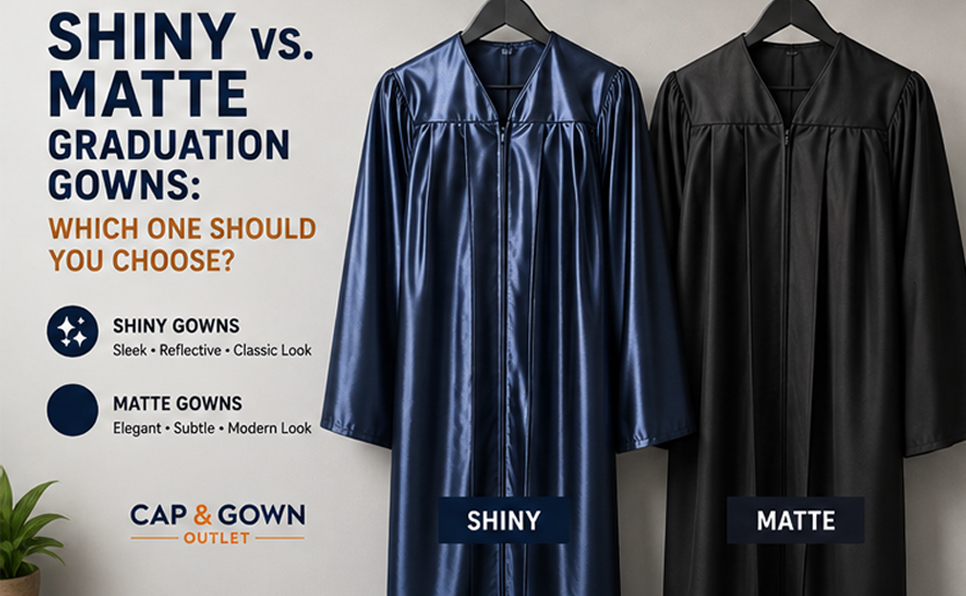
There is no universal WIOA graduation gown color. Organizations may select black, navy, royal blue or another available color according to their ceremony plan, existing inventory or institutional requirements. When adding merchandise to existing inventory, compare actual product specifications because gowns with similar color names can differ in fabric, shade and finish.Matte vs. Shiny Graduation Gowns
Matte gowns provide a lower-sheen appearance, while shiny gowns reflect more light. Neither finish is automatically required for workforce training ceremonies. For recurring events, maintaining one approved finish can help keep the graduating group visually consistent.Graduation Gown Sizing for Workforce Participants
Workforce programs may serve young adults, career changers, displaced workers and participants from a broad range of backgrounds. Orders should therefore account for a wide size distribution. Programs should first select the gown product and then use the sizing instructions provided for that specific product.Recommended Sizing Process
- Select the gown product
- Obtain the current sizing chart
- Provide sizing instructions to participants
- Collect the information required by the chart
- Assign the appropriate gown sizes
- Identify extended-size needs
- Compile quantities by size
- Review the complete distribution
- Submit aggregate quantities for purchasing
Do Not Depend on Everyday Clothing Size
Graduation gowns may use height, weight or other product-specific sizing information rather than ordinary shirt, jacket or dress sizes. Always follow the current chart for the actual gown being purchased.Plan Extended Sizes Early
Extended-size requirements should be identified before the primary institutional order is finalized. Waiting until distribution day to identify these needs can make replacement planning more difficult.Graduation Caps for Workforce Training Ceremonies
A mortarboard can be paired with a traditional graduation gown when approved by the organization conducting the event. Programs should specify the required cap color and determine whether participants may decorate their caps.Tassels for WIOA Recognition Ceremonies
Tassels can coordinate with the gown, training organization or approved career-program colors. Available options may include:- Single-color tassels
- Two-color tassels
- Program-color tassels
- Dated tassels
- Undated tassels
Dated or Undated Tassels?
Dated tassels can commemorate a particular completion year. Undated tassels can offer more flexibility when an organization holds several ceremonies or maintains backup inventory. Programs should consider the likelihood of unused merchandise before purchasing large quantities of year-specific products.Certificate Covers for Workforce Training Completion
Certificate presentation can be especially important for occupational and workforce training ceremonies. Before purchasing certificate covers, verify:- Document width
- Document height
- Portrait or landscape orientation
- Required cover dimensions
- Cover color
- Quantity
- Blank or customized format
Do Not Assume Every Training Provider Uses the Same Certificate
A workforce board may work with multiple training providers. Each provider can potentially issue documents with different dimensions. Measure the actual certificates before selecting covers rather than assuming one standard cover will fit every program.Graduation Stoles for Career Pathways
Stoles can provide a practical way to distinguish career programs while maintaining a standard gown across the ceremony. Organizations might choose approved recognition stoles for pathways such as:- Healthcare
- Information technology
- Cybersecurity
- Advanced manufacturing
- Construction
- Electrical training
- HVAC
- Welding
- Automotive technology
- Transportation and logistics
- Culinary and hospitality
- Business and entrepreneurship
Plain vs. Customized Workforce Stoles
Plain stoles can offer flexibility for recurring ceremonies and changing training programs. Customized stoles may provide program-specific recognition but can require additional time for artwork, authorization, approval and production. Organizations should balance customization with the ability to reuse unused inventory.Recognition Cords
Cords may be used for organization-defined distinctions such as:- Training excellence
- Leadership
- Academic achievement
- Service
- Career pathway completion
- Additional credentials
- Other approved achievements
WIOA Adult Program Recognition
Adult workforce participants may receive career and training services designed to support employment and career advancement. When an adult participant completes an occupational training or credential program, the responsible workforce organization or training provider may choose an appropriate recognition ceremony. The products selected should correspond to the actual achievement and program requirements.Dislocated Worker Training Recognition
Dislocated Worker programs help eligible workers respond to job loss and transitions in the labor market through workforce services and training opportunities. Participants completing qualifying training may be recognized through certificates, traditional graduation apparel or other organization-approved ceremony formats.WIOA Youth Program Recognition
Workforce programs serving youth may include education, career preparation, occupational skills development and other services. Recognition planning should consider participant age, the type of program completed and whether the event is connected with a school, training provider or separate workforce organization. Youth graduation products should be selected according to the requirements of the organization responsible for the ceremony.Occupational Skills Training Graduates
Occupational skills training can prepare participants for specific jobs or career pathways. Programs may recognize completion through:- Certificate presentations
- Cap-and-gown ceremonies
- Career stoles
- Recognition cords
- Other approved completion products
Registered Apprenticeship Recognition
Registered Apprenticeship combines work-based learning with related instruction and can lead to a recognized completion credential. When apprenticeship completers participate in a recognition ceremony, the apprenticeship sponsor or responsible organization should determine the appropriate apparel and certificate presentation format. Traditional academic degree regalia should not be assumed solely because a participant completed an apprenticeship.On-the-Job and Employer-Based Training
Some workforce training occurs directly in the workplace or through employer partnerships. If an employer, workforce board or training organization chooses to hold a completion ceremony, certificate covers or simple recognition products may be more appropriate than full graduation apparel for certain programs. The recognition format should reflect the nature of the training.Adult Education and Workforce Training
Some participants combine adult education or literacy activities with workforce preparation and occupational training. If the participant also completes a GED, high school equivalency credential or another educational milestone, the ceremony organizer should clearly identify what credential is being recognized.Degree Programs Require Institution-Specific Regalia
Some WIOA participants may receive training through community colleges or other institutions and earn an academic degree. In those cases, graduates should follow the academic regalia requirements established by the degree-granting institution. A workforce program should not substitute a generic package for institution-required degree regalia without confirming that the merchandise meets the school’s requirements.Academic Hoods Are Not Automatically Required
Completion of occupational training, a workforce certificate or another non-degree credential does not automatically require an academic hood. Academic hood requirements vary by institution and credential. Buyers should verify them with the degree-granting institution before purchasing.Training Provider vs. Workforce Program Responsibilities
WIOA participants may receive services through multiple organizations. Before purchasing graduation merchandise, determine which organization is responsible for:- Confirming completion
- Issuing the credential
- Conducting the ceremony
- Establishing graduation apparel requirements
- Purchasing merchandise
- Receiving shipments
- Distributing merchandise
Create a Master Graduation Order by Program
Organizations managing several training programs can collect requirements through one standardized worksheet.For Each Program, Record:
- Program name
- Training provider
- Credential being recognized
- Estimated completers
- Expected ceremony participants
- Gown quantities by size
- Extended sizes
- Mortarboard quantity
- Tassel specification and quantity
- Certificate-cover size and quantity
- Stole quantity
- Cord quantity
- Custom merchandise
- Ceremony date
- Required arrival date
- Receiving location
Calculate Every Product Separately
Do not multiply the number of participants by one complete package without first determining which products each group actually requires.Example
- 350 total ceremony participants
- 290 graduation gowns
- 290 mortarboards
- 290 tassels
- 350 certificate covers
- 135 career stoles
- 75 recognition cords
Use Preliminary and Final Counts
Participants may still be completing training requirements when initial ceremony planning begins. Use preliminary numbers for budgeting and supplier discussions, then establish a deadline for confirmed participant counts and final gown sizes.Review Existing Inventory
Before ordering additional merchandise, count usable products remaining from previous ceremonies. Potential reusable inventory includes:- Standard gowns by size
- Extended-size gowns
- Mortarboards
- Undated tassels
- Blank certificate covers
- Plain stoles
- Recognition cords
Control Year-Specific Inventory
Dated tassels and highly customized products may have limited usefulness after a particular ceremony. Programs can maintain more flexible reserves of standard merchandise while purchasing year-specific items more conservatively.Ordering Across Multiple American Job Center or Training Locations
Workforce services may involve networks of local offices and training providers. When several locations participate in a common recognition initiative, the purchasing team can consolidate requirements while keeping site-level allocations separate.Each Location Can Report:
- Participant count
- Gown size distribution
- Caps and tassels
- Certificate covers
- Program accessories
- Ceremony date
- Delivery requirements
Choose Central or Multi-Site Delivery
Large organizations should determine the delivery model before requesting a formal quotation. Options may include:- One centralized delivery
- Separate approved training-site deliveries
- Central delivery followed by internal distribution
- A hybrid delivery plan
Prepare Detailed Product Specifications
Government and institutional purchasing works more effectively when product requirements are clear. Instead of requesting simply “300 graduation sets,” specify the components and requirements.For Example:
- Specified graduation gown style and color
- Matte or shiny finish
- Quantity by gown size
- Extended-size requirements
- Matching mortarboard
- Specified tassel
- Certificate cover dimensions
- Stole specifications
- Cord configuration
- Customization requirements
Request Formal Line-Item Pricing
An institutional quote can separate products so purchasing teams can evaluate and adjust quantities. Potential line items include:- Graduation gown
- Mortarboard
- Tassel
- Cap, gown and tassel set
- Certificate cover
- Diploma cover
- Plain stole
- Customized stole
- Single cord
- Double cord
- Intertwined cord
- Customization charges
- Shipping
Compare Equivalent Products
When comparing quotations, verify that competing products have similar specifications. Review gown material and finish, size availability, package contents, accessory specifications, customization requirements, processing expectations and shipping arrangements.Compare Total Delivered Cost
Institutional buyers should consider the complete cost of receiving the required merchandise. Depending on the transaction, this can include merchandise, customization, setup charges, special packaging, multiple-destination shipping, freight and other disclosed costs.Ask About Institutional and Quantity Pricing
Workforce boards, training organizations and other institutional purchasers can request pricing based on their actual quantities and product specifications. Minimum quantities and pricing structures may vary by product, particularly for customized merchandise.Government Funding Does Not Automatically Make Regalia an Allowable WIOA Expense
The fact that a participant or program receives WIOA support does not by itself establish that graduation apparel or ceremony supplies are an allowable use of WIOA funds. The responsible workforce organization should determine whether the proposed expenditure is permitted under the applicable law, regulations, grant terms, cost principles, state or local policy and program guidance before committing program funds.Identify the Actual Purchasing Entity
The organization funding training may not be the organization purchasing graduation supplies. The legal purchaser might be:- A state workforce agency
- A local workforce development board
- A local government
- A public college
- A school district
- A technical school
- An apprenticeship sponsor
- A nonprofit organization
- A contracted training provider
- Another authorized entity
Follow Applicable Procurement Requirements
Public and grant-funded purchasers should determine which procurement procedures apply before placing an order. Depending on the organization and transaction, purchasing could involve:- Authorized direct purchasing
- Informal quotations
- Formal quotations
- Requests for quotations
- Competitive bids
- Requests for proposals
- Purchase orders
- Purchasing cards
- Existing contracts
- Other authorized procurement methods
Vendor Registration May Be Required
A government or institutional purchaser may require supplier onboarding before an order can be processed. Requirements vary and may include business information, tax documentation, certifications, disclosures, insurance documentation where applicable or other procurement forms.Purchase-Order Acceptance Must Be Confirmed
If the purchaser plans to use a purchase order, supplier acceptance and applicable payment terms should be confirmed before the PO is issued. Acceptance of a purchase order does not by itself establish WIOA approval, government-contract status, preferred-supplier status or an awarded procurement.Verify Large-Order Inventory
Online availability of one item does not establish availability for an institutional order across dozens or hundreds of sizes and products. Before finalizing a substantial order, verify:- Total gown quantity
- Quantity by gown size
- Extended sizes
- Required gown color
- Mortarboards
- Tassels
- Certificate covers
- Stoles
- Cords
Recheck Inventory After Procurement Approval
Public purchasing approvals can take time. If a significant period passes between quotation and authorization, the purchaser should reconfirm product availability before placing the final order.Separate Standard and Customized Merchandise
Standard gowns, caps and tassels may have different processing requirements from customized stoles or certificate covers. Customized merchandise may require:- Artwork submission
- Authorization to reproduce branding
- Proof review
- Approval
- Production
- Shipping
Government and WIOA Branding Requires Authorization
Do not place federal seals, U.S. Department of Labor marks, state agency logos, workforce-board branding, American Job Center branding, training-provider logos or other protected marks on merchandise without appropriate authorization. A supplier’s ability to customize merchandise does not create permission to reproduce a government or institutional mark.Plan Backward From the Required Arrival Date
The merchandise should arrive before the ceremony so staff have time to inspect and distribute it.A Reverse Timeline Can Include:
- Ceremony date
- Participant distribution date
- Fitting and exchange period
- Shipment inspection
- Required arrival date
- Carrier transit
- Supplier processing
- Custom production
- Artwork approval
- Procurement authorization
- Final quantities and sizing
Processing and Shipping Are Separate
Processing occurs before merchandise enters the carrier network. Shipping begins after the order has been released to the carrier. Expedited transportation may shorten transit for qualifying products, but it does not eliminate procurement, artwork approval, customization or supplier processing requirements.Inspect Merchandise Immediately After Delivery
Do not leave institutional cartons unopened until ceremony week.Check:
- Number of cartons
- Gown quantities
- Gown sizes
- Extended sizes
- Colors and finishes
- Mortarboards
- Tassels
- Certificate covers
- Stoles
- Cords
- Customized merchandise
- Visible shipping damage
Schedule Early Participant Distribution
Providing apparel before the ceremony gives participants time to verify gown fit and package contents. It also gives program staff additional time to address legitimate size changes, missing merchandise or late additions.Maintain Records for Future Workforce Ceremonies
Recurring programs can improve future purchasing by documenting actual usage after each ceremony. Record:- Final participant count
- Gown sizes used
- Extended-size usage
- Size exchanges
- Late participants
- Replacement orders
- Unused gowns
- Unused caps
- Unused undated tassels
- Unused certificate covers
- Unused stoles and cords
WIOA Training Program Graduation Supply Checklist
- Identify the WIOA-related training program
- Identify the credential or achievement being recognized
- Confirm who is conducting the ceremony
- Separate degree and non-degree credentials
- Determine the recognition format
- Select gown style, color and finish
- Obtain the current sizing chart
- Collect participant sizing information
- Identify extended-size requirements
- Select caps and tassels
- Choose dated or undated tassels
- Measure certificates
- Select appropriate certificate covers
- Determine whether stoles are needed
- Determine whether cords are needed
- Define recognition meanings internally
- Confirm authorization for custom branding
- Review reusable inventory
- Calculate quantities by product
- Set preliminary and final participant counts
- Plan reasonable backup inventory
- Determine the legal purchasing entity
- Verify whether program funds may be used for the proposed expense
- Follow applicable procurement requirements
- Prepare clear product specifications
- Request formal institutional pricing
- Compare equivalent products
- Evaluate total delivered cost
- Complete supplier onboarding where required
- Confirm PO acceptance when applicable
- Verify institutional-scale inventory
- Recheck availability after lengthy approvals
- Plan customized merchandise early
- Establish the required arrival date
- Confirm delivery instructions
- Inspect merchandise promptly
- Distribute apparel before the ceremony
- Document remaining inventory after the event
Graduation Products for Workforce Training Organizations
Cap and Gown Outlet is an independent academic regalia supplier offering graduation and recognition products for individual customers and qualifying institutional purchasers. Products that workforce training organizations may consider include:- Graduation gowns
- Mortarboard caps
- Graduation tassels
- Cap, gown and tassel sets
- Certificate covers
- Diploma covers
- Plain graduation stoles
- Customized stoles where available
- Honor and recognition cords
- Academic regalia where appropriate
- Related graduation accessories