Largest Retailer and Wholesalers of Graduation Cap and Gown


Saint John's University New York, New York
Saint John’s University (New York) — Commencement & Academic Regalia Summary
At St. John’s University (New York), academic attire is required for all graduates participating in commencement. Graduates must pre‑purchase keepsake regalia — including cap, gown, hood (where required), and tassel — usually via the official vendor, with a specified deadline for orders.
Undergraduate Regalia
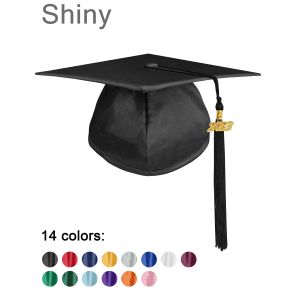
For bachelor‑ and associate‑degree candidates, the standard academic gown has a semi‑stiff yoke, a long pleated front, shirred shoulders and back, and distinctive long pointed sleeves. The mortarboard cap is worn with a plain black tassel. On Commencement Day, graduates assemble wearing the cap and gown, with the tassel starting on the right side before degree conferral.
Graduate & Doctoral Regalia
Master’s‑level graduates wear an open‑front gown with squared, closed long sleeves (slit above the elbow) and a mortarboard cap plus gown. Doctoral candidates wear full doctoral gowns featuring velvet panels down the front and three velvet bars on bell‑like sleeves; their caps may be velvet tams, and tassels may follow doctoral tradition.
Academic Hoods & Discipline Colors
The academic hood is a core part of the regalia for advanced degrees. The hood’s shell is black, lined in the university’s official colors (bright red with a white chevron), and trimmed with velvet. The velvet trim corresponds to the graduate’s field of learning, using a standard color code: e.g., White for Arts, Letters & Humanities; Drab (light brown) for Business Administration; Light Blue for Education; Brown for Fine Arts; Purple for Law; Dark Blue for Philosophy; Golden Yellow for Science; Lemon for Library Science; Olive Green for Pharmacy; Salmon Pink for Public Health; etc.
Honor Cords, Stoles & Accessories
St. John’s University does not automatically supply honor cords or stoles as part of the standard regalia package. Students from honor societies or other recognized groups may wear cords or stoles if permitted, but any such items must be obtained or approved separately — the official “Academic Attire” policy states that cords and stoles are managed by honor societies or departments, not centrally by the University.
Summary: Saint John’s University maintains a traditional academic‑regalia structure: black graduation gowns and mortarboards for undergraduates; more elaborate gowns and hoods for master’s and doctoral graduates; hoods lined in university colors and trimmed in discipline‑specific velvet; tuck‑in of tassels before and after degree conferral; optional cords or stoles only if awarded through external honor societies. This ensures formal, uniform commencement attire across degree levels while allowing flexibility for honors or affiliations through accessory additions.
Short Description
Official‑style St. John’s University commencement regalia — cap, gown, tassel, and hood (if applicable) — for bachelor’s, master’s, and doctoral graduates.
Long Description – Cap, Gown, Tassel & Academic Regalia Details
St. John’s University requires all degree candidates to wear academic attire — cap, gown, and hood — at Commencement. Undergraduate graduates receive a gown with traditional cut, mortarboard cap, and tassel. Masters and doctoral candidates wear more formal robes with academic hoods, indicating degree level and academic discipline.
The hood’s inner lining uses St. John’s institutional colors (bright red with a white chevron), while the velvet border identifies the graduate’s field of learning: Business (drab), Education (light blue), Law (purple), Science (golden yellow), Arts (white), Pharmacy (olive green), Fine Arts (brown), Public Health (salmon pink), Library Science (lemon), and more — matching the university’s academic heraldry traditions.
This regalia set includes all core items—gown, cap, tassel, and hood (if required). Honor cords, stoles, or special tassels are not part of the default package; such accessories must be obtained through approved honor societies or departments, as St. John’s does not provide a universal color code for them.
Available Regalia Package Options
- Bachelor’s / Undergraduate Set: Black gown + mortarboard cap + tassel
- Master’s Graduate Set: Gown (master’s style) + hood (discipline‑trim) + mortarboard cap + tassel
- Doctoral / Professional Set: Doctoral gown (velvet panels & sleeve chevrons) + hood + cap or tam + tassel
- Accessory Add‑Ons (Optional): Honor cords, stoles, special tassels — only if authorized by relevant honor societies or departments
Note: To confirm the exact colors of the graduation gown, cap, tassel, honor cords, and stoles for your specific program at Saint John's University (New York, New York) , you can reach out directly to the college's administration or the office responsible for commencement and student services. They can provide you with the most accurate and up-to-date information regarding academic regalia.
Our Categories




Our Categories

Filter
Shopping Options