Government agencies and publicly operated education and training programs may need graduation apparel and recognition supplies for large groups of participants completing education, workforce development, vocational training, professional development or other qualifying programs.
Ordering bulk graduation Faculty regalia for government agencies requires more planning than purchasing individual graduation products. Institutional buyers may need to coordinate participant counts, gown sizes, multiple programs, certificate dimensions, customization, purchasing procedures, delivery locations and required arrival dates.
This guide explains how government and public-sector purchasers can organize a bulk graduation order from initial planning through delivery and distribution.
Who May Purchase Bulk Graduation Regalia?
Graduation and recognition merchandise may be relevant to many types of public-sector education and training organizations when permitted by their program and purchasing requirements. Examples may include:- Federal agencies and qualifying federal programs
- State agencies
- Local government organizations
- Public school districts
- State-operated schools
- Adult education programs
- GED and high school equivalency programs
- Career and technical education programs
- Vocational education programs
- Workforce development programs
- Apprenticeship and skills-training programs
- Correctional education programs
- Juvenile education programs
- Reentry education and training programs
- Government employee training programs
- Veterans education and training programs
- Tribal education and training organizations
- Other qualifying public education programs
Step 1: Define the Achievement Being Recognized
Before requesting prices, determine exactly what participants are completing. The ceremony may recognize:- High school completion
- GED or high school equivalency achievement
- College degree completion
- Vocational education
- Career and technical education
- Occupational skills training
- Workforce training
- Apprenticeship completion
- Professional development
- Government employee education
- Certificate programs
- Other program-defined educational achievements
Step 2: Determine the Appropriate Ceremony Format
Government programs can select merchandise that corresponds to the actual credential or accomplishment.Traditional Graduation Ceremony
When appropriate, a basic graduation package may include:- Graduation gown
- Mortarboard cap
- Tassel
Certificate Recognition Ceremony
Programs recognizing vocational, workforce or professional training may choose a certificate-centered ceremony using:- Completion certificate
- Certificate cover
- Approved recognition stole
- Approved recognition cord
Academic Degree Ceremony
When participants are receiving academic degrees, the degree-granting institution should establish the applicable academic-regalia requirements.Step 3: Build a Participant Roster
A bulk order should begin with an organized participant list. Depending on program needs and privacy requirements, internal records can track:- Participant identifier
- Program
- Credential or achievement
- Location
- Required gown size
- Cap requirement
- Tassel requirement
- Certificate-cover requirement
- Stole eligibility
- Cord eligibility
- Academic hood requirement where applicable
Step 4: Convert the Roster Into Product Quantities
Do not assume that participant count equals the required quantity of every product. For example, an organization recognizing 600 participants might determine that it needs:- 500 graduation gowns
- 500 mortarboards
- 500 tassels
- 600 certificate covers
- 125 approved stoles
- 80 recognition cords
- Academic hoods only for applicable degree recipients
Step 5: Select the Graduation Gown
For non-degree ceremonies where standard graduation apparel is appropriate, one approved gown can simplify a large institutional order. Compare:- Gown style
- Material
- Matte or shiny finish
- Color
- Construction
- Size range
- Extended-size availability
- Bulk availability
Standardize Compatible Programs When Practical
Government organizations operating several compatible programs may be able to use one base gown across multiple recognition events when program requirements permit. Standardization can simplify:- Purchasing
- Sizing
- Inventory
- Distribution
- Replacement orders
- Future ceremonies
Step 6: Collect Accurate Gown Sizes
Bulk orders become significantly more difficult when sizing is estimated instead of collected systematically. A centralized sizing workflow can include:- Select the exact gown product
- Obtain its current sizing chart
- Establish a sizing deadline
- Collect the required participant information
- Assign sizes using the product-specific chart
- Identify extended sizes
- Review incomplete entries
- Calculate the final quantity by size
Do Not Rely Only on Everyday Clothing Sizes
Graduation gown sizing systems can differ from normal clothing sizing. Use the current sizing instructions for the exact gown being purchased.Plan Extended Sizes With the Main Order
Extended sizes should be included during initial planning rather than treated as a last-minute exception. Before standardizing a gown for a large group, verify that its available size range can accommodate expected participants.Step 7: Select Caps and Tassels
For traditional graduation packages, determine:- Mortarboard style
- Cap color
- Tassel color
- Dated or undated tassel
- Year charm requirement
- Quantity
Consider Undated Tassels for Recurring Programs
When permitted, undated tassels may provide greater inventory flexibility for programs holding ceremonies throughout the year or across multiple graduating cohorts.Step 8: Determine Certificate and Diploma Cover Requirements
Certificate covers can be especially useful for vocational, workforce, professional-development and training-completion ceremonies. Before ordering covers, verify:- Document width
- Document height
- Portrait or landscape orientation
- Required cover dimensions
- Cover color
- Quantity
- Customization requirements
Do Not Assume All Government Certificates Are the Same Size
Different agencies, training providers and credentialing organizations may issue documents in different dimensions. Measure the actual certificate before selecting a cover.Step 9: Establish Stole Requirements
Graduation stoles may provide organization-defined recognition when appropriate. Possible uses may include:- Program completion
- Leadership
- Academic achievement
- Career training
- Technical education
- Other approved distinctions
Plain vs. Customized Graduation Stoles
Plain stoles can reduce customization requirements and may provide greater flexibility for recurring ceremonies. Customized stoles can be considered when approved wording or artwork is important to the program.Step 10: Establish Recognition Cord Criteria
Recognition cords can distinguish achievements without requiring different gowns for every participant group. Create an internal recognition key documenting:- Cord color
- Achievement represented
- Eligibility requirements
- Approving authority
Step 11: Separate Academic Regalia From General Training Apparel
Government-supported participants may sometimes earn bachelor’s, master’s or doctoral degrees through colleges or universities. Academic degree recipients should follow the requirements of their degree-granting institutions.Bachelor’s Regalia
Bachelor’s regalia commonly includes a bachelor’s gown, mortarboard and tassel, subject to institutional requirements. A bachelor’s academic hood should not automatically be included unless required or permitted by the institution.Master’s Regalia
Master’s graduates generally use a degree-specific gown and commonly wear an academic hood according to institutional requirements.Doctoral Regalia
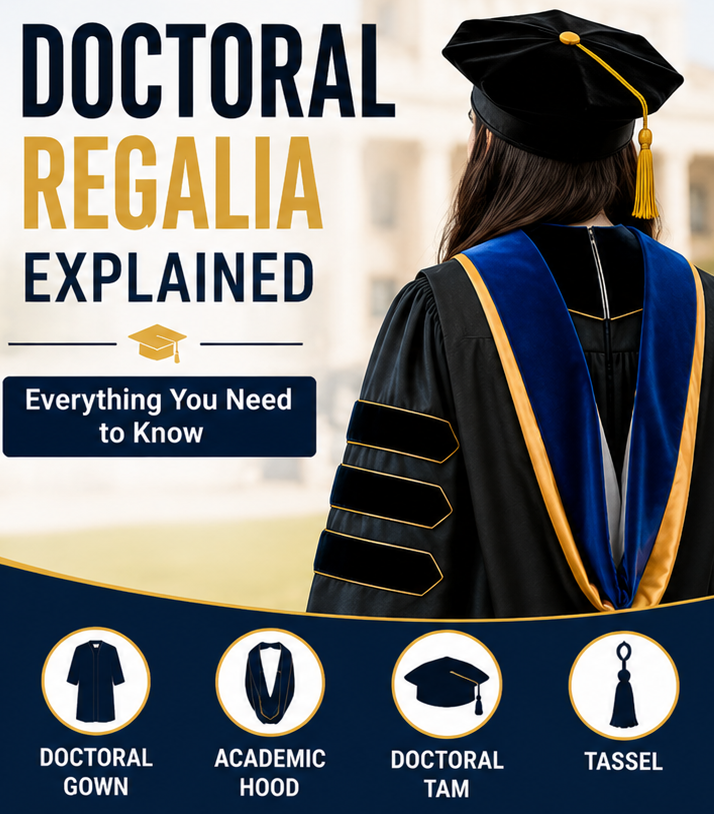
Doctoral requirements may include a doctoral gown, academic hood and approved doctoral headwear such as a tam or mortarboard.Step 12: Review Existing Inventory
Government organizations with recurring ceremonies should count usable merchandise before purchasing additional quantities. Review:- Gowns by size
- Extended-size gowns
- Mortarboards
- Dated tassels
- Undated tassels
- Certificate covers
- Diploma covers
- Plain stoles
- Customized stoles
- Recognition cords
Subtract Usable Inventory From the New Requirement
If an organization requires 300 gowns and has 45 suitable gowns already available in the required sizes, those usable units can be considered when calculating the new purchase requirement. Apply this calculation separately to each product.Step 13: Separate Reusable and Cohort-Specific Merchandise
Standard gowns, mortarboards, undated tassels and plain accessories may provide greater flexibility for future ceremonies than merchandise customized for one year or one specific cohort. Maintain separate inventory records for standard and customized products.Step 14: Plan Multiple Locations Carefully
Government agencies may coordinate ceremonies across multiple facilities, offices, campuses or service areas. Maintain a location-level allocation showing:- Delivery location
- Program
- Participant quantity
- Gown quantities by size
- Mortarboards
- Tassels
- Certificate covers
- Stoles
- Cords
- Required arrival date
Central Delivery vs. Multiple-Destination Shipping
Before requesting a quote, determine whether merchandise will be delivered to one central receiving location or distributed directly to multiple locations. Shipping configuration can affect packaging, freight and administrative requirements.Step 15: Prepare a Supplier-Ready Specification
A detailed specification can make quotations easier to compare and reduce misunderstandings. Include:- Product description
- Gown style
- Gown material or finish
- Gown color
- Quantity by size
- Extended-size quantities
- Mortarboard requirements
- Tassel specifications
- Certificate-cover dimensions
- Diploma-cover dimensions
- Stole specifications
- Cord specifications
- Authorized customization
- Packaging requirements
- Delivery location or locations
- Required arrival date
Step 16: Request Itemized Pricing
A bulk quotation should make it possible to understand the cost of individual components. Request separate pricing where applicable for:- Graduation gowns
- Mortarboards
- Tassels
- Cap, gown and tassel packages
- Certificate covers
- Diploma covers
- Plain stoles
- Customized stoles
- Recognition cords
- Academic regalia
- Customization
- Packaging
- Shipping or freight
Step 17: Compare Equivalent Products
Price comparisons are most useful when suppliers are quoting merchandise that satisfies substantially the same requirement. Compare:- Material
- Construction
- Finish
- Color
- Size range
- Extended-size availability
- Package contents
- Customization
- Processing requirements
- Delivery terms
Step 18: Calculate Total Delivered Cost
Government purchasers should consider more than the advertised unit price. Total delivered cost may include:- Merchandise
- Customization
- Setup charges
- Packaging
- Freight
- Multiple-destination shipping
Step 19: Determine the Applicable Purchasing Process
Government purchasing procedures vary according to jurisdiction, agency, transaction, funding source and other applicable requirements. Depending on the circumstances, purchasing methods may include:- Authorized purchase cards
- Direct purchases where permitted
- Requests for quotation
- Price quotations
- Purchase orders
- Competitive solicitations
- Existing contracts
- Required purchasing sources
- Other authorized procurement methods
Federal Simplified Acquisition Procedures
Federal purchasing rules include simplified acquisition procedures for qualifying purchases, but dollar thresholds do not automatically authorize purchasing from any particular supplier. Required sources, existing contracts, competition requirements, small-business requirements and agency procedures may affect how a federal purchase is conducted.Federal Micro-Purchases
Federal acquisition rules provide procedures for authorized micro-purchases and identify the Governmentwide commercial purchase card as the preferred purchasing and payment method for micro-purchases. This does not mean every government education program can automatically use a card to purchase graduation merchandise from any supplier. The purchaser must be appropriately authorized, and applicable acquisition requirements still control.Purchase Orders
Government purchasers planning to use a purchase order should confirm supplier PO acceptance and applicable payment terms before issuing the PO. A supplier’s willingness to accept a purchase order does not by itself establish government contract status, approved-vendor status or agency endorsement.Step 20: Verify Funding Allowability
Government funding for an education, workforce, rehabilitation, correctional, apprenticeship or other training program does not automatically establish that graduation merchandise is an allowable program expense. The responsible organization should verify applicable law, regulations, award or grant terms, cost requirements, program guidance, agency policy and other governing requirements before charging graduation products to a particular funding source.Step 21: Review Branding and Customization Authorization
Government seals, agency logos, official insignia and other protected marks should only be reproduced when the purchaser has appropriate authorization. The ability of a supplier to manufacture customized merchandise does not itself establish authorization to use government artwork.Avoid Unsupported Government Claims
A commercial supplier should not describe itself as government approved, federally approved, state approved, an official agency supplier, a GSA supplier or a government contractor unless the applicable status has actually been established.Step 22: Establish the Required Arrival Date
The required arrival date should normally be earlier than the ceremony date so the organization has time to receive, inspect and distribute the merchandise. Work backward from:- Ceremony date
- Participant distribution date
- Inspection period
- Required arrival date
- Shipping transit
- Supplier processing
- Custom production
- Proof approval
- Procurement authorization
- Final quantity deadline
- Sizing deadline
Step 23: Allow Additional Time for Customized Merchandise
Custom stoles, printed covers and other customized products may require additional steps. These can include:- Final wording
- Authorized artwork
- Artwork preparation
- Proof creation
- Purchaser review
- Proof approval
- Production
- Shipping
Step 24: Inspect the Shipment
Government and institutional purchasers should inspect bulk orders promptly after delivery. Verify:- Carton count
- Total product quantities
- Gown quantities by size
- Extended sizes
- Mortarboards
- Tassels
- Certificate covers
- Diploma covers
- Stoles
- Cords
- Customized merchandise
- Visible shipping damage
Step 25: Pre-Sort Graduation Packages
Large institutional orders can be easier to distribute when merchandise is organized before participants arrive. Packages can be sorted according to:- Program
- Participant identifier
- Gown size
- Location
- Recognition category
Step 26: Distribute Regalia Before the Ceremony
When practical, distribute graduation apparel early enough for participants to check:- Gown fit
- Cap fit
- Tassel
- Certificate cover
- Approved stole
- Approved cord
- Other required package contents
Step 27: Maintain Post-Ceremony Records
After the ceremony, record information that can improve future purchasing. Track:- Projected participants
- Confirmed completers
- Actual participants
- Gown-size distribution
- Extended-size demand
- Size exchanges
- Late additions
- Supplemental orders
- Unused merchandise
- Remaining reusable inventory
- Delivery issues
Bulk Government Graduation Regalia Ordering Checklist
- Define the achievement being recognized
- Select the appropriate ceremony format
- Create the participant roster
- Separate academic and non-degree programs
- Select the gown
- Obtain the current size chart
- Collect participant sizing information
- Include extended sizes
- Select mortarboards
- Select tassels
- Measure certificates
- Select certificate or diploma covers
- Establish stole eligibility
- Establish cord eligibility
- Count existing inventory
- Separate reusable and customized inventory
- Calculate each product quantity separately
- Create location-level allocations
- Prepare supplier-ready specifications
- Request itemized quotations
- Compare equivalent products
- Calculate total delivered cost
- Determine the applicable purchasing process
- Verify supplier PO acceptance when applicable
- Verify funding allowability
- Confirm authorization for protected artwork
- Set the required arrival date
- Plan custom merchandise early
- Inspect delivered merchandise
- Pre-sort participant packages
- Distribute merchandise before the ceremony
- Record remaining inventory
- Use historical information for the next order
Bulk Graduation Products for Government and Institutional Buyers
Cap and Gown Outlet is an independent academic regalia supplier serving individual customers and qualifying institutional purchasers. Depending on program requirements and product availability, organizations may consider:- Graduation gowns
- Mortarboard caps
- Graduation tassels
- Cap, gown and tassel packages
- Certificate covers
- Diploma covers
- Plain graduation stoles
- Customized stoles where available and appropriately authorized
- Honor and recognition cords
- Bachelor’s regalia
- Master’s regalia
- Doctoral regalia
- Academic hoods when applicable
- Related graduation accessories