State rehabilitation, vocational education and career-training programs can help participants develop occupational skills, complete education and prepare for employment. When a program chooses to recognize completion through a graduation, certificate presentation or achievement ceremony, the merchandise should reflect the actual accomplishment being celebrated.
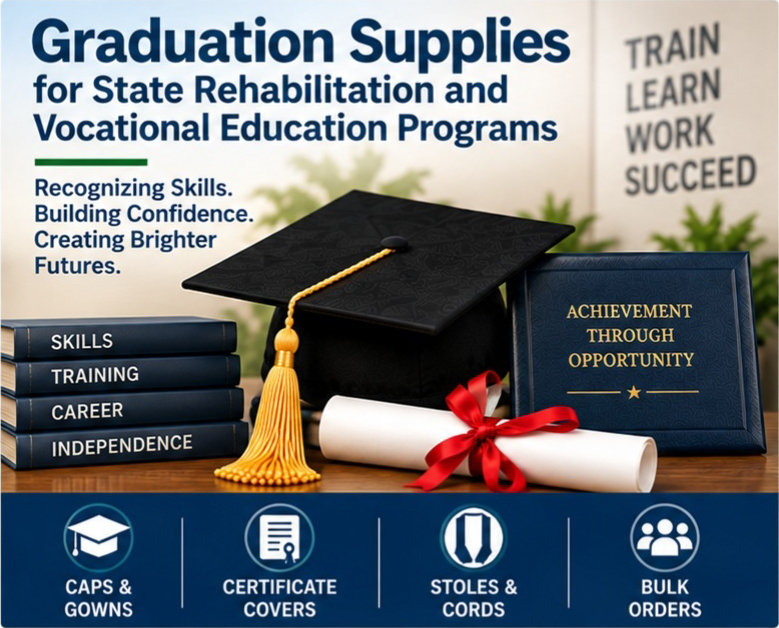
Graduation supplies for state rehabilitation and vocational education programs may include graduation Masters gowns, mortarboard caps, tassels, certificate covers, diploma covers, graduation stoles, recognition cords and other ceremony accessories.
Not every rehabilitation or vocational program requires traditional academic regalia. Program administrators should first identify the credential, certificate or training milestone being recognized and then select appropriate ceremony products.
Recognition Supplies for Different Education and Training Pathways
State-supported rehabilitation and vocational programs can involve different education, training and employment pathways. Recognition events may celebrate participants completing:- Vocational education
- Career and technical training
- Occupational skills training
- Employment-readiness programs
- Postsecondary education
- Certificate programs
- Apprenticeship or pre-apprenticeship pathways
- On-the-job training
- High school or equivalency education
- Professional or industry training
- Other program-defined education or employment milestones
Start With the Credential, Not the Gown
Before selecting graduation apparel, determine exactly what participants have completed. Ask:- Is an academic degree being awarded?
- Is the participant receiving a diploma?
- Is a certificate being issued?
- Is this vocational or occupational training completion?
- Is the ceremony recognizing a workforce milestone?
- Does another institution issue the credential?
Three Practical Recognition Formats
1. Traditional Cap-and-Gown Recognition
When appropriate for the program, participants may wear a standard graduation gown, mortarboard and tassel. This format can be considered for formal completion ceremonies when approved by the organization conducting the event.2. Certificate-Centered Recognition
Some vocational and rehabilitation accomplishments may be better represented by presenting the participant’s actual certificate in a professional certificate cover. This approach can provide formal recognition without suggesting that a non-degree training program awarded an academic degree.3. Academic Commencement
Participants earning academic degrees from a college or university should follow the academic-regalia requirements established by the degree-granting institution. Those requirements may differ substantially from general workforce or vocational graduation apparel.Graduation Gowns for Vocational Education Programs
A standard graduation gown can provide a coordinated appearance when a vocational program chooses a cap-and-gown ceremony. Before selecting a gown, review:- Program requirements
- Gown style
- Gown color
- Matte or shiny finish
- Available sizes
- Extended-size availability
- Participant quantity
- Future inventory needs
One Standard Gown Can Simplify Multiple Programs
A state agency or education organization may recognize participants from several training pathways during the same event. When program rules permit, one approved base gown can simplify:- Purchasing
- Sizing
- Inventory management
- Distribution
- Replacement orders
- Future ceremonies
Graduation Caps and Mortarboards
A mortarboard can be paired with a standard graduation gown when traditional graduation apparel is appropriate. Before ordering, determine:- Required cap style
- Cap color
- Tassel requirement
- Whether another form of headwear is required or permitted
Graduation Tassels
Tassels can help complete a traditional graduation presentation. Organizations should determine:- Tassel color
- Dated or undated style
- Year charm requirement
- Quantity
Certificate Covers for Vocational and Rehabilitation Programs
For many training programs, the completion certificate may be the most important recognition item. A certificate cover can create a professional presentation for:- Vocational training certificates
- Career-training completion documents
- Occupational skills certificates
- Employment-readiness achievements
- Program completion certificates
- Other organization-issued credentials
Measure Certificates Before Ordering Covers
Certificate dimensions can differ among agencies, schools and credential providers. Verify:- Document width
- Document height
- Portrait or landscape orientation
- Required cover dimensions
- Cover color
- Quantity
- Customization requirements
Graduation Stoles for Vocational Programs
Stoles may be used for organization-defined recognition when approved by the program conducting the ceremony. A stole might identify:- Program completion
- Leadership
- Career-training achievement
- Technical education
- Other approved distinctions
Recognition and Honor Cords
Organizations may establish recognition cords for particular achievements. A documented cord system can identify:- Cord color
- Recognition category
- Eligibility requirements
- Approving authority
Academic Regalia for College Degree Recipients
Some participants in rehabilitation or vocational programs may also complete college degrees. When an academic degree is being awarded, the degree-granting institution should determine the required academic apparel.Bachelor’s Regalia
Bachelor’s regalia commonly includes a bachelor’s gown, mortarboard and tassel, subject to institutional requirements. An academic hood should not automatically be added unless the institution requires or permits one.Master’s Regalia
Master’s regalia generally uses a degree-specific gown and commonly includes an academic hood. Exact requirements should be obtained from the institution.Doctoral Regalia
Doctoral graduates may require a Doctoral gown, academic hood and institution-approved headwear such as a tam or mortarboard.Academic Hoods Are Credential-Specific
An academic hood should not be used simply because a vocational or rehabilitation program is advanced or demanding. Academic hoods should correspond to applicable academic credentials and institutional requirements.Career and Technical Education Recognition
Career and technical education can prepare participants with academic and technical skills for occupations and further education. A completion ceremony can use standard graduation apparel or a certificate-centered recognition format depending on the program and credential.Occupational Skills Training
Participants completing occupational skills programs can be recognized with merchandise appropriate to the actual accomplishment. Possible products include:- Graduation gown
- Mortarboard
- Tassel
- Certificate cover
- Approved stole
- Recognition cord
Employment and Career Preparation Recognition
Some rehabilitation programs focus on preparation for employment rather than awarding academic credentials. For these programs, organizations can recognize participant accomplishments without presenting the ceremony as a college commencement. A certificate-centered format may be particularly useful when the primary achievement is completion of training or employment preparation.Transition-Age Student Recognition
Programs serving students transitioning from secondary education toward employment or postsecondary opportunities may recognize completed training milestones when appropriate. The ceremony should clearly identify the actual achievement and avoid implying that a separate academic credential was awarded when it was not.Accessible Graduation Planning
Organizations serving participants with disabilities should consider accessibility throughout ceremony planning rather than only when selecting merchandise. Planning may include:- Accessible registration and sizing processes
- Accessible distribution locations
- Reasonable time for fitting and exchanges
- Accessible ceremony routes and seating
- Communication accommodations as applicable
- Individual apparel considerations where necessary
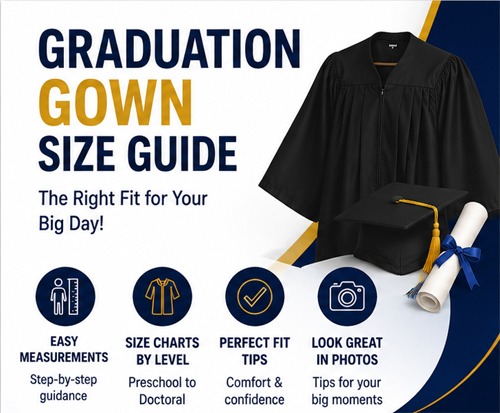
Graduation Gown Sizing
For institutional orders, accurate sizing is essential. A centralized process can include:- Selecting the exact gown product
- Obtaining its current sizing chart
- Setting a sizing deadline
- Collecting required sizing information
- Assigning gown sizes
- Identifying extended sizes
- Reviewing incomplete information
- Calculating quantities by size
Use the Product-Specific Size Chart
Graduation gown sizes may not correspond directly to ordinary clothing sizes. Organizations should use the sizing instructions for the exact gown selected.Include Extended Sizes in the Initial Order
Extended sizes should be incorporated into the normal sizing process rather than handled as an afterthought. Before selecting one gown for a large program, verify that the available size range can accommodate expected participants.Protect Participant Privacy
Institutional purchasers should share only information reasonably necessary for order fulfillment. When participant names or other personal details are not required by the supplier, the organization can maintain individual records internally and provide aggregate quantities by size.Build a Program-Level Product Matrix
For organizations coordinating multiple programs, create a worksheet showing:- Program
- Achievement
- Credential or certificate
- Credential issuer
- Participant count
- Gown requirement
- Sizes
- Extended sizes
- Cap requirement
- Tassel requirement
- Certificate-cover size
- Stole requirement
- Cord requirement
- Customization
- Delivery location
- Required arrival date
Calculate Each Product Separately
Do not assume every participant needs every item. For example, an event with 200 participants might require:- 150 graduation gowns
- 150 mortarboards
- 150 tassels
- 200 certificate covers
- 60 approved stoles
- 40 recognition cords
- Academic hoods only for applicable degree recipients
Count Existing Inventory
Recurring programs should review usable merchandise before purchasing additional supplies. Count:- Gowns by size
- Extended-size gowns
- Mortarboards
- Dated tassels
- Undated tassels
- Certificate covers
- Diploma covers
- Plain stoles
- Customized stoles
- Recognition cords
Separate Reusable and Program-Specific Products
Standard gowns, undated tassels and plain accessories may provide greater flexibility for future cohorts than merchandise customized for one year or program. This distinction can help organizations determine appropriate backup quantities.Multi-Location State Programs
State agencies and partner organizations may coordinate training or recognition activities across multiple offices, schools or service locations. Maintain a separate allocation for each destination showing:- Location
- Program
- Participant quantity
- Gown sizes
- Caps
- Tassels
- Certificate covers
- Stoles
- Cords
- Required arrival date
Prepare Supplier-Ready Specifications
A detailed request can make institutional quotations easier to compare. Include:- Product type
- Gown style and color
- Fabric or finish
- Quantities by size
- Extended sizes
- Cap specifications
- Tassel specifications
- Certificate-cover dimensions
- Stole specifications
- Cord specifications
- Authorized customization
- Ship-to destination
- Required arrival date
Request Itemized Institutional Pricing
Institutional purchasers can request separate pricing for:- Graduation gowns
- Mortarboards
- Tassels
- Cap, gown and tassel sets
- Certificate covers
- Diploma covers
- Plain stoles
- Customized stoles
- Recognition cords
- Academic regalia when applicable
- Customization charges
- Shipping or freight
Compare Equivalent Products
When reviewing quotations, compare more than the unit price. Review:- Material
- Construction
- Color
- Finish
- Size range
- Extended-size availability
- Package contents
- Customization
- Processing requirements
- Delivery terms
Evaluate Total Delivered Cost
The complete institutional cost may include merchandise, customization, setup charges, packaging, shipping and multiple-destination delivery. Purchasers should compare the complete requirement rather than only the advertised price of an individual gown.State Agency Purchasing Requirements
State agencies and organizations purchasing with public funds may be subject to procurement requirements established by state law, agency policy, funding terms or other applicable rules. Depending on the transaction, purchasing methods may include:- Authorized direct purchases
- Price quotations
- Requests for quotation
- Competitive solicitations
- Purchase orders
- Purchasing cards
- Existing contracts
- Other authorized purchasing methods
Confirm Purchase Order Acceptance
If a purchase order will be used, confirm that the supplier accepts POs for the proposed transaction and verify applicable payment terms before issuance. PO acceptance does not establish state endorsement, preferred-vendor status or contract status.Do Not Assume Rehabilitation Funding Covers Graduation Merchandise
Participation in a state vocational rehabilitation, workforce, education or federally supported program does not automatically establish that graduation gowns, certificate covers, stoles, cords or other ceremony merchandise are allowable program expenses. The responsible agency should verify applicable statutes, regulations, grant or award terms, cost principles, state requirements, program guidance and purchasing policies before charging graduation merchandise to a particular funding source.Program Status Does Not Approve a Supplier
A supplier selling merchandise to a state program should not describe itself as state approved, federally approved, rehabilitation-program approved or an official government vendor unless the applicable status has actually been established.State Agency Logos and Government Marks
State seals, agency logos, government marks and other protected artwork should only be reproduced on customized products when the purchaser has appropriate authorization. A supplier’s technical ability to reproduce artwork does not itself establish permission to use it.Plan Customized Products Early
Custom merchandise may require additional time for:- Final wording
- Authorized artwork
- Agency review
- Proof preparation
- Proof approval
- Production
- Shipping
Build the Timeline Backward
Important milestones can include:- Ceremony date
- Participant distribution date
- Inspection period
- Required arrival date
- Shipping transit
- Supplier processing
- Custom production
- Proof approval
- Procurement authorization
- Final participant count
- Final sizing deadline
Inspect Merchandise Promptly
When an institutional shipment arrives, verify:- Carton count
- Total quantities
- Gown sizes
- Extended sizes
- Mortarboards
- Tassels
- Certificate covers
- Diploma covers
- Stoles
- Cords
- Customized products
- Visible shipping damage
Distribute Regalia Before the Ceremony
Early distribution gives participants and program staff time to verify fit and package contents before the event.Maintain Records for Future Cohorts
After the ceremony, record:- Projected participants
- Confirmed completers
- Actual participants
- Gown-size distribution
- Extended-size demand
- Size exchanges
- Supplemental orders
- Unused merchandise
- Remaining inventory
- Delivery issues
State Rehabilitation and Vocational Graduation Checklist
- Identify the education or training achievement
- Identify the credential or certificate issuer
- Determine the appropriate ceremony format
- Separate academic degrees from vocational training
- Select appropriate graduation apparel
- Obtain the product-specific sizing chart
- Collect participant sizing information
- Include extended sizes
- Select caps and tassels
- Measure certificates
- Select certificate or diploma covers
- Establish stole criteria
- Establish cord criteria
- Review accessibility needs
- Count existing inventory
- Calculate quantities by individual product
- Allocate merchandise by location when necessary
- Identify the legal purchasing entity
- Follow applicable procurement requirements
- Verify funding requirements
- Prepare supplier-ready specifications
- Request itemized pricing
- Compare equivalent products
- Calculate total delivered cost
- Confirm PO acceptance when applicable
- Verify bulk inventory
- Plan custom merchandise early
- Set the required arrival date
- Inspect the shipment
- Distribute merchandise before the ceremony
- Document remaining inventory
Graduation Products for Rehabilitation and Vocational Education Programs
Cap and Gown Outlet is an independent academic regalia supplier serving individual customers and qualifying institutional purchasers. Depending on program requirements and product availability, organizations may consider:- Standard graduation gowns
- Mortarboard caps
- Graduation tassels
- Cap, gown and tassel sets
- Certificate covers
- Diploma covers
- Plain graduation stoles
- Customized stoles where available and properly authorized
- Recognition and honor cords
- Bachelor’s regalia
- Master’s regalia
- Doctoral regalia
- Academic hoods when appropriate
- Related graduation accessories